

Predatory gambling apps are using loopholes to avoid state laws

Premium domains for sale
Freedom Is Back In Style

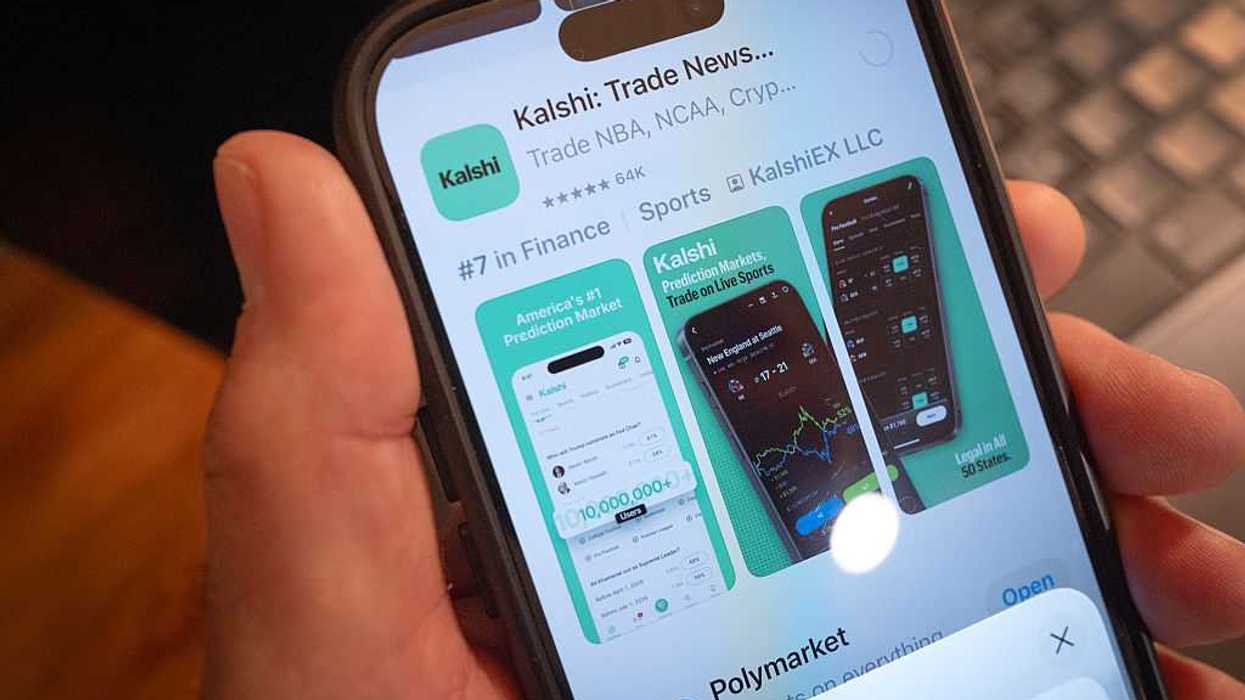
For this year’s March Madness, the action goes far beyond the court: Millions of teenagers too young to step into a Las Vegas casino are placing college basketball bets on prediction market platforms.
Freedom Is Back
In Style
Premium domains for sale
It’s the latest form of legally dubious gambling, a growing “campus frenzy” in which unsafe and unregulated sports betting sites are masquerading as investment.
People as young as 18 can wager nationwide, even in the 11 states where online sports gambling remains illegal.
As moms, we take nothing more seriously than the obligation to protect our kids and communities. Prediction markets do the opposite: They exploit college students by luring them into sports “event contracts” through shady marketing, financed fraternity parties, and social media influencers.
Passed off as merely predictions of who will win a game or tournament, these contracts are sports gambling in disguise. They should be regulated as such, treated the same as the online sports betting that has proliferated nationwide since the Supreme Court effectively legalized it in 2018.
By skirting state and tribal laws, prediction markets are offering unregulated sports betting without consumer protections or age minimums, avoiding state gambling taxes that fund important education and infrastructure programs. An estimated $657 million state gaming tax dollars have been lost since prediction markets waded into the sports arena.
At Moms for America, we proudly joined the new Gambling Is Not Investing coalition to make sure this pernicious trend is reversed — and that prediction markets’ sports event contracts are stopped until they comply with state gambling laws.
Our cause is made more urgent by the unrelenting growth of prediction markets. They seem to be everywhere, with people betting — sometimes with alleged inside information — on everything from elections to developments in the U.S. war against Iran.
But athletics drive the action. Sports regularly account for over 85% of volume on Kalshi, one of the two major prediction market platforms along with Polymarket, according to a 2025 report from Keyrock and Dune Analytics.
Since early 2024, the report found overall monthly volume on prediction markets has surged from under $100 million to more than $13 billion.
Prediction markets are exchange platforms in which people trade event contracts based on predicting the outcomes of future events. They offer many of the same bets as sportsbooks, including moneyline, spread, player props, and over/under outcomes.
Yet even though they clearly constitute sports betting, prediction markets claim they are regulated by the federal Commodity Futures Trading Commission rather than state gambling agencies. This claim allows their gambling activities to be rebranded as “trading,” or “investing” — and means that people as young as 18 can wager nationwide, even in the 11 states where online sports gambling remains illegal.
RELATED: Arizona files 20 criminal charges against Kalshi for flouting state gambling laws
 Scott Olson/Getty Images
Since most states with legal online sports betting restrict it to people 21 and older, this loophole has created a “three-year window” for prediction markets to target the 18- to 20-year-old crowd.
As the Wall Street Journal put it in a recent expose, Kalshi and Polymarket are aiming their marketing “at an eager group of users that isn’t known for financial discretion: college students.”
The targeting has not been subtle: Both platforms have been paying student influencers and creators on TikTok and Instagram to promote them, while Polymarket has offered to help fund parties for fraternities in exchange for signing up users.
The platforms are taking advantage of a troubling trend: extensive gambling among teenagers just short of college. Common Sense Media, which recently surveyed more than 1,000 U.S. adolescent boys ages 11 to 17, found that nearly half of 17-year-olds gambled in the past year.
This exploitation of our youth must stop. Since prediction markets clearly promote gambling, they should be regulated by state gambling agencies that enforce safeguards and compliance standards.
A number of states, correctly seeing prediction market platforms as “sports gambling in disguise,” are asserting their regulatory authority in federal courts.
As March Madness heats up, the NCAA recently urged the CFTC to suspend college sports offerings in prediction markets until the agency implements stronger regulations.
Amid the various calls for action, we urge the public to weigh in. Tell your elected officials and state leaders that prediction markets should not be a back door for unregulated sports gambling.
More from this network:
Domains for Sale · GOTPeople.org · TheDSAPlatform · The Truth About Socialism
What's Your Reaction?
 Like
0
Like
0
 Dislike
0
Dislike
0
 Love
0
Love
0
 Funny
0
Funny
0
 Wow
0
Wow
0
 Sad
0
Sad
0
 Angry
0
Angry
0

I am just an average American. My teen years were in the late 70s and I participated in all that that decade offered. Started working young, too young. Then I joined the Army before I graduated High School. I spent 25 years in, mostly in Infantry units. Since then I've worked in information technology positions all at small family owned companies. At this rate I'll never be a tech millionaire. When I was young I rode horses as much as I could. I do believe I should have been a cowboy. I'm getting in the saddle again by taking riding lessons and see where it goes.
Premium domains for sale














Comments (0)