

Reclaiming Religious Liberty From Distortion
Premium domains for sale
Freedom Is Back In Style
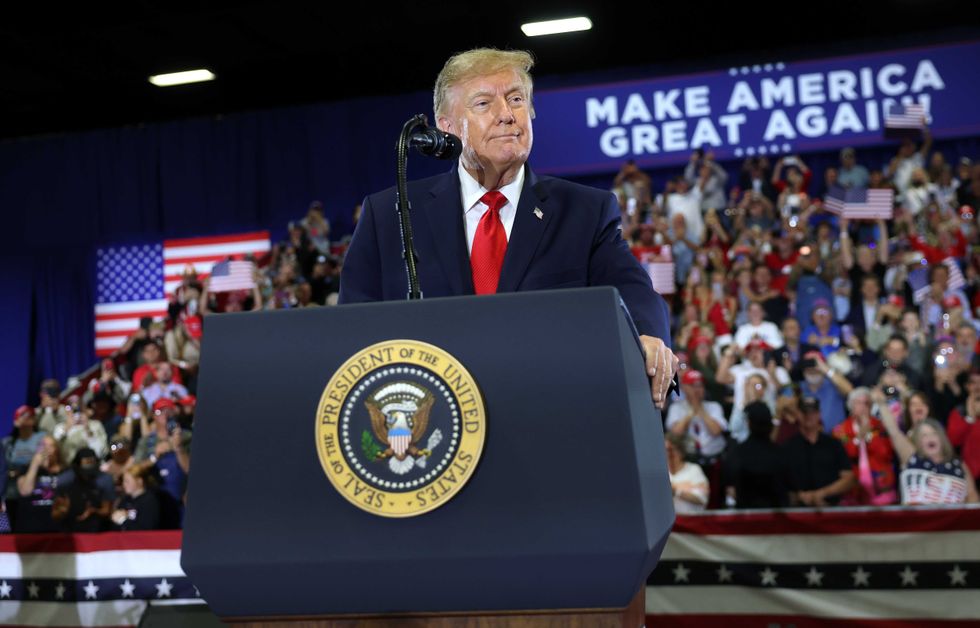
Government commissions come and go. Most deliver their reports to polite applause and prompt obscurity. But the Religious Liberty Commission that recently presented its draft report to President Donald Trump deserves a look that extends well beyond the Oval Office. At stake is something fundamental to the American character: our distinctive religious pluralism and the constitutional architecture that has protected it for more than two centuries.
Freedom Is Back
In Style
Premium domains for sale
Established last May, the commission was charged with identifying emerging threats to religious liberty, upholding federal laws protecting full civic participation in a pluralistic democracy, and protecting the free exercise of religion. That mandate is broadly American, and the process the commission used to fulfill it was a textbook demonstration of how democratic deliberation is supposed to work.
America has never been a secular nation in the European sense. From its earliest days, faith has been woven into the texture of American public life not as part of the establishment, but as a wellspring.
The framers were not hostile to religion. They were hostile to state-established religion, a very different thing. What they constructed was a republic that respects the independence of churches and houses of worship from government control while actively safeguarding the freedom of individuals to live and express their beliefs openly.
“Separation of church and state,” the infamous phrase found in Thomas Jefferson’s letter to the Danbury Baptists, has become, in popular usage, a weapon deployed to push religion out of public life altogether. The commission report’s careful historical grounding helps restore the actual meaning: not a wall excluding faith from the public square, but a guarantee that government will neither coerce belief nor punish its expression.
That clarification arrives at a propitious moment. Lawmakers in several states have moved to permit or require the display of the Ten Commandments in public school classrooms. Courts are weighing whether teachers may incorporate the Bible into instruction on history, literature, and the foundations of Western law.
These are genuinely contested questions that are being debated in a climate badly distorted by a generation of sloppy shorthand. When the historical record is obscured, even well-intentioned jurists and legislators lack the conceptual tools to reason clearly. The commission’s recovery of that record is not merely backward-looking. It is a contribution to an ongoing argument that Americans are only beginning to have honestly.
The threats documented in the commission’s draft report are real. Over the course of a year, the Commission held seven public hearings and received testimony from more than 100 witnesses representing diverse ages, religions, professional expertise, and life experiences. The hearings addressed religious liberty threats across a wide range of American life, including the surge in violence against houses of worship and the rise of antisemitism.
The commission’s 12 recommendations translate that constitutional vision into practical action. They range from requiring public officials who accuse someone of “improper” religious expression to provide written justification within 30 days, creating religious liberty reporting hotlines at federal agencies, and repealing the Johnson Amendment.
The commission also urges the nomination of federal judges committed to safeguarding religious freedom, combating antisemitism through vigorous civil rights enforcement, and restoring pensions and benefits to military service members penalized for conscience-based objections to vaccine mandates.
Taken together, the recommendations reflect the conviction that religious liberty requires not only legal protection after violations occur, but a culture that understands why those protections exist in the first place.
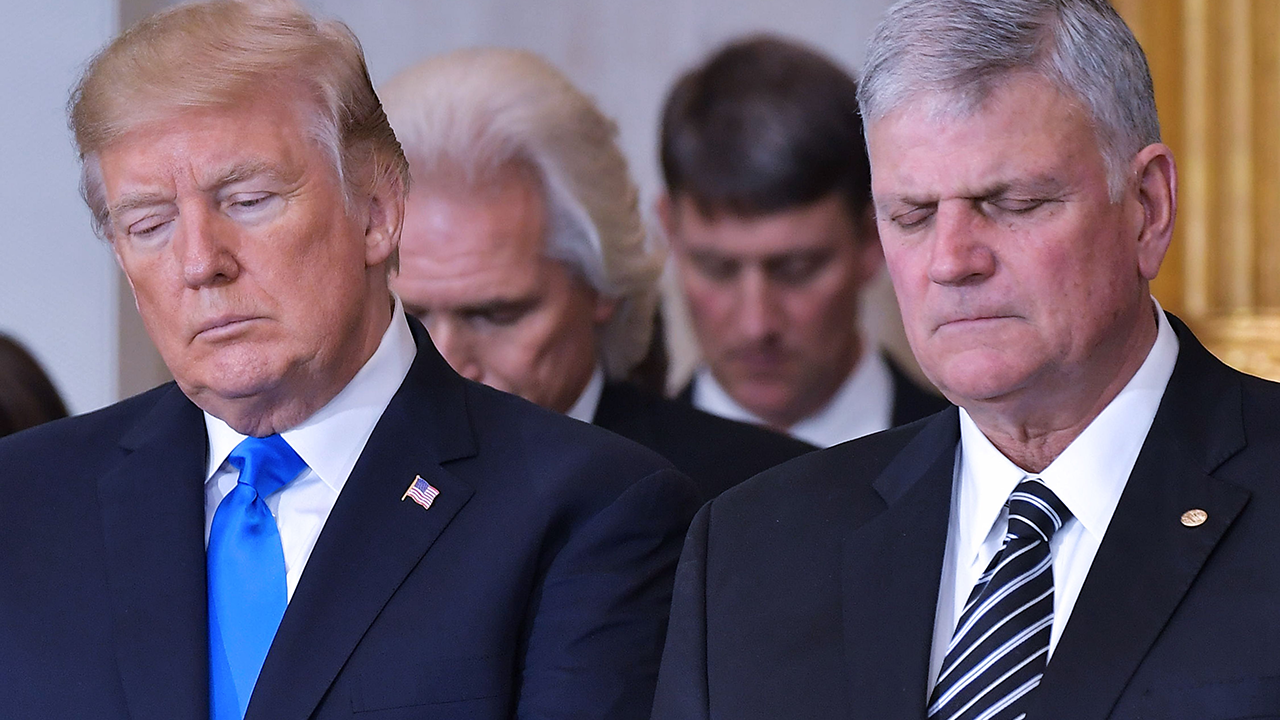
To better understand the insight of the commission’s recommendations, consider who served as commissioners. The roster included Rabbi Meir Soloveichik, one of America’s most respected Orthodox Jewish thinkers; Pastor Franklin Graham; and Ben Carson, whose Christian faith has been a defining feature of a remarkable life from pioneering neurosurgeon to Cabinet secretary.
These are prominent Americans whose religious convictions are not incidental to who they are. Their presence was itself a statement: Faith belongs in the public square, not as a political weapon, but as the moral inheritance that has shaped American civic life from the beginning.
That is perhaps nowhere more evident than in the contributions of three Catholic commissioners: Ryan Anderson, president of the Ethics and Public Policy Center; Cardinal Timothy Dolan of New York; and Bishop Robert Barron.
Catholic teaching holds that a believer should be fully convinced of the truth of his own faith and simultaneously insist that no one should be coerced in matters of conscience. All three men have consistently advanced this teaching and the understanding that the First Amendment either protects everyone or protects no one.
The commission was not without its disruptions. During a hearing on antisemitism, one member used the session to pursue a personal agenda. The chair removed her, making clear that no member had the right to hijack a hearing for personal and political purposes. The commission moved on undistracted and undeterred. That, too, is a distinctly American moment.
Religious liberty is the first freedom. It is one that makes all the others possible. America’s founders knew it. The witnesses who testified before this commission know it.
At a moment when lawmakers, courts, and citizens are actively renegotiating the place of faith in American public life, the report that resulted deserves to be read and taken seriously by us all.
We publish a variety of perspectives. Nothing written here is to be construed as representing the views of the Daily Signal.
Andrea Picciotti-Bayer is director of the Conscience Project and recipient of the Religious Freedom Institute’s 2025 Religious Freedom Impact Award.
More from this network:
Domains for Sale · GOTPeople.org · TheDSAPlatform · The Truth About Socialism
What's Your Reaction?
 Like
0
Like
0
 Dislike
0
Dislike
0
 Love
0
Love
0
 Funny
0
Funny
0
 Wow
0
Wow
0
 Sad
0
Sad
0
 Angry
0
Angry
0

I am just an average American. My teen years were in the late 70s and I participated in all that that decade offered. Started working young, too young. Then I joined the Army before I graduated High School. I spent 25 years in, mostly in Infantry units. Since then I've worked in information technology positions all at small family owned companies. At this rate I'll never be a tech millionaire. When I was young I rode horses as much as I could. I do believe I should have been a cowboy. I'm getting in the saddle again by taking riding lessons and see where it goes.
Premium domains for sale







Comments (0)