

Should You Fear a Nationwide Blackout? Doomsday Preppers and Power Grid Experts Weigh In on Nov 17 Claims
Premium domains for sale
Freedom Is Back In Style
Summary
Freedom Is Back
In Style
Premium domains for sale
- FEMA scheduled a nationwide Emergency Alert System test for Nov. 17 amid social media claims that a cyberattack would cause a blackout.
- Federal officials attributed recent aviation, Microsoft 365, and banking disruptions to technical problems, not cyberattacks.
- Energy and national security experts said a nationwide blackout is difficult, while preparedness influencers recommended practical three-day emergency supplies.
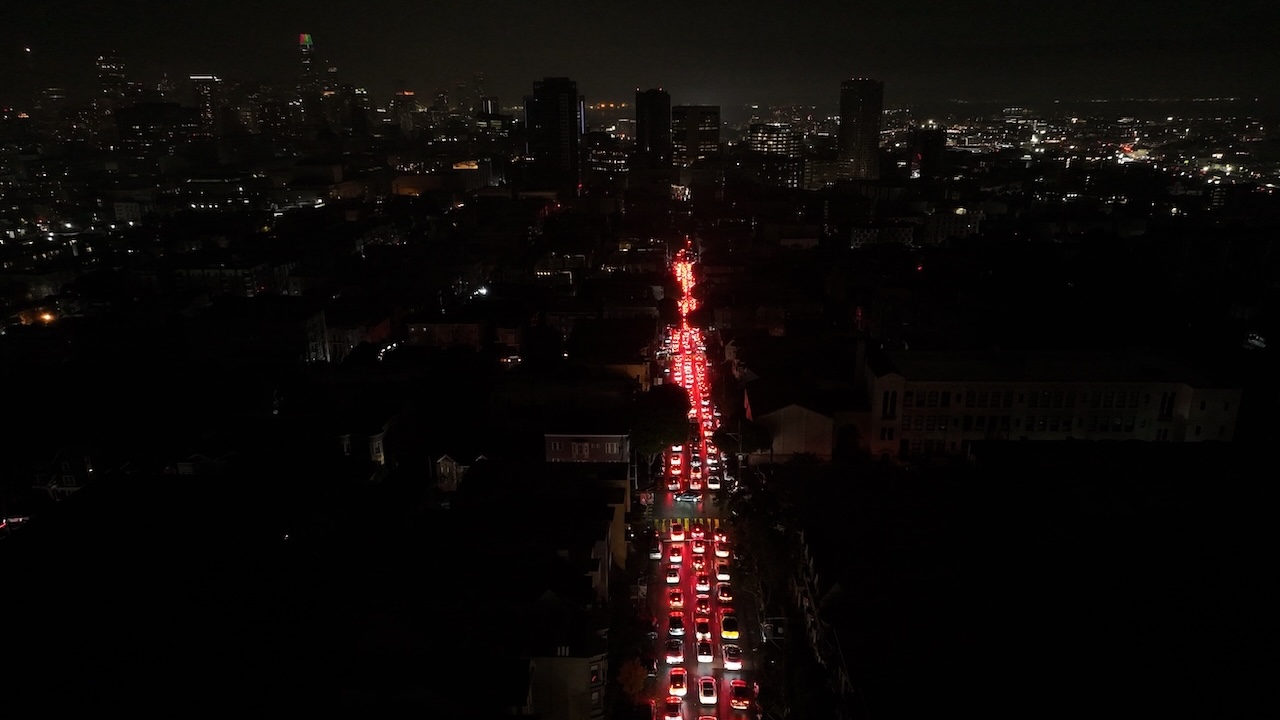
Social media is full of warnings that a nationwide cyberattack will strike today, Nov. 17, triggering a blackout that could last for who knows how long.
The predictions have left many asking one frightening question: Is doomsday coming?
The speculation has latched onto one real event: the Federal Emergency Management Agency’s scheduled nationwide test of the Emergency Alert System today.
FEMA is required by law to test the system at least once every three years. But online, the routine test has become a launch point for claims that its timing is too convenient—or that it signals a cyberattack really is coming.
Add to that Canada’s guidance to keep enough supplies to get through at least 72 hours, reports of hacked supermarket refrigeration systems in Europe, the Federal Aviation Administration ground stop that disrupted thousands of flights, and last week’s Microsoft 365 outage. It’s easy to see why people started asking whether the blackout claims had any weight.
Adding fuel to the cyberattack speculation, on Monday, customers reported online banking and payment problems at several major financial institutions, including JPMorgan Chase, Bank of America, Wells Fargo, and U.S. Bank.
However, Chase attributed the problems to a technical bug, not a cyberattack.
“Due to a technical issue, some transactions are taking longer than usual to complete but customers still have access to their accounts and funds,” a Chase spokesman said. “We are working to resolve this as quickly as possible.”
As these events piled up, Fox News host Jesse Watters asked, “The government is telling us everything is fine. … Is it?”
Other prominent voices, including Glenn Beck, Dan Bongino, and Joe Rogan, have also urged their audiences to prepare.
But how vulnerable is the power grid, and could a cyberattack really bring the entire country to a standstill?
Jack Spencer, director of the Center for Energy, Climate, and Environment at The Heritage Foundation, acknowledged that parts of the grid are vulnerable but explained that its compartmentalized design makes a nationwide blackout much harder to pull off.
“There are some inherent firewalls, if you will, that would make a broad, sustained blackout more difficult. Again, I want to emphasize: I’m not saying impossible,” he told the Daily Signal.
“The threat is real, but it’s not something that I personally worry about.”
The Heritage Foundation national security expert James Carafano also appeared unconcerned but cautioned that protecting every corner of America’s vast infrastructure from potential threats is simply unrealistic.
“America is a massive country, huge geography, massive population—you cannot childproof America,” he said.
Carafano said people can reduce anxiety by building confidence in their own ability to handle a crisis.
“The more confident I am in my personal capacity to take care of myself, the less anxious I am, regardless of what the things are.”
But what do the preppers themselves think?
Survival influencer Kelsey King Vandermyde, who has more than 300,000 followers on Instagram, grew up off-grid in the mountains of Montana without electricity. Her father was, as she puts it, a “big-time doomsday prepper.”
When the Daily Signal asked what she thinks of the Nov. 17 claims, she said she’s seen doomsday predictions come and go—remembering how she worried in 2012 that the end of the Mayan calendar meant the world was about to end.
“I think people definitely should get prepared but not be terrified that everything’s going to collapse tomorrow,” King Vandermyde said.
Her experience also changed how she thinks about living with the possibility of disaster: “I don’t want to waste my life waiting for my life to end. I want to live till the day I die.”
Derrick James, who runs PrepperPress, an account with more than 500,000 followers, said the same.
“I don’t think there’s any teeth behind it other than a bunch of people stirring stuff up trying to get views on social media,” he said.
Still, James believes the panic is tapping into a real vulnerability: how dependent Americans have become on systems that could fail.
Raised in the ’80s, playing in the woods, and building bushcraft shelters, James explained how the very conveniences we rely on—electricity, grocery stores, and delivery services—could also be our greatest vulnerabilities in an emergency.
“If you go back to our grandparents’ generations, dinner was—you got it from the butcher down the street, who got it from the farm down the road. That sort of system is long gone.”
Rather than focus on the worst-case scenario, James said people should start by preparing for emergencies they’re more likely to face.
“Start with preparing for a three-day natural disaster,” he said. “What do you need to do to run your home for three days if you can’t get out and there’s no power and it’s winter? … Those preps that you did for that three-day blackout are going to lay the foundation for more dire, less likely events.”
What's Your Reaction?
 Like
0
 Dislike
0
 Love
0
 Funny
0
 Wow
0
 Sad
0
 Angry
0

I am just an average American. My teen years were in the late 70s and I participated in all that that decade offered. Started working young, too young. Then I joined the Army before I graduated High School. I spent 25 years in, mostly in Infantry units. Since then I've worked in information technology positions all at small family owned companies. At this rate I'll never be a tech millionaire. When I was young I rode horses as much as I could. I do believe I should have been a cowboy. I'm getting in the saddle again by taking riding lessons and see where it goes.
Premium domains for sale










Comments (0)