

Sports Columnist Breaks Up With Paper Over Biological Reality
Premium domains for sale
Freedom Is Back In Style
After 11 years as a sports columnist at The Seattle Times, Matt Calkins has resigned from the paper, saying editors refused to publish a column arguing that opposing biological males competing in women’s sports does not make someone “transphobic.”
Freedom Is Back
In Style
Premium domains for sale
The columnist announced his resignation Thursday, saying the decision was entirely his own but came after the newspaper declined to run his piece on the debate over biological males competing in women’s sports.
“The impetus was the Times declining to run a column I wrote from the perspective of two female student athletes who were opposed to competing against biological males,” Calkins wrote. “It was one of several pieces of mine that had been spiked, and I no longer felt like I could properly do my job as a columnist.”
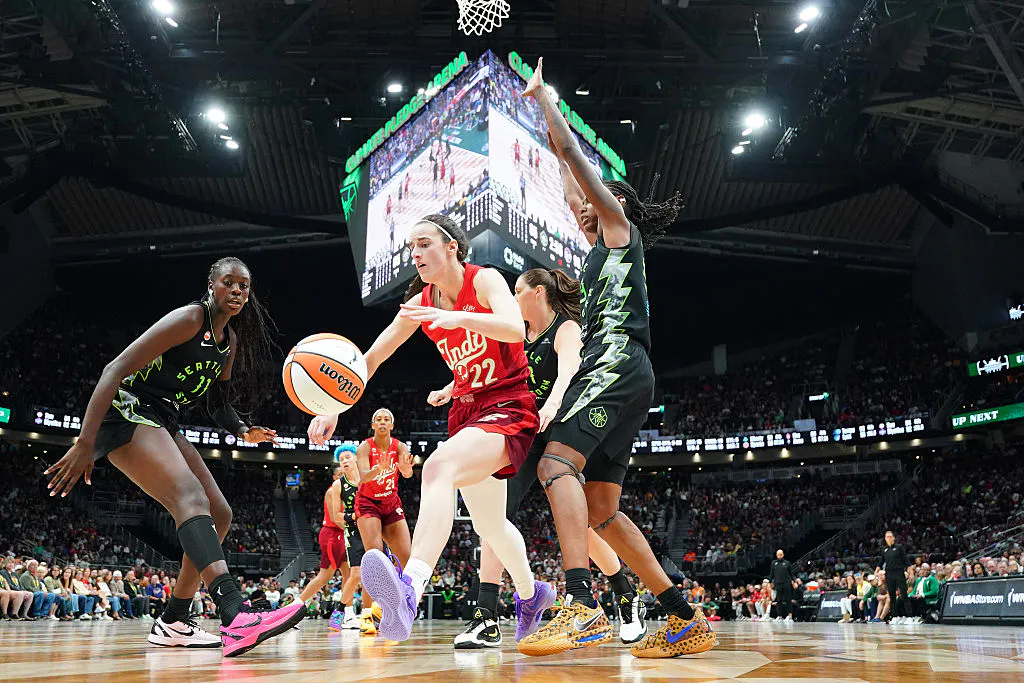
The decision came after Calkins interviewed 16-year-old Ahnaleigh Wilson, a student-athlete who had lost to a biological male in a track race and attended a matchup between the Indiana Fever and the Seattle Storm carrying a sign reading, “Thank You, Sophie For Speaking Up For Girls!” Wilson’s experience at that game became the catalyst for Calkins’ unpublished column.
During the game, Storm co-owner Celeste Keaton confronted Wilson and another teenage girl who were supporting Indiana Fever guard Sophie Cunningham, who has publicly opposed biological males competing in women’s sports.
Keaton allegedly called the girls “f***ing insane” and told Wilson, “I hope Jesus can forgive you,” leaving the teenager in tears. The WNBA subsequently suspended Keaton from attending five home games and fined her over the incident.
For Calkins, the episode raised a question he believed deserved to be addressed by a sports columnist: Why should a teenage girl who believes women’s sports should remain female-only automatically be treated as hateful or bigoted?
Wilson told Calkins that she did not hate transgender people and simply believed girls should have their own sports. Another Washington student-athlete, Frances Staudt, told him she had faced verbal abuse at school after refusing to play against a biological male.
Calkins ultimately published the rejected column on his Substack under the title, “Agreeing with Sophie Cunningham’s stance doesn’t make you transphobic.”
“Some people saw bigotry. I saw bravery,” Calkins wrote of Wilson. “I saw a teenage girl speaking up on an issue that so many adults shy away from.”
The column argued that the separation of male and female sports exists precisely because of biological differences in physical performance, and that supporting that separation does not necessarily amount to hostility toward transgender people. But the Seattle Times declined to publish it.
Calkins said he initially submitted the column to his editor on July 31 and was told that editors were reviewing it. Several days later, he said, he was informed that the piece would not run because he had failed to notify his editor in advance that he was working on it.
“I didn’t buy this reasoning,” Calkins wrote. “If that were the case, the piece would have been killed on the spot, not passed through the hands of multiple editors over several days.”
He resigned immediately afterward.
The decision was not, according to Calkins, simply about one column. He said the Times had previously spiked columns questioning whether the U.S. women’s soccer team was actually the victim of discrimination in its equal-pay lawsuit, criticizing cancel culture in sports, and defending a black high school basketball coach who urged Americans not to stereotype police following George Floyd’s death.
Calkins said the common thread was that the pieces challenged narratives that he believed a columnist should be willing to question.
“I’ve always thought that it was a columnist’s duty to generate discussion on the most hot-button issues,” he wrote. “To avoid such topics was to leave the reader shortchanged.”
“I guess in the end, I just didn’t feel like I could do my job properly anymore,” he wrote.
Calkins acknowledged that leaving a long-established newspaper job without another position lined up was frightening. He said he has no idea what his career will look like in the coming years and joked that he could even end up working as a dental assistant.
But he said the uncertainty was preferable to self-censorship.
“To be honest, I’m scared sh—tless right now,” Calkins wrote. “But that fear beats the indignity of being muzzled.”
More from this network:
Domains for Sale · GOTPeople.org · TheDSAPlatform · The Truth About Socialism
What's Your Reaction?
 Like
0
Like
0
 Dislike
0
Dislike
0
 Love
0
Love
0
 Funny
0
Funny
0
 Wow
0
Wow
0
 Sad
0
Sad
0
 Angry
0
Angry
0

I am just an average American. My teen years were in the late 70s and I participated in all that that decade offered. Started working young, too young. Then I joined the Army before I graduated High School. I spent 25 years in, mostly in Infantry units. Since then I've worked in information technology positions all at small family owned companies. At this rate I'll never be a tech millionaire. When I was young I rode horses as much as I could. I do believe I should have been a cowboy. I'm getting in the saddle again by taking riding lessons and see where it goes.
Premium domains for sale











Comments (0)