

Supreme Court Decides that ‘Day’ Does Not Mean Day in Watson v. RNC
Premium domains for sale
Freedom Is Back In Style
What’s in a word? Does “day” really mean day? That’s essentially the issue the Supreme Court was asked to decide in Watson v. RNC, where Justice Amy Coney Barrett wrote for a 5-4 majority that “Election Day,” as used in a statute passed by Congress, does not really mean a single day.
Freedom Is Back
In Style
Premium domains for sale
Justice Samuel Alito, joined by Justices Clarence Thomas, Neil Gorsuch, and—in significant part—Brett Kavanaugh, dissented.
As most now know, the Constitution leaves primary authority for setting election rules and procedures with each state’s legislature. But, in certain limited instances, the Constitution provides that Congress may step in and set uniform procedures for elections.
And while Congress has rarely exercised that authority, it did so all the way back in the 1800s to set a uniform day on which federal elections must be held: the Tuesday after the first Monday in November.
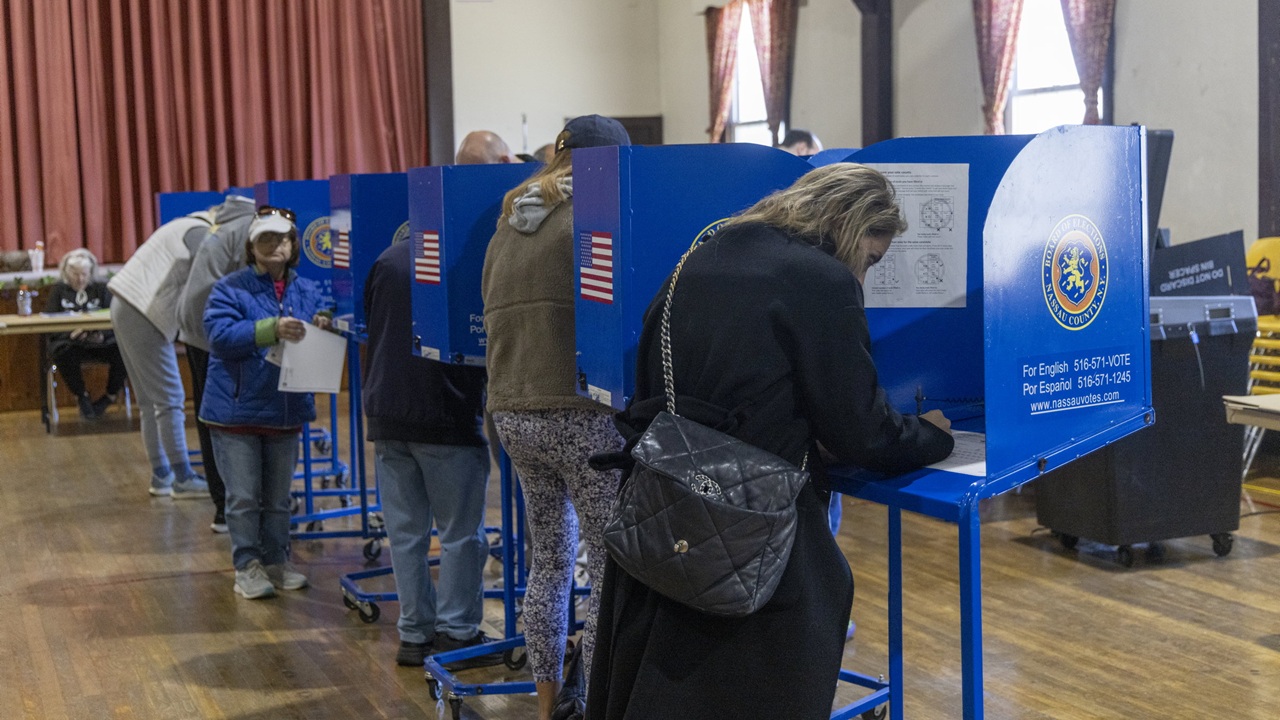
And yet today, some states—like Mississippi—allow for absentee ballots to be received and counted after Election Day, provided they are postmarked by Election Day itself.
Challengers argued that this Mississippi provision (which allowed for receipt and counting up to five business days after Election Day), and even longer provisions in other states (some of which allow for receipt and counting of ballots up to almost three weeks after Election Day), violated the Election Day statute Congress passed.
But the majority said not so. Essentially, the majority said that Election Day is the date by which the electorate must make its choice—the date by which ballots must be cast—but that states are free to receive and count them after that date.
Justice Alito rebutted that notion in his dissent. He made clear that the “expression of the electorate’s choices is conveyed to the responsible election officials when the collection of individual ballots is complete” and that if “ballots received after Election Day are added to the set of ballots that dictate the election’s outcome, the electorate’s choice does not occur on Election Day, and the federal election-day statutes are violated.”
The good news from this unfortunate decision is that states are still free to change their own laws and practices to make sure all ballots are received and counted by Election Day. Congress can also clarify its own law that all ballots in federal elections must be received and counted by Election Day.
And it should be even more obvious now that commonsense election integrity measures like the SAVE America Act are needed.
More from this network:
Domains for Sale · GOTPeople.org · TheDSAPlatform · The Truth About Socialism
What's Your Reaction?
 Like
0
Like
0
 Dislike
0
Dislike
0
 Love
0
Love
0
 Funny
0
Funny
0
 Wow
0
Wow
0
 Sad
0
Sad
0
 Angry
0
Angry
0

I am just an average American. My teen years were in the late 70s and I participated in all that that decade offered. Started working young, too young. Then I joined the Army before I graduated High School. I spent 25 years in, mostly in Infantry units. Since then I've worked in information technology positions all at small family owned companies. At this rate I'll never be a tech millionaire. When I was young I rode horses as much as I could. I do believe I should have been a cowboy. I'm getting in the saddle again by taking riding lessons and see where it goes.
Premium domains for sale














Comments (0)