

Supreme Court Rules on State Laws Excluding Men From Women’s Sports
Premium domains for sale
Freedom Is Back In Style
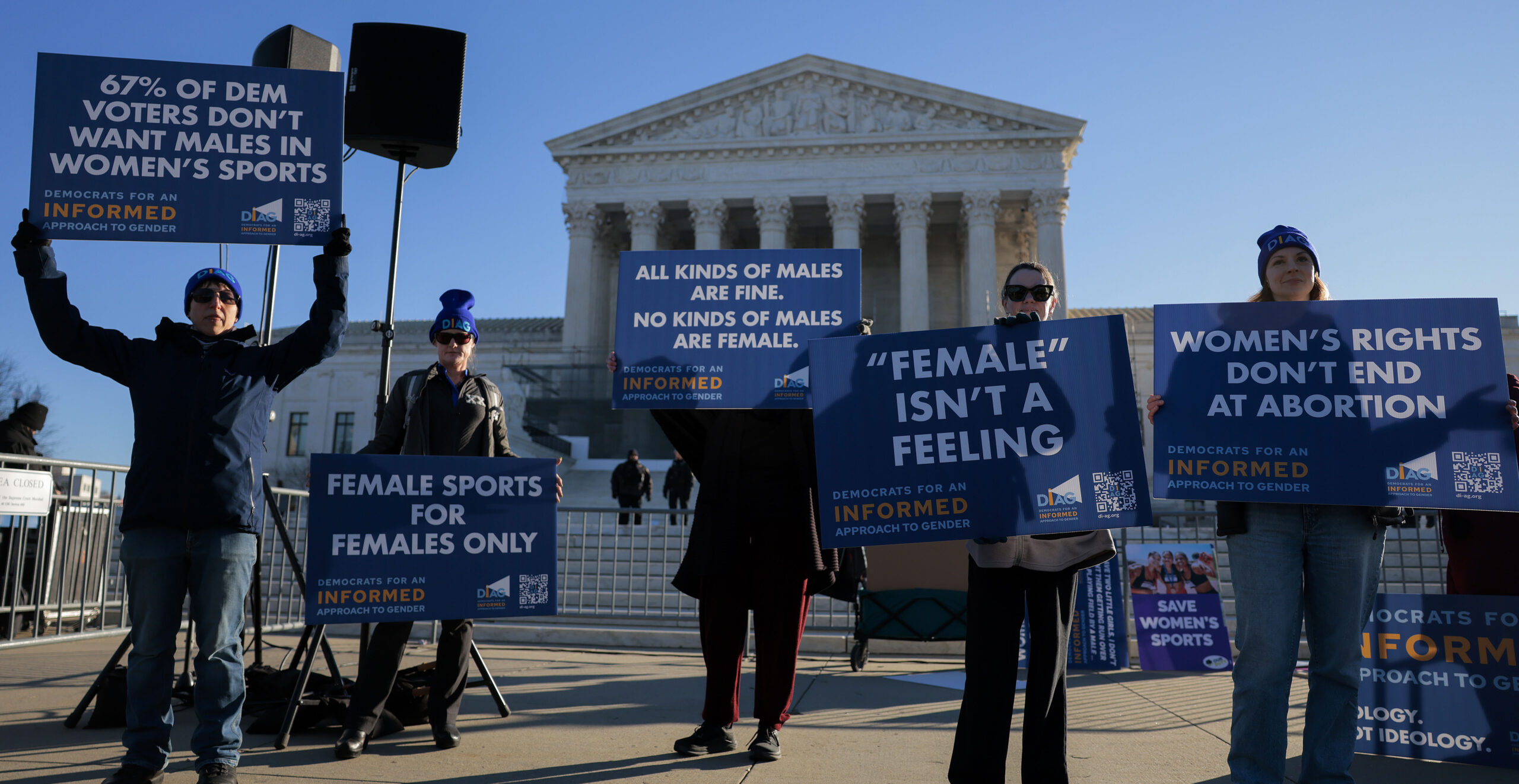
The Supreme Court on Tuesday ruled, 6-3, in favor of a West Virginia law preventing men from competing in women’s sports.
Freedom Is Back
In Style
Premium domains for sale
“The question before the Court is: Under Title IX and the Equal Protection Clause of the Fourteenth Amendment, may schools maintain women’s and girls’ sports for biological females? In other words, may schools determine eligibility for women’s and girls’ sports based on biological sex? The answer is yes,” Justice Brett Kavanaugh, an appointee of President Donald Trump, wrote in the majority opinion.
Chief Justice John Roberts and Justices Clarence Thomas, Samuel Alito, Neil Gorsuch, and Amy Coney Barrett joined Kavanaugh’s opinion. Thomas and Gorsuch wrote concurring opinions. Justice Sonia Sotomayor, an appointee of President Barack Obama, wrote an opinion concurring in part and dissenting in part, which Justices Elena Kagan and Ketanji Brown Jackson joined. Jackson, an appointee of President Joe Biden, wrote another opinion concurring in part and dissenting in part.
In January, justices heard arguments in the combined cases from Idaho and West Virginia. The cases of Little v. Hecox and West Virginia v. B.P.J. will affect 25 states with laws preventing biological males from competing in women’s sports.
Trump signed an executive order in 2025 to withhold federal funds from states that allow biological males to compete in women’s sports.
In 2020, Idaho lawmakers enacted the Fairness in Women’s Sports Act, banning men and boys from competing in women’s and girls’ sports across all ages and levels of competition.
Lindsay Hecox, a self-identified transgender athlete who wanted to be on the women’s track and cross-country teams at Boise State University, sued the state, and lower courts sided with the athlete, including the 9th U.S. Circuit Court of Appeals.
In the West Virginia case, a transgender middle school student wanted to play on the female sports teams at her school. The 4th U.S. Circuit Court of Appeals ruled West Virginia’s law violates Title IX, the federal law that prohibits sexual discrimination in educational programs and school athletics.
This story is developing and may be updated.
More from this network:
Domains for Sale · GOTPeople.org · TheDSAPlatform · The Truth About Socialism
What's Your Reaction?
 Like
0
Like
0
 Dislike
0
Dislike
0
 Love
0
Love
0
 Funny
0
Funny
0
 Wow
0
Wow
0
 Sad
0
Sad
0
 Angry
0
Angry
0

I am just an average American. My teen years were in the late 70s and I participated in all that that decade offered. Started working young, too young. Then I joined the Army before I graduated High School. I spent 25 years in, mostly in Infantry units. Since then I've worked in information technology positions all at small family owned companies. At this rate I'll never be a tech millionaire. When I was young I rode horses as much as I could. I do believe I should have been a cowboy. I'm getting in the saddle again by taking riding lessons and see where it goes.
Premium domains for sale

















Comments (0)