

Supreme Court Slaps Down New York Judge’s Attempt to Redraw GOP District For ‘Racial Fairness’
Premium domains for sale
Freedom Is Back In Style
On Monday, in a 6-3 vote, the Supreme Court blocked a New York trial court order that would have required redrawing a congressional district ahead of the 2026 election.
Freedom Is Back
In Style
Premium domains for sale
Freedom Is Back
In Style
Premium domains for sale
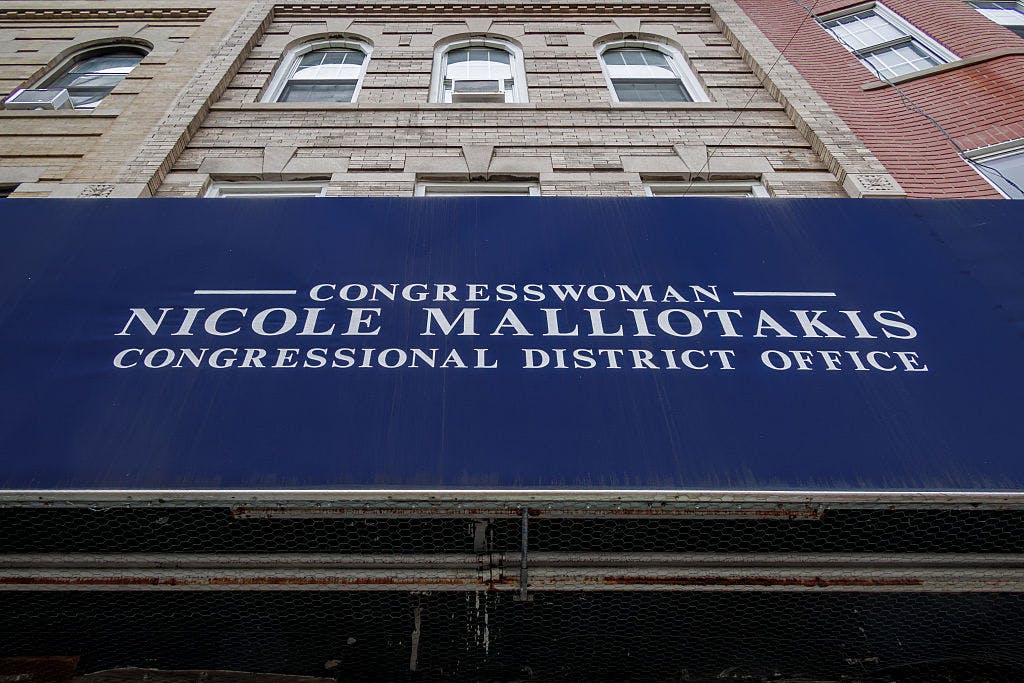
By granting a stay requested by Rep. Nicole Malliotakis and state election officials, the Court’s conservative majority sent a clear message: state courts cannot use the pretext of “vote dilution” to mandate simple racial discrimination or justify actions that violate the Equal Protection Clause.
The case centers on New York’s 11th Congressional District, encompassing Staten Island and southern Brooklyn. Activists attempted to use the state constitution to force the creation of a “crossover” district, specifically designed to ensure that minority voters — who comprise approximately 30% of Staten Island’s population — could elect their preferred candidates.
In January, Justice Jeffrey Pearlman of the New York Supreme Court, a trial-level court, sided with these activists. He prohibited the use of the existing congressional map and ordered the Independent Redistricting Commission to redraw the lines based on explicit racial targets. Critics of the order argued that it amounted to a race-based gerrymander targeting the only Republican representative in New York City, prioritizing identity politics over neutral districting.
Justice Samuel Alito cut through the legal jargon to identify the trial court’s order for what it was: a violation of the 14th Amendment. Alito made clear that a state court cannot authorize redistricting for the “express purpose” of producing race-based outcomes.
Citing its 2023 decision in Students for Fair Admissions, the Supreme Court reiterated that the government may only engage in race-based action under “extraordinary” circumstances, such as remediating specific, identified past discrimination. In granting the stay, the majority suggested that neither the lower court nor the challengers provided sufficient justification. As Alito noted: “A state law cannot authorize the violation of federal rights.”
The Supreme Court’s decision is good news for Republican leaders in states like Texas and Louisiana, where Democrats and civil rights groups have argued that the states must draw more “opportunity districts” to account for minority population growth.
By granting the stay, the Court signaled skepticism toward making special “crossover” districts to achieve race-based electoral outcomes. That reasoning could make it more difficult for groups to demand new maps based predominantly on racial demographics.
The Court also dealt with the Purcell principle, the doctrine cautioning against judicial changes to election rules too close to an election. Usually, judges aren’t supposed to change voting rules right before people vote, which could cause confusion.
Now, the Supreme Court is saying this “no-changes zone” starts much earlier — even four to eight months before the election. This acts like an emergency brake, stopping lower-court judges from forcing states to change their maps at the last minute. It keeps things stable and focuses on fair rules instead of meeting racial quotas.
This ruling is a win for those who believe the Constitution is colorblind. It stops what critics viewed as a partisan attempt to use race as a tool for political gain and ensures that New York’s 2026 elections proceed under established, legislatively enacted maps rather than experimental racial quotas.
What's Your Reaction?
 Like
0
Like
0
 Dislike
0
Dislike
0
 Love
0
Love
0
 Funny
0
Funny
0
 Wow
0
Wow
0
 Sad
0
Sad
0
 Angry
0
Angry
0

I am just an average American. My teen years were in the late 70s and I participated in all that that decade offered. Started working young, too young. Then I joined the Army before I graduated High School. I spent 25 years in, mostly in Infantry units. Since then I've worked in information technology positions all at small family owned companies. At this rate I'll never be a tech millionaire. When I was young I rode horses as much as I could. I do believe I should have been a cowboy. I'm getting in the saddle again by taking riding lessons and see where it goes.
Premium domains for sale











Comments (0)