

The Age of Reading Isn’t Over

Premium domains for sale
Freedom Is Back In Style
Not quite 2,300 years ago, but more like 17 years ago, the story goes, the executives of Barnes & Noble asked their engineers to build a device that could hold every book ever printed. The company, which had spent a century filling oak shelves one store at a time, envisioned a library small enough to slip into a coat pocket yet vast enough to safeguard the sum total of a reader’s collection. These files were stored on a bank of humming servers in New Jersey, a kind of reliquary modeled after the chain’s old flagship store on Fifth Avenue. A scanned first edition of “Moby-Dick” was said to be among the holdings.
Freedom Is Back
In Style
Premium domains for sale
Much of the Kindle reader panic has been done away with. But at one time, there was an outcry that the bookstore would die. That the sites of learning and information would soon be done away with. That public libraries would deteriorate, and children would ask their mothers on the street what these dilapidated, weather-worn buildings of old were. Maintaining the collection of books in your own library was an enormous expense, they said. Humidity, mice, and insects will slowly eat away at your books. Might as well just copy all your books onto an e-reader and burn all the rest of your paper books. Eventually, the challenges of running a bookstore became greater than the will to preserve it, and all bookstores and libraries on Earth disappeared.
Except that’s not what happened. Twenty years later, I am writing this in my own little personal library, with physical copies of books on my bookshelf and some lovely new independent and small bookstores in my area that I frequent — including some Barnes & Noble stores as well — the very epicenter of the e-reader epidemic. This is what the last reading-is-dying panic looked like, and it was wrong too.
And so Rose Horowitch is standing on the street corner with a cardboard sign that reads: “The End of Reading Is Here.” Yet another reading-is-dying panic essay. And I can’t help but roll my eyes and walk by. Because the Atlantic is saying the end of reading is near, but I am seeing the exact opposite. It just takes some looking.
I run a number of book-related YouTube channels, so it’s possible I am just insulated and living in my own little world where I don’t see the light of day and don’t think there’s a problem with reading. I actually see it as flourishing. I see people wanting to talk about books more often than they did when I was growing up. I see more people interested in book clubs and book analysis than ever before because of the decline in reading. It’s just going to take a bit of time for the rest of the world to catch up.
I know this might sound strange, but as fewer and fewer people read, it will become increasingly important to read. This is human nature. And the one thing, besides wisdom and patience, that Horowitch lacks is the ability to understand: that it is precisely the human spirit to do things that are unpopular. This is why I got off Facebook during my Junior year. Because my mom joined it.
When dating apps became all the rage among millennials, Gen A went completely off them.
Vinyl has posted 19 straight years of growth and crossed $1 billion in U.S. revenue in 2025, in the middle of the streaming era, not despite a lag in it. Half of new vinyl buyers are 18-34.
Flip phones and “dumbphones” are having a real moment, too, among the exact generation that grew up with a smartphone in hand: brick-phone purchases among 18- 24-year-olds jumped 148% from 2021 to 2024, and #BringBackFlipPhones has 59.8 million views on TikTok.
Film and instant photography are back in a generation that has a professional camera in every pocket: Gen Z instant-camera use is up 45%, and 2024 was called “film’s best year in decades” by industry press.
The social platforms themselves aren’t immune. Horowitch writes that people don’t know how to read and are replacing books with social media and endless scrolling. But 52% of Gen Z tried to quit social media in 2025, versus 33% of the general population, with mental health cited as the top reason.
CNBC has dubbed the whole cluster (flip phones, vinyl, logging off) a “quiet revolution.”
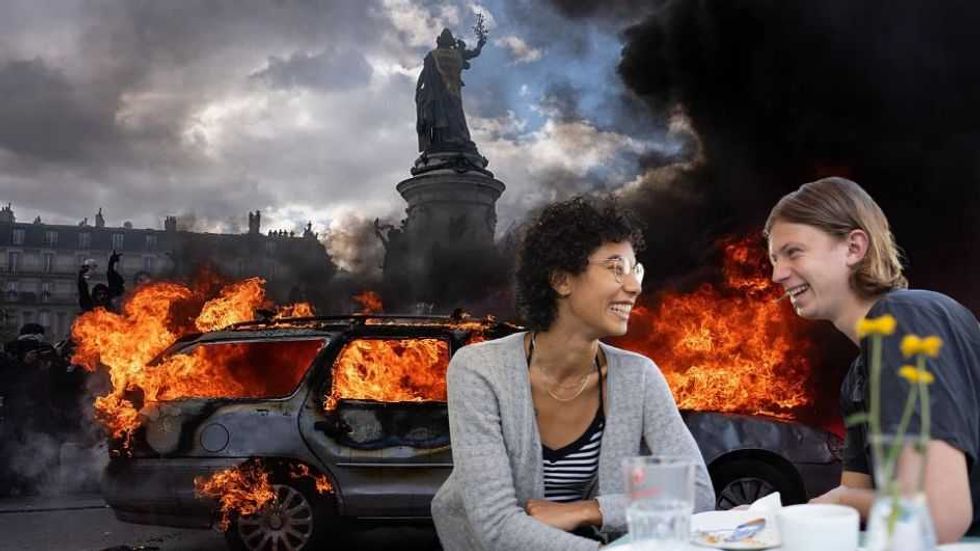
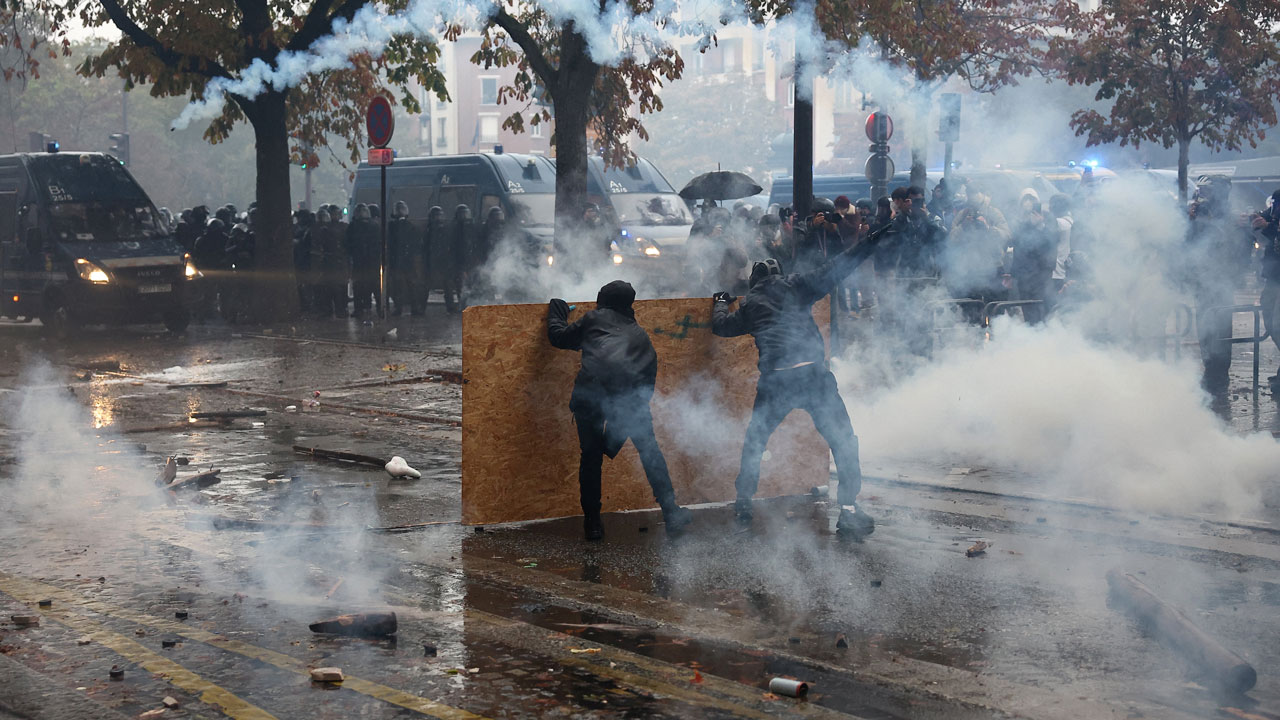
And this is the thing with revolutions. They are invisible at first. The French Revolution didn’t begin with people yelling on street corners to join the movement. They didn’t publish articles in the papers. It was a growing dissatisfaction with the way things were and a pressing on to a better way for these people (not sure the guillotine was the better way, but I digress).
I have always found that when sensationalism exists, there are people on the sidelines just waiting. There are people biding their time and just reading in spite of the numbers. When the very same people who are addicted to scrolling social media finally get off the diet of junk food, they’ll need to replace it with something good. And the replacement will be the rise of books. Mark my words: in a few months to years, you will see new articles popping up about book clubs’ resurgence, the rise of the classics, and how Gen Z just cannot stop reading “The Count of Monte Cristo” or “Anna Karenina.”
Let’s not just sit back and romanticize the past and be Luddites. We praise the kinds of writers like Dumas and Dickens and Dostoevsky, but they were writing serialized content and were paid by the word. Yes, sentences are getting shorter, not because our attention spans are dropping, but because writers are getting better. This is the kind of crucible that will make writers crack their knuckles and learn how to capture an audience even better. Their writing will sharpen because their competition isn’t just other novels, but now it’s the world of social media.
Writing is still a relatively young form of storytelling. We have had thousands of years to master verbal storytelling, but writing is much different. The last few hundred years have been some of the only times when the mass audience has had access to write stories. And so we’re learning. And I don’t think I would commend anyone in a writing class to consistently write the long sentences of a Dickens. He is a brilliant storyteller, no doubt, and a brilliant writer, but some of his sentences are lackluster and just laborious. And he made it so because he wanted to get more money.
The same thing with Dumas. Although I am reading that now and I adore it, there are some things in there that just don’t need to be there and distract from the story. I am a purist and don’t love abridged versions of anything, but abridged versions are there for a reason: they’re likely better-written stories. This is kind of like “The Lord of the Rings” extended edition. I love it much more than the theatrical cut, but the theatrical cut is objectively a better-paced story and a much better film.
So maybe I’m not as insulated as I am worried. The work that I am doing and what I am seeing with the reading world counters the idea that Americans cannot swallow words and sentences…that they are losing the ability to think deeply about works of literature. The majority of my audience across my channels is under 35. And about 20% of them are between 13 and 24. And all I do on this channel is analyze literature and think deeply about books that I love, like The Lord of the Rings.
The older a child gets, the less likely they are to read. And this was true of me as well. I didn’t really read all that much until a passionate English teacher put “To Kill a Mockingbird” in my hands. And I fell in love with a good story. And then I read more and more because I found that while reading, I felt better. It was a break from everything else, and it felt like it nourished my mind. And that isn’t going away. As reading disappears, it will start becoming cool again, and you’ll see new generations start to read and consume books and become better writers and craft more brilliant stories.
Reading panics happen all the time.
And so let Rose Horowitch keep her sign up on the corner. The panic will run its course, the way it always does — the paperback, the television, the Nook, and now this. Because when the dust settles, and the feeds have moved on to whatever comes after doomscrolling, I already know where I’ll be: in my comfy chair, sipping tea, working through my half-destroyed copy of “The Return of the King” for the 17th time, enjoying one of the greatest stories ever told. The rest of the world will catch up soon.
***
Jonathan Minnema is the founder of First Timers (https://youtube.com/@firsttimereaders) and was previously the managing editor of Fathom Magazine.
More from this network:
Domains for Sale · GOTPeople.org · TheDSAPlatform · The Truth About Socialism
What's Your Reaction?
 Like
0
Like
0
 Dislike
0
Dislike
0
 Love
0
Love
0
 Funny
0
Funny
0
 Wow
0
Wow
0
 Sad
0
Sad
0
 Angry
0
Angry
0

I am just an average American. My teen years were in the late 70s and I participated in all that that decade offered. Started working young, too young. Then I joined the Army before I graduated High School. I spent 25 years in, mostly in Infantry units. Since then I've worked in information technology positions all at small family owned companies. At this rate I'll never be a tech millionaire. When I was young I rode horses as much as I could. I do believe I should have been a cowboy. I'm getting in the saddle again by taking riding lessons and see where it goes.
Premium domains for sale








Comments (0)