

The Bill of Rights is the antidote to soft despotism
Premium domains for sale
Freedom Is Back In Style
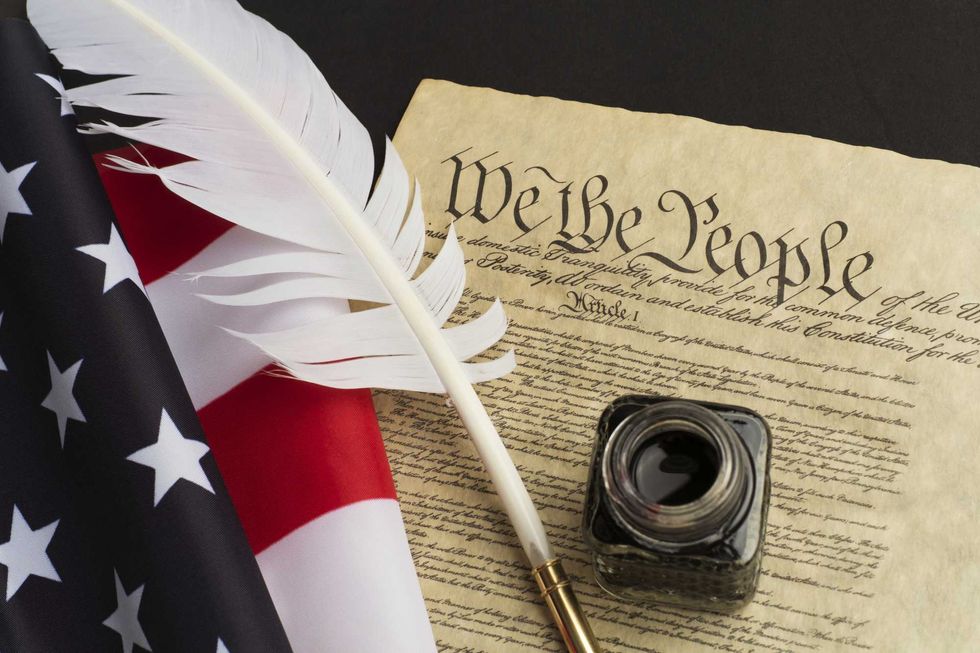
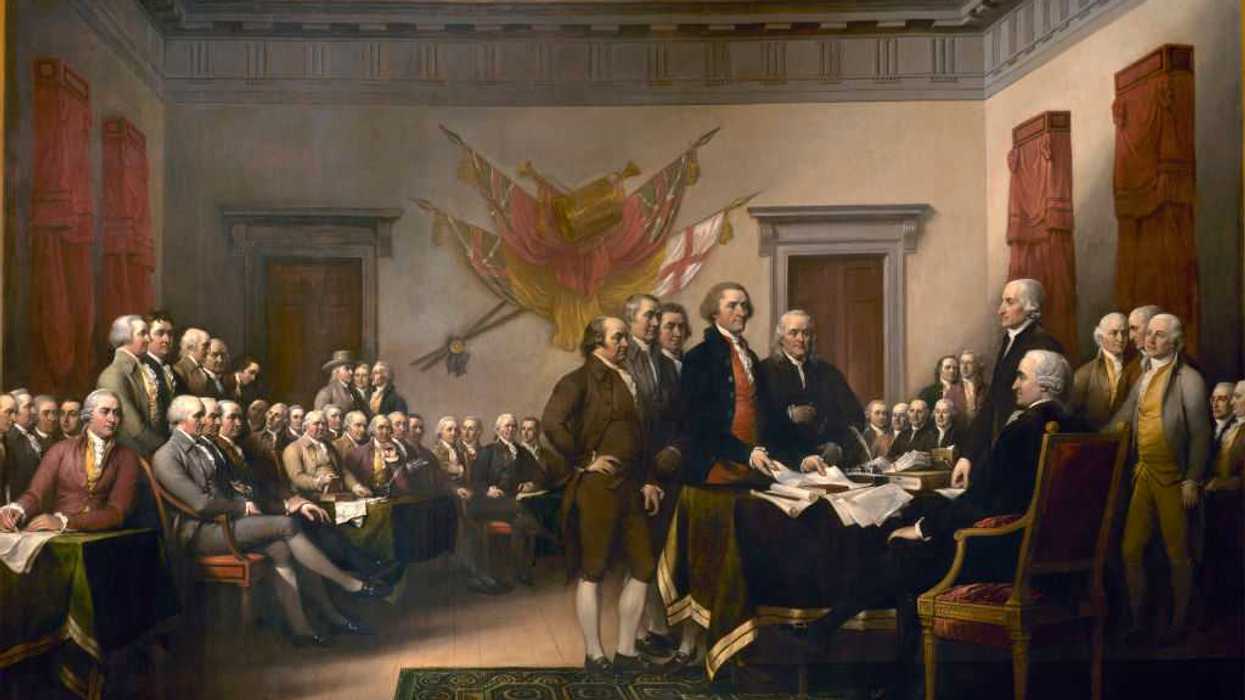
As the nation approaches what looks like a weak and divided commemoration of the 250th anniversary of the Declaration of Independence, another milestone has arrived with little acclaim. Today marks the 239th anniversary of the introduction of the Bill of Rights in the U.S. House of Representatives.
Freedom Is Back
In Style
Premium domains for sale
It should be a day of celebration every year. The Bill of Rights is one of the most important documents in human history. James Madison, one of the nation’s central founders and a future two-term president, introduced it in Congress on June 8, 1787.
We have less than half a decade to avert a fiscal collapse of the federal government and the social and economic destruction that would follow.
The central lesson of the Bill of Rights lies in Madison’s purpose: to bind every level of government to one overriding mission — protecting individual rights against majority tyranny.
The Bill of Rights Institute summarizes Madison’s concern well. Before the Constitutional Convention, Madison wrote “Vices of the Political System,” an essay detailing the flaws of the Articles of Confederation. One of the chief defects, in his view, was that tyrannical majorities in the states passed unjust laws violating the rights of minorities. He had seen the oppression of religious dissenters in Virginia and became the leading advocate for the Virginia Statute for Religious Freedom.
At the Constitutional Convention, Madison argued for separation of powers, checks and balances, bicameralism, and federalism as safeguards for liberty. But he lost one key feature of his plan: a national veto over state laws meant to prevent majority tyranny in the states.
Today, we are light-years away from Madison’s vision and from the founders’ plan to protect it. Neither Madison nor anyone else could force the American people and their governments to live within the letter and spirit of the Constitution and the common law. The founders could only encode their vision into the Constitution, laws, and judicial precedents, then hope later generations would preserve it.
They often have not.
In 1840, only a half-century into the American experiment, Alexis de Tocqueville anticipated the rise of “soft despotism” in the United States. He saw that the passion for equality could erode devotion to natural law, natural rights, and self-government.
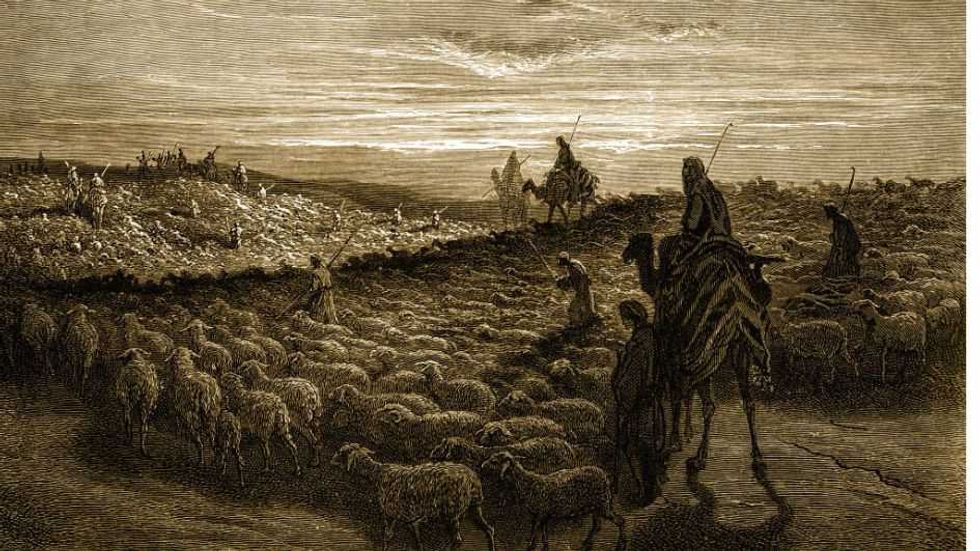
Tocqueville warned of a sovereign power that takes each individual “into its powerful hands” and covers society with “a network of small, complicated, minute, and uniform rules.” Such power, he wrote, “does not tyrannize” but “hinders, represses, enervates, extinguishes,” and finally reduces the nation to “a flock of timid and industrious animals, of which the government is the shepherd.”
He also warned that this mild, regulated servitude could exist “in the very shadow of the sovereignty of the people.”
That is the danger America now faces.
Tocqueville foresaw that citizens might voluntarily give up sovereignty in exchange for temporary economic stability and government largesse extracted from their neighbors. In doing so, they would surrender the things that made the nation great: self-rule, protection against majority coercion, voluntary association, free enterprise, and ultimately each person’s dignity as a unique human being.
RELATED: The timeless truths behind the Declaration of Independence
 Fine Art Images/Heritage Images/Getty Images
Restoring respect for the Bill of Rights and the founders’ vision is essential if we hope to rescue the United States from the soft despotism into which the American experiment has devolved — and from the harder totalitarianism toward which it now hurtles.
Documents and laws alone will not achieve that. In our present decline, the only way to reverse the slide is to remove the temptation that feeds it: the ability of majorities at all levels of government to vote themselves ownership over other people’s property, liberties, and lives.
In an ironic turn, the United States may now be approaching a resolution of sorts: the collapse of the national government’s ability to pay for everything Congress, presidents, and courts have promised Americans over the past century and a half.
Entitlements such as Social Security, food stamps, Medicaid, Medicare, federal housing subsidies, and other national bribes have become insupportable. They now threaten a debt spiral as high interest rates and inflation weaken the economy and erode the government’s tax base.
The federal debt has already risen above 100% of gross domestic product — the nation’s entire annual economic output. More ominously, the debt is accelerating. The total now sits just short of $40 trillion. It is projected to rise to $55 trillion by 2031, an increase of more than one-third in five years. By 2036, it is projected to reach $77 trillion, nearly doubling in a decade.
Meanwhile, federal and state governments have steadily eroded individual rights, freedom of association, free enterprise, election integrity, and countless other safeguards of liberty.
This is the outcome of majority tyranny. We have less than half a decade to avert a fiscal collapse of the federal government and the social and economic destruction that would follow. What would arise from such a catastrophe is impossible to know.
History offers little comfort. The chances are strong that whatever replaced our flawed yet hardy constitutional system would not resemble the order our forefathers established in the 1700s. A nation founded on individual rights and self-government could vanish from the earth.
That is what Americans must confront as we approach another election season and another referendum on our founding values.
More from this network:
Domains for Sale · GOTPeople.org · TheDSAPlatform · The Truth About Socialism
What's Your Reaction?
 Like
0
Like
0
 Dislike
0
Dislike
0
 Love
0
Love
0
 Funny
0
Funny
0
 Wow
0
Wow
0
 Sad
0
Sad
0
 Angry
0
Angry
0

I am just an average American. My teen years were in the late 70s and I participated in all that that decade offered. Started working young, too young. Then I joined the Army before I graduated High School. I spent 25 years in, mostly in Infantry units. Since then I've worked in information technology positions all at small family owned companies. At this rate I'll never be a tech millionaire. When I was young I rode horses as much as I could. I do believe I should have been a cowboy. I'm getting in the saddle again by taking riding lessons and see where it goes.
Premium domains for sale























Comments (0)