

The Case for Resolving Birthright Citizenship in Trump’s Favor
Premium domains for sale
Freedom Is Back In Style
During the 2024 campaign, Donald Trump repeatedly promised to “end birthright citizenship” for children born in the U.S. to non-citizen parents.
Freedom Is Back
In Style
Premium domains for sale
After winning by an electoral landslide, on Jan. 20, 2025, President Trump issued his executive order to fulfill that promise. The American Civil Liberties Union promptly filed a lawsuit challenging President Trump’s executive order.
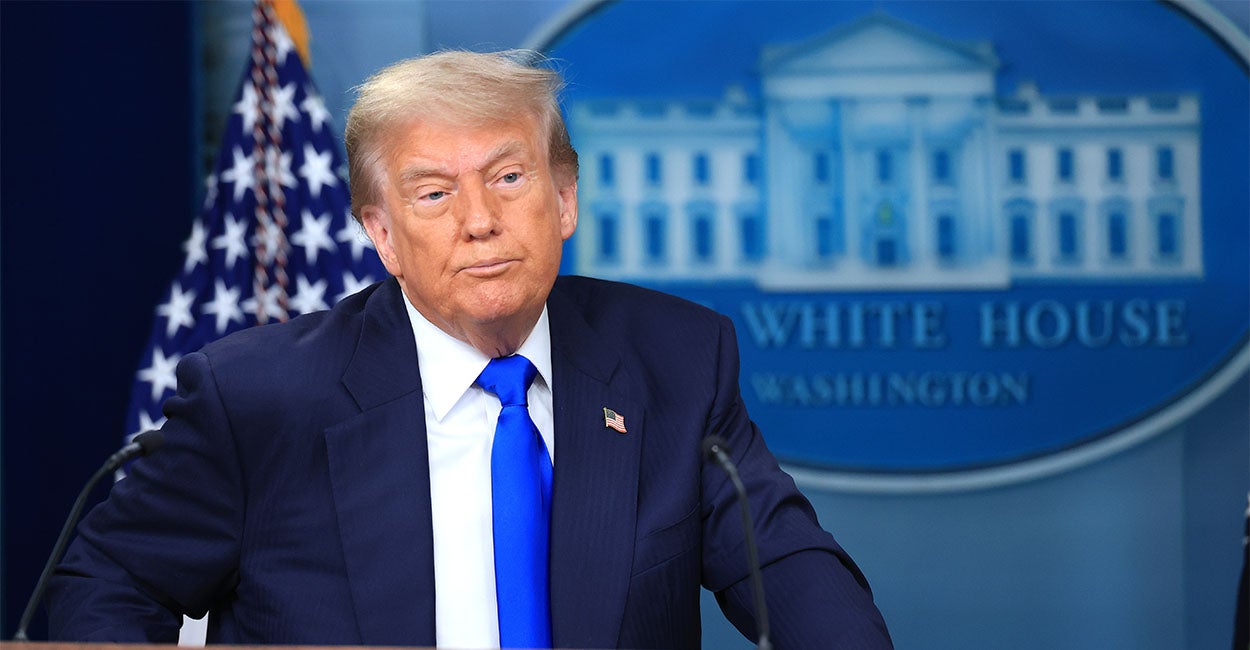
That executive order was the subject of oral arguments in the Supreme Court on April 1, 2026. President Trump attended in person.
For reasons explained below, the court should sustain President Trump’s executive order because the people elected President Trump, and any ambiguities in the 14th Amendment should be construed in favor of the people—which is different than construing the amendment in favor of President Trump.
The purpose of President Trump’s executive order is clearly stated: “The privilege of United States citizenship is a priceless and profound gift. The Fourteenth Amendment states: ‘All persons born or naturalized in the United States, and subject to the jurisdiction thereof, are citizens of the United States and of the State wherein they reside.’ That provision rightly repudiated the Supreme Court of the United States’s shameful decision in Dred Scott v. Sandford, 60 U.S. (19 How.) 393 (1857), which misinterpreted the Constitution as permanently excluding people of African descent from eligibility for United States citizenship solely based on their race.”
President Trump’s executive order also acknowledged that, “The Fourteenth Amendment has always excluded from birthright citizenship persons who were born in the United States but not ‘subject to the jurisdiction thereof.’”
On April 1, 2026, the lawyer representing the American Civil Liberties Union in its challenge to President Trump’s executive order relied primarily on the 1898 Supreme Court ruling in United States v. Wong Kim Ark for her arguments in favor of birthright citizenship for the children of parents not in the U.S. legally. She suggested that this “landmark decision” established that children born on U.S. soil are citizens regardless of their parents’ status.
As the parents of the child at issue in Wong Kim Ark were in the U.S. legally, to suggest that this “landmark decision” established birthright citizenship for the children of parents not legally allowed to reside in the United States defies logic.
The issue argued in the Supreme Court on April 1, 2026, centered around ambiguities in the phrase in the 14th Amendment, “All persons born or naturalized in the United States, and subject to the jurisdiction thereof.”
Even though the final Section of the 14th Amendment, Section 5, grants Congress “the power to enforce, by appropriate legislation,” the 14th Amendment, Congress has never enacted legislation clarifying the ambiguities in the phrase, “All persons born or naturalized in the United States, and subject to the jurisdiction thereof.”
When dealing with ambiguities in the 14th Amendment, unless or until Congress exercises its powers under Section 5 of the 14th Amendment to clarify ambiguities by legislative enforcement, the Supreme Court should construe the ambiguities in favor of the people, who re-elected President Trump.
Thirty years ago this month, the American Legislative Exchange Council published my article, “The Forgotten Preamble: Introduction to the Bill of Rights Gives More Meaning to the Tenth Amendment.” In it, I pointed out how the Preamble of the 1789 Bill of Rights explains the purpose of the Bill of Rights as “in order to prevent misconstructions or abuses of its power,” i.e., abuses of powers delegated by our Constitution to our federal government. In this light, I suggested:
Whenever federal courts and agencies are forced to “legislate” by construing legal ambiguities, they should utilize the final Article of the Bill of Rights – “The powers not delegated to the United States by the Constitution, nor prohibited by it to the States, are reserved to the States respectively, or to the people” – as an interpretive rule to construe ambiguities against the proffering party, i.e., against Congress (See United States v. Heth, 1806.). … [A] Tenth Amendment rule of construction would provide a practical safeguard against federal encroachments on powers that neither the states nor the people have ever delegated to the national government.
Justice Neil Gorsuch explained in his June 28, 2024, concurring opinion in Loper Bright Enterprises v. Raimondo, which struck down decades of “Chevron deference” to unelected government bureaucrats: “Chevron deference sits in tension with many traditional legal presumptions and interpretive principles, representing nearly the inverse of … contra preferentem.”
President Trump repeatedly promised to “end birthright citizenship” for children born in the U.S. to non-citizen parents, and then did just that on the first day of his second term. Now, the Supreme Court should resolve ambiguities in the 14th Amendment using contra preferentem and thereby avoid frustrating the will of the people.
It’s our government after all.
The post The Case for Resolving Birthright Citizenship in Trump’s Favor appeared first on The Daily Signal.
More from this network:
Domains for Sale · GOTPeople.org · TheDSAPlatform · The Truth About Socialism
What's Your Reaction?
 Like
0
Like
0
 Dislike
0
Dislike
0
 Love
0
Love
0
 Funny
0
Funny
0
 Wow
0
Wow
0
 Sad
0
Sad
0
 Angry
0
Angry
0

I am just an average American. My teen years were in the late 70s and I participated in all that that decade offered. Started working young, too young. Then I joined the Army before I graduated High School. I spent 25 years in, mostly in Infantry units. Since then I've worked in information technology positions all at small family owned companies. At this rate I'll never be a tech millionaire. When I was young I rode horses as much as I could. I do believe I should have been a cowboy. I'm getting in the saddle again by taking riding lessons and see where it goes.
Premium domains for sale











Comments (0)