

The Cities Hiding Homelessness For The World Cup
Premium domains for sale
Freedom Is Back In Style
The final FIFA World Cup game hosted in Seattle ended in the disappointing loss of the United States to Belgium. But for Seattle, a city so overcome by drug addiction, mental illness, and street-level homelessness, the weeks-long event was a smashing success.
Freedom Is Back
In Style
Premium domains for sale
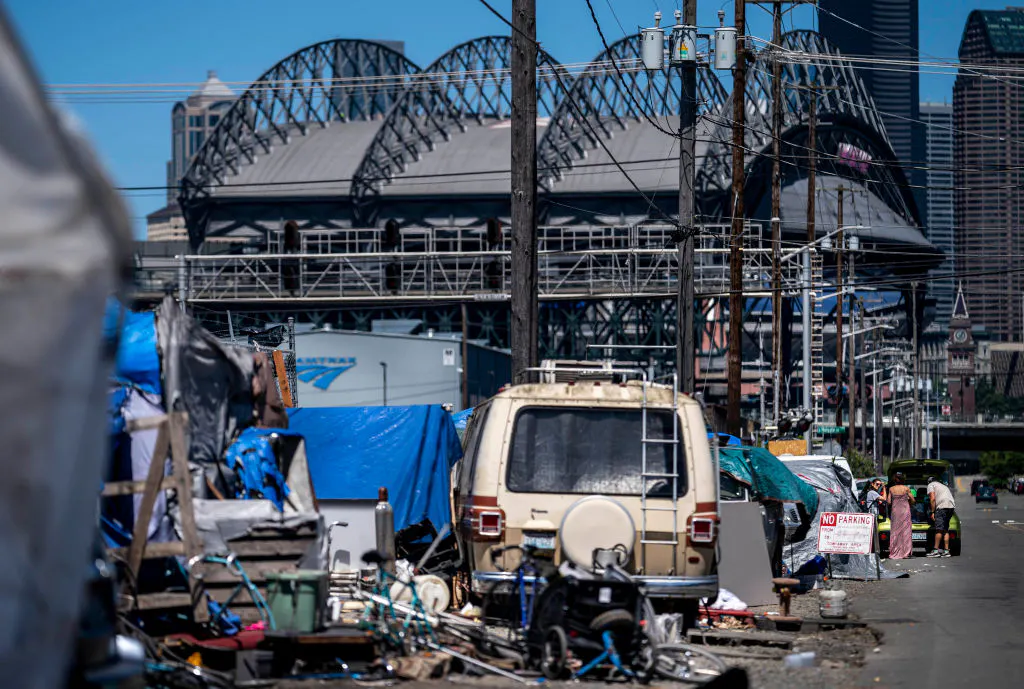
Downtown sparkled as it welcomed visitors from around the world for the six games it hosted at Lumen Field, rebranded Seattle Stadium for the tournament. In addition to exciting games, soccer fans enjoyed a city with noticeably cleaner streets and few visible signs of homelessness, drug addiction, and mental illness that are familiar to residents.
But this is not what long-term success looks like.
Mayor Katie Wilson and her team did not clean up the city. They simply moved the problem elsewhere, like a child shoving his toys under the bed when told to clean his room.
Under Wilson’s direction, the homeless were swept out of downtown and pushed into surrounding neighborhoods and minority communities already struggling with crime and disorder.
Journalist Jonathan Choe regularly reports on the plight of Seattle’s Chinatown-International District, an Asian American community overwhelmed by open-air drug use and stolen-goods markets. Here, many businesses are boarded up, and those that have survived are quickly losing money. Merchants report ongoing theft and crime. Parks meant for children and families are instead filled with drug users and paraphernalia. Residents have pleaded with city officials for help, but there has been little response. Choe calls it “the city’s human dumping ground.”
Seattle is not the first to engage in these deceptive city-cleaning tactics. Hiding the homeless is a common occurrence in cities across the nation when they host large events or important national and international figures. The Associated Press noted such instances in New Orleans ahead of the 2025 Super Bowl, Chicago ahead of the 2024 Democratic National Convention, and Atlanta ahead of the 1996 Olympics. The most notorious might be the cleanup of San Francisco in preparation for Chinese dictator Xi Jinping.
These cities appear more concerned with making a good impression on visiting tourists, dignitaries, and soccer fans than with the experiences of residents who live with these conditions year-round.
Those who live and work in downtown Seattle know the reality. Daily commutes often involve navigating not only traffic, but discarded needles, human waste, and individuals who shout, scream, and curse at random. The Emerald City has the third-highest number of individuals experiencing homelessness in the nation, outranked only by Los Angeles and New York City. Despite the city spending millions over the years, the crisis has only worsened.
Seattle is like this because its leaders allow it. One homeless man explained that he left his home in Whatcom County, two hours north of Seattle, because the residents there wouldn’t tolerate his lifestyle. He came to Seattle because, in his words, he and his friends can “live how we want to live.”
Under the faulty belief that housing is the solution for this crisis, Seattle and many other cities have poured millions of taxpayer dollars into housing projects that often fail to materialize. For instance, Wilson promised 500 new shelter units ahead of the FIFA World Cup. She delivered 75 at a cost of $3.95 million — and those units appeared to remain empty 24 hours before the first game. Not a promising start for her larger campaign promise to open 4,000 shelter beds during her first term as mayor.
Even when they finally open, these projects fail to meaningfully change lives. Addicts continue to use illicit drugs, the mentally ill go untreated, and many end up back on the streets. Some die.
Homelessness is not an economic problem. The people living on our streets are not primarily suffering from a lack of housing, but from addiction, untreated mental illness, and broken relationships. This requires a different response than just housing; they need detox, treatment, and help restoring their lives. Hopefully, recent federal reforms will encourage cities in a better direction.
When the World Cup ends, and the visitors return to their home cities, states, and countries, the homeless who were pushed to the outskirts will return, still addicted, still mentally ill, still desperately in need of help. Until these cities take the needs of these individuals seriously and enforce the laws against prostitution, theft, and violence, the homelessness crisis will continue to grow.
The best way to showcase our country’s cities to the world is not to stage a clean downtown for a few weeks. It is to create clean, safe, and thriving cities for their own residents every day.
***
Caitlin Cory writes about homelessness at Discovery Institute. She has been published in The Federalist and the Puget Sound Business Journal. A native of the Pacific Northwest, she now lives in Maryland.
More from this network:
Domains for Sale · GOTPeople.org · TheDSAPlatform · The Truth About Socialism
What's Your Reaction?
 Like
0
Like
0
 Dislike
0
Dislike
0
 Love
0
Love
0
 Funny
0
Funny
0
 Wow
0
Wow
0
 Sad
0
Sad
0
 Angry
0
Angry
0

I am just an average American. My teen years were in the late 70s and I participated in all that that decade offered. Started working young, too young. Then I joined the Army before I graduated High School. I spent 25 years in, mostly in Infantry units. Since then I've worked in information technology positions all at small family owned companies. At this rate I'll never be a tech millionaire. When I was young I rode horses as much as I could. I do believe I should have been a cowboy. I'm getting in the saddle again by taking riding lessons and see where it goes.
Premium domains for sale











Comments (0)