

The Midterms, JD Vance, and the Working-Class Realignment
Premium domains for sale
Freedom Is Back In Style
In 2024, voters without a college degree broke for Trump 56 to 42. On Nov. 3, Americans will learn whether the working-class voters who pulled the lever for President Donald Trump are staying with the Republican Party.
Freedom Is Back
In Style
Premium domains for sale
At least since President Franklin Roosevelt and the New Deal, most working-class voters have felt kinship with the Democratic Party. The Democrats were supposedly the party aligned with manufacturing and labor unions, the party of higher wages for workers, affordable housing, and a social safety net.
The Republicans were largely viewed as the party that put industry leaders over workers and the GDP over the real wages of the average worker. Put aside the fact that free markets supporting entrepreneurship and innovation tend to lift all boats and progressive and socialist policies tend to destroy more than they build. The perception has had little to do with actual policy and a lot to do with vibes. The vibe for the last century has been that Democrats are for the working man.
There has been a recent “vibe shift” taking place in America. Trump tapped into something: the feeling of ordinary Americans that our nation’s institutions no longer represent their interests.
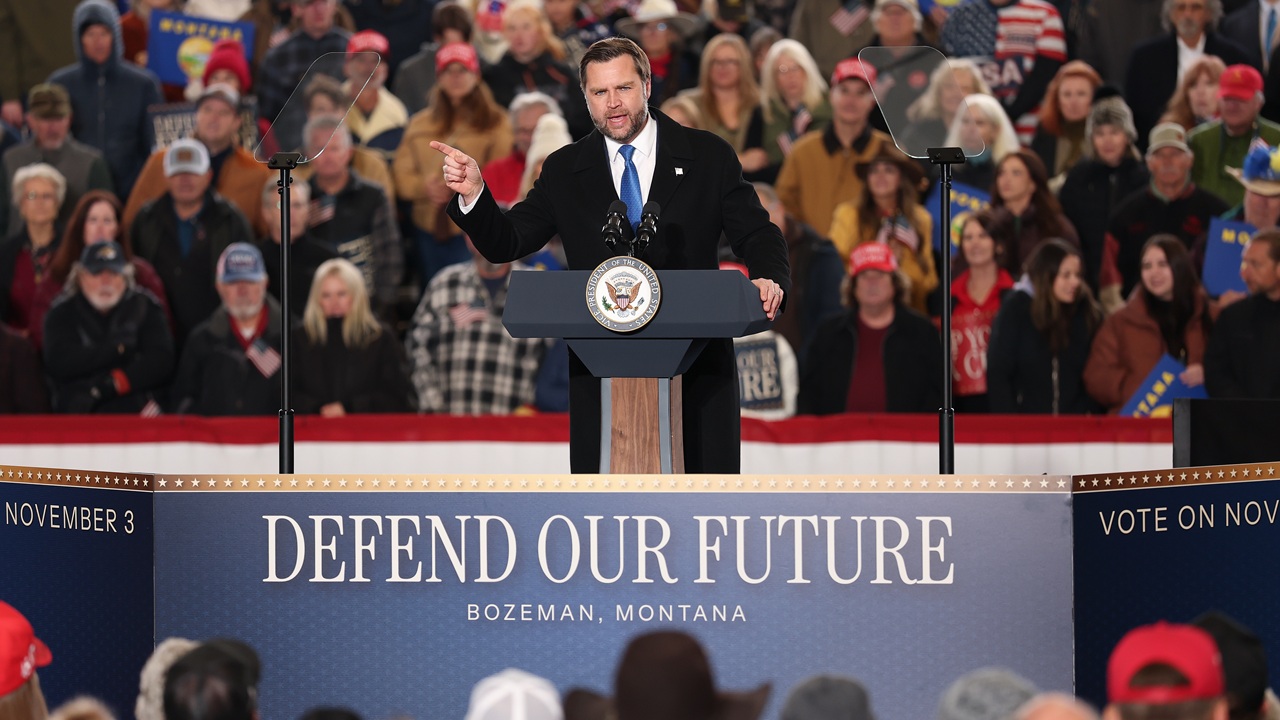
The question facing the Republican Party is whether or not the shift will reverse itself. One prominent Republican hoping to ensure it doesn’t is Vice President JD Vance. Vance has the chance to turn the shift into a realigned coalition where the Republican Party becomes the party of the American working class for generations to come.
As I argue in my book, “JD Vance and the Future of the Republican Party,” Vance’s political project is about reorienting the Republican Party around the interests of the American family and the American worker. But this is not simply messaging; he is putting it into practice.
Vance has long been a supporter of expanding the child tax credit. Some reports have also indicated that he has advocated for a proposal to expand eligibility for the Child Care and Development Fund (the federal day care subsidy) to married couples with a stay-at-home parent, rather than limiting it to parents who work and outsource care of their children to day care. Eligible families could receive up to $9,000 per child per year.
Vance sees that America needs families who have and raise children; he seems willing to experiment with policies that might encourage people to make this happen.
Some conservatives object to the stay-at-home subsidy, arguing that it could bring about unintended consequences, including audits, benefit cliffs, and disincentives to work.
Vance’s own view, from Fox News in August: “You don’t stop socialism by throwing slogans at people about the free market. As much as I love the free market, you stop socialism by making people’s lives better.”
Vance’s rhetoric on immigration is centered, not primarily on disfavoring outsider groups, but on ensuring that American workers have access to well-paying, meaningful work.
In September he said the H-1B visa “should not exist to replace American workers with low-wage foreigners.” This worker-centered messaging is key.
Immigration hawkishness focused on preserving American culture alone plays well with the MAGA base but makes other parts of the Republican coalition nervous. A focus on ensuring that American citizens have jobs that pay a living wage before inviting the rest of the world into our country should be the way to unite the party around this issue.
Tariff policy needs restructured messaging, too: The purpose of most of our tariffs is a long game to reindustrialize the United States by keeping out unfair competition from countries that pay slave wages.
Vance recognizes that homeownership is a key part of attaining the American Dream. He has publicly worried that foreign nationals and large investment firms purchasing American homes is making homeownership harder for ordinary Americans. The ROAD to Housing Act, which was passed in July and goes into effect in January, limits home purchases by for-profit investors that own 350 or more homes.
These are not scattered proposals. Vance has a vision for the Republican Party as the party of the ordinary worker and the ordinary family.
If working-class Americans continue to see Democrats as the party of the college-educated elite and Republicans as the party that wants to ensure ordinary Americans have access to homes, good jobs, and strong communities, that can’t help but cause a seismic shift in the American political landscape.
The policies mentioned here are not a guaranteed recipe for success; they actually have to work. American voters must see good jobs reshored, housing prices come down, and raising a family become more affordable. But Vance is making an important play for the future of the Republican Party.
If these policies start to make life better for working-class Americans, we could see a political realignment that permanently moves working-class Americans from the party of FDR to the party of JD Vance. That could transform American electoral politics for decades to come.
We publish a variety of perspectives. Nothing written here is to be construed as representing the views of the Daily Signal.
What's Your Reaction?
 Like
0
 Dislike
0
 Love
0
 Funny
0
 Wow
0
 Sad
0
 Angry
0

I am just an average American. My teen years were in the late 70s and I participated in all that that decade offered. Started working young, too young. Then I joined the Army before I graduated High School. I spent 25 years in, mostly in Infantry units. Since then I've worked in information technology positions all at small family owned companies. At this rate I'll never be a tech millionaire. When I was young I rode horses as much as I could. I do believe I should have been a cowboy. I'm getting in the saddle again by taking riding lessons and see where it goes.
Premium domains for sale

















Comments (0)