

The Old-School Rule That Might Fix More Than Just How Kids Dress
Premium domains for sale
Freedom Is Back In Style
This article is part of Upstream, The Daily Wire’s new home for culture and lifestyle. Real human insight and human stories — from our featured writers to you.
Freedom Is Back
In Style
Premium domains for sale
Freedom Is Back
In Style
Premium domains for sale
***
When Transportation Secretary Sean Duffy urged travelers to return to more respectful attire, he was met with vicious backlash. People called his PSA racist, classist, and prudish despite him asking for what would have been considered the bare minimum just decades ago. Similarly, when the Tampa International Airport banned pajamas, outraged fliers vowed to never visit Tampa again. These measures aren’t just a push for aesthetic decorum but are active efforts to help mitigate the 400% increase of “in-flight outbursts” Duffy cited.
People can cling to their right to pajamas all they want, but the way people dress is one of the best indicators of social respect. As a recent college graduate, I’ve seen firsthand how dressing well can transform an academic experience.
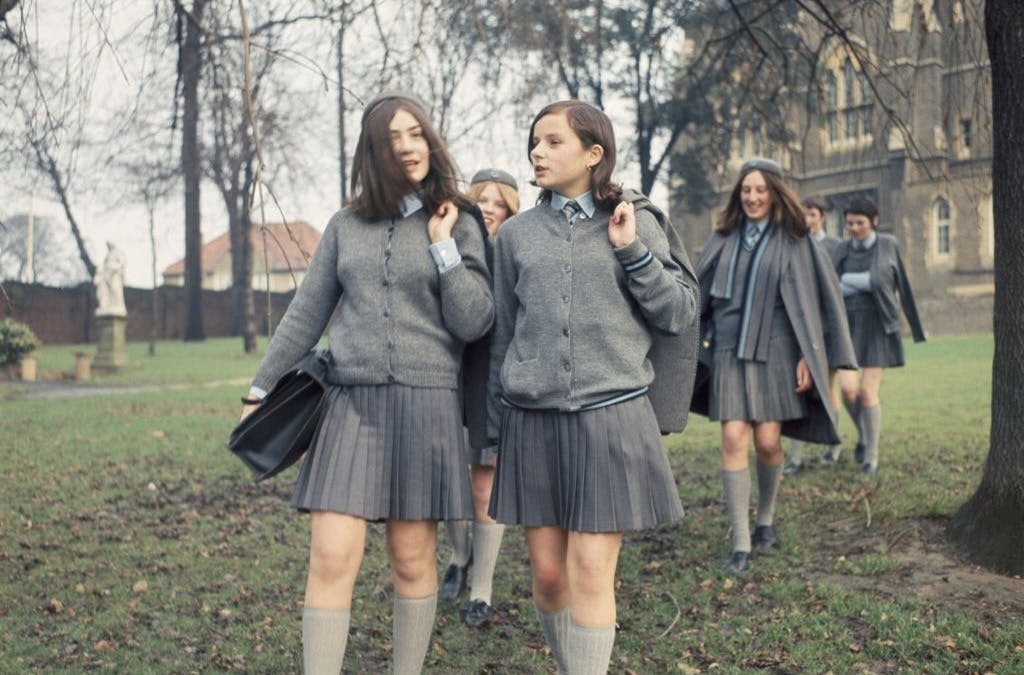
When I was four, the greatest dread in my life was getting ready for school in the morning. I attended a classical Christian academy, whose strict dress code applied even to the preschool students. The boys were expected to wear crisp white shirts and black trousers, while we girls wore red tartan dresses. Over the years, I grew accustomed to wearing a uniform. They were old-fashioned, but they ensured a standard of neatness and modesty throughout the student body. Most of the students complained about wanting to wear more casual clothing, but complaints were quickly dismissed as we redirected our attention on learning Latin or reading great books.
My first day at a public high school was shocking for several reasons. I was stunned to see kids vaping, cursing, and shoving one another around. After years attending private schools, it intrigued my rebellious teenage attitude. Still, nothing could have prepared me for the way people were dressed: Some boys wore pajama pants and crude t-shirts, some girls donned crop tops and mini shorts that wouldn’t be appropriate at any age, and a majority wore nothing but sweatpants and sweatshirts. The student body’s appearance fit the school system’s low expectations.
After four years of public high school, I thought that a Christian college would have a higher standard for personal grooming. The day before my classes began, I picked out a cute dress to wear. I stuck out like a sore thumb. Everyone was wearing athletic shirts, sweatpants, and sweatshirts. The students walked around the hallways with headphones on and their eyes glazed over. During class periods, they fiddled with their laptops, didn’t take notes, and often kept at least one of their AirPods in. Their clothing matched their attitude. The students were late to class, rarely finished assignments on time, and hardly ever engaged in thoughtful conversations. Even in a Christian, collegiate setting, there was a total lack of respect for social order.
I quickly realized that I needed to find an institution where intellectual growth was the actual priority. Transferring schools was my only hope. When I toured Hillsdale College, I felt like I stepped back in time. Every corner of the campus looked like a Norman Rockwell painting brought to life. Professors sat underneath statues in three-piece suits. The young men surrounding them dressed the same as they smoked pipes and talked philosophy. Young women wearing sundresses would set up picnic blankets in the sun to read Homer. Even the athletes and artists had time to change out of soiled clothes and into something fresh and neat for seminars. There is no official dress code, but the young people at Hillsdale were anxious to learn. Their passion was reflected in their appearance.
Our culture often tries to disconnect people from their physical bodies. This is why movements like transgenderism have been able to take hold of the culture: the belief that your body and your personhood will not necessarily align. However, our bodies and our personal grooming habits are often good representations of our souls. Although there can be exceptions, the way we look can be a reliable measure of how we feel about both ourselves and the world around us.
Dressing for comfort is convenient. In the age of social media, DoorDash, and Netflix, convenience often becomes our priority. We want things fast and easy; we want to throw on a hoodie and joggers and avoid making eye contact with anyone at the risk of engaging in small talk. This is not the behavior of a healthy society, but of a utilitarian regime. Frank Sinatra, who had a strict standard of rules for style, used to instruct people, “If black tie is optional, wear it.”
Dressing well requires both time and intention. It is something that we don’t do for ourselves, but out of respect for those around us. It is a way to express our gratitude for the social order. In return, good attire gives its wearers esteem and confidence. When students wore suits and skirts to class, as opposed to athleisure, their demeanor changed. They walked, talked, and thought confidently. They had deeper relationships with their fellow students, their professors, and even the custodial staff. They were not simply trying to get a degree but were deeply invested in growing into fully fleshed-out individuals.
Researchers often refer to this as “enclothed cognition,” which shows how one’s clothing directly affects their psychological processes. In a test, researchers split 58 science students into two groups. One of the groups performed a series of tests while wearing white lab coats, which are typically associated with intelligence and status. The other group was allowed to wear their own clothes. The group wearing lab coats did significantly better, making “half as many errors.”
We can see the effects of poor dressing in all areas of society, from businesses to churches to public parks. The way we dress corresponds to the way we behave. If we want to restore this country’s virtues, there needs to be a polite group effort that begins among Gen Z. Encouraging official or unofficial dress codes in schools may help heal the damage of social slovenliness. To love America is to dress the part. It’s time we teach kids that both are important.
***
Brooke Brandtjen is a writer and journalist from Wisconsin who focuses primarily on culture, politics, and religion. She is a senior contributor at New Guard Press, a publication she joined while attending Hillsdale College.
The views expressed in this piece are those of the author and do not necessarily represent those of The Daily Wire.
What's Your Reaction?
 Like
0
Like
0
 Dislike
0
Dislike
0
 Love
0
Love
0
 Funny
0
Funny
0
 Wow
0
Wow
0
 Sad
0
Sad
0
 Angry
0
Angry
0

I am just an average American. My teen years were in the late 70s and I participated in all that that decade offered. Started working young, too young. Then I joined the Army before I graduated High School. I spent 25 years in, mostly in Infantry units. Since then I've worked in information technology positions all at small family owned companies. At this rate I'll never be a tech millionaire. When I was young I rode horses as much as I could. I do believe I should have been a cowboy. I'm getting in the saddle again by taking riding lessons and see where it goes.
Premium domains for sale






















Comments (0)