

How A Weatherman Helped The Allies Win On D-Day
Premium domains for sale
Freedom Is Back In Style
This article is part of Upstream, The Daily Wire’s new home for culture and lifestyle. Real human insight and human stories — from our featured writers to you.
Freedom Is Back
In Style
Premium domains for sale
***
Just in time for Father’s Day comes the ultimate film for the men in your life: It’s a war movie about the weather. Better, it’s a movie about monitoring the situation and then making a decision about what the situation will become. It’s an unexpectedly thrilling depiction of what it means to make hard choices, trust your instincts, and be decisive when a single call might turn the tide of a war.
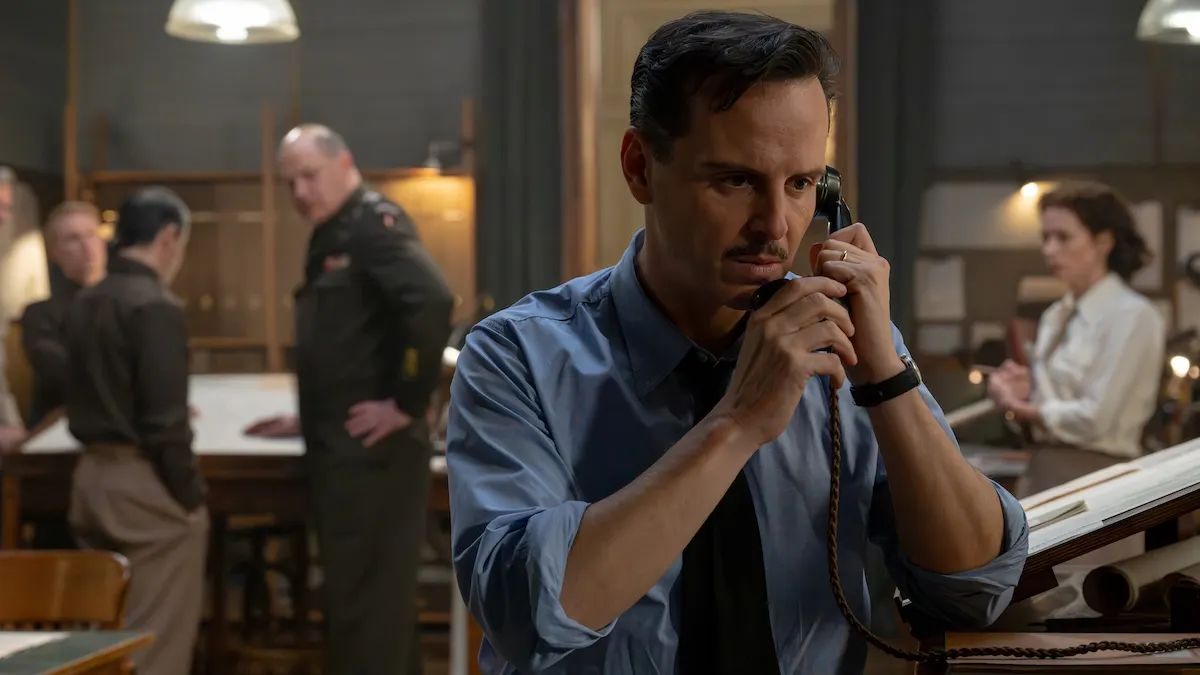
“Pressure,” which is out in theaters now, tells the story of one pivotal decision near the end of World War II: how the Allies chose the exact time to storm the beaches at Normandy on D-Day. Its hero is meteorologist Captain James Stagg (Andrew Scott), who leaves his pregnant wife at home to report to General Dwight D. Eisenhower (Brendan Fraser) and lead a team of weather watchers. The Allies need one key forecast.
Stagg’s American counterpart Irving P. Krick may have helped the filming of “Gone With The Wind” by predicting good weather, but there’s much more at stake now than Hollywood cash and Clark Gable’s hair. It’s 1944, the war has been raging for almost five years, and the Germans have held France for four. The details for this invasion must be precise. Waves that are too high mean boats will capsize. Clouds that are too thick mean pilots won’t know where to fly. Conditions must be good, or at least good enough. Otherwise, thousands of lives will be lost.
“Pressure” is based on a play, which makes sense when you consider that it’s mostly just people talking in various rooms. But despite a bit of a slow start, it rarely feels boring. From the tense, demanding score to Scott’s minute facial changes, the film finds ways to command your attention. And it knows it might sound a bit dull.
“Did you know that weathermen are traditionally a little boring?” Eisenhower’s aide, Kay Summersby, quips to Stagg.
“How dare you say that?” he jokes. “Weathermen, maybe. But how can the weather be boring? It feeds us. The weather can destroy us. Controls our daily life. I don’t think that’s boring.”
We know the stakes, but what drives the film is not the abstract fear of failure in battle but the internal moral struggles of its protagonists. Racked with guilt over a training exercise gone fatally wrong, Eisenhower wrestles with how to make a decision that could lead to the end of the war — or if, as one British Army officer puts it, they might as well start goose-stepping now.
“If any blame or fault is attached to the attempt, it is mine, and mine alone,” Eisenhower concludes hours before the attack.
Stagg proves his character by maintaining his forecast of poor weather even when everyone, including his colleagues, wants to believe in a cloudless sky. But he’s still hesitant to attach any certainty to his forecasts, arguing that with the weather, nothing is certain. It was President Harry Truman who begged for “a one-handed economist” so he could stop hearing “on the one hand” and “on the other hand.”
Here, what Eisenhower needs is a one-handed weatherman.
Fraser is an imposing presence as the general, and his secretary (played sympathetically by Kerry Condon) acts as a voice of reason and an emotional center for the two men, telling Eisenhower to leave his guilt in the past and advising Stagg to let the general’s outbursts wash over him.
Stagg is confident in his understanding of the weather, but not in his ability to make a decision that he himself has to own. After spending two meetings with high-level officials telling them that the weather on the day of the invasion is likely no good, he gets another chance to give Eisenhower a new forecast that could make the invasion possible after all. To make his case, he points to his charts.
“I don’t want to look at your damn charts,” Eisenhower says. “It’s a bunch of gobbledygook!”
Finally, Stagg quits hiding behind his forecasts and makes a decision. “My official position is this: Go. You should go.”
When the D-Day invasion begins, “Pressure” reminds you that we’re talking about real events by interspersing actual footage from the war. Of course, the invasion, which happened on June 6, 1944, was a success. Years later, President Eisenhower would observe that the attack succeeded “because we had better meteorologists than the Germans.” The film is a celebration of that excellence — and of the courage it takes to make a monumental decision when the stakes couldn’t be higher.
More from this network:
Domains for Sale · GOTPeople.org · TheDSAPlatform · The Truth About Socialism
What's Your Reaction?
 Like
0
Like
0
 Dislike
0
Dislike
0
 Love
0
Love
0
 Funny
0
Funny
0
 Wow
0
Wow
0
 Sad
0
Sad
0
 Angry
0
Angry
0

I am just an average American. My teen years were in the late 70s and I participated in all that that decade offered. Started working young, too young. Then I joined the Army before I graduated High School. I spent 25 years in, mostly in Infantry units. Since then I've worked in information technology positions all at small family owned companies. At this rate I'll never be a tech millionaire. When I was young I rode horses as much as I could. I do believe I should have been a cowboy. I'm getting in the saddle again by taking riding lessons and see where it goes.
Premium domains for sale

















Comments (0)