

The Plan To Split The World Into Spheres And What It Means For America
Premium domains for sale
Freedom Is Back In Style
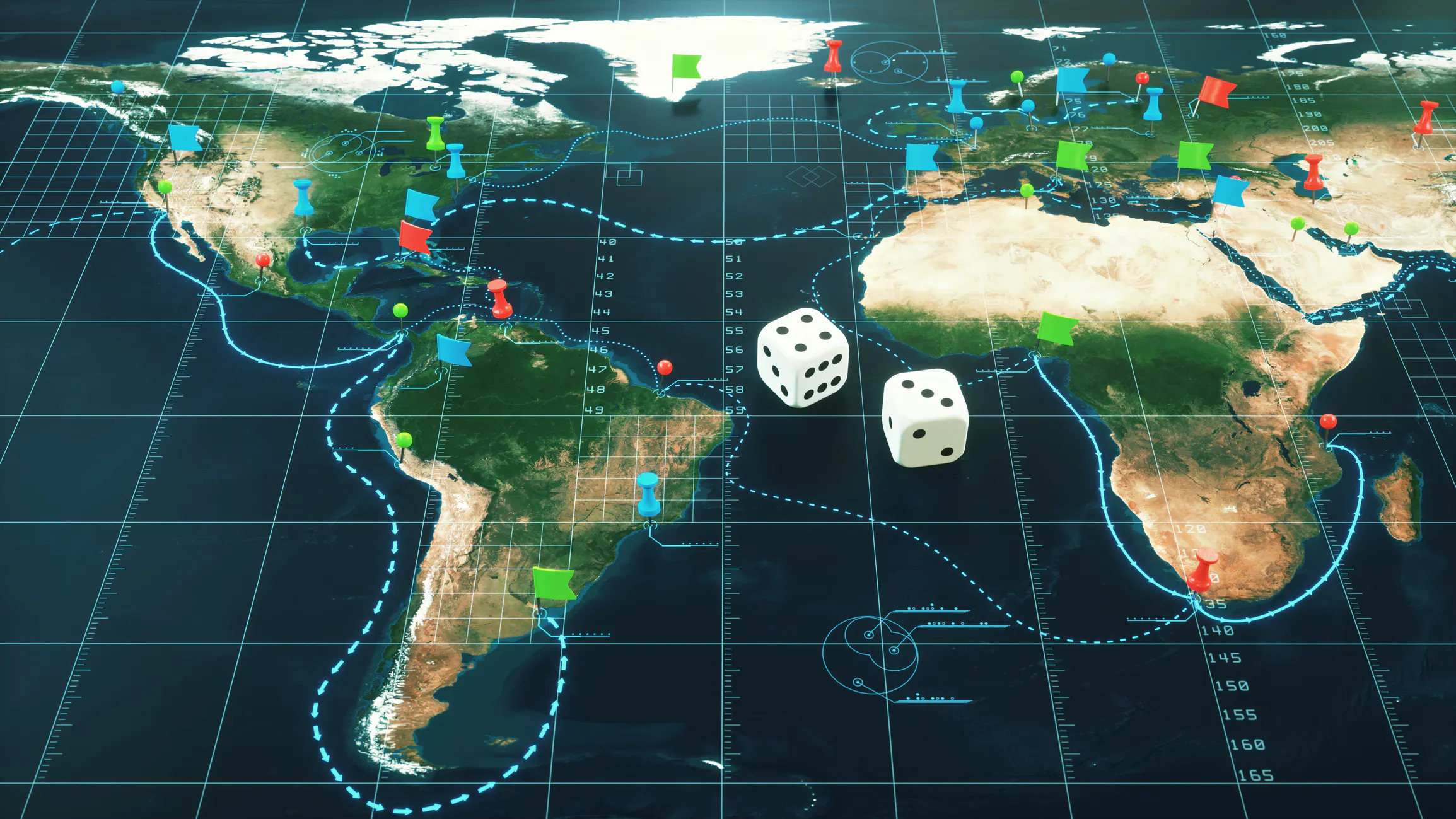
In current foreign-policy debates on the Right, some have pushed for dividing the world into “spheres of influence.” The United States would get the Americas, the People’s Republic of China would be granted sway over Asia, and Vladimir Putin would have carte blanche to intervene in European affairs. Far from being steely-eyed “realism,” splitting up the world in that way might actually not take the national interest seriously enough.
Freedom Is Back
In Style
Premium domains for sale
The “spheres of influence” gambit has a superficial logic. By some measures, the United States is a smaller portion of the global economy than it was fifty years ago. It faces growing fiscal burdens. Its industrial infrastructure has withered. Some of its longstanding allies have hit economic and demographic slumps. The growth of other regional powers means that the geopolitical landscape has become more multipolar. Yet withdrawing from much of the globe would hamper the ability of the United States to respond to those changed circumstances and would also undermine the policy aims of American populists. International networks will be critical for renewing American industry and reinforcing national sovereignty.
While some European partners need urgent reforms (from cutting red tape to hiking defense budgets), the continent remains a major global economic hub. The White House’s recent National Security Strategy observed that Europe “is home to cutting-edge scientific research and world-leading cultural institutions” and that it retains robust manufacturing and technology sectors. A full-scale American withdrawal from Europe could close down a crucial market for American industry (including defense sales) and could also threaten regional stability. Ending NATO and shuttering American military bases would create a power vacuum in that continent and also hurt the ability of the United States to project power abroad.
Nor can the United States afford to ignore Asia. Responsible for about half of global manufacturing output, Asia has become the workshop for the world. The People’s Republic of China is already a manufacturing powerhouse, and it could consolidate industrial dominance if the United States severs its commitments to allies in the Pacific. That is especially the case for the advanced technologies that are the building blocks of the digital economy. A link in countless international supply chains, Taiwan produces about 90% of the world’s most advanced semiconductors. If the People’s Republic of China conquered that island, it would have a chokehold on the American and global economies. It could cut off the chips that are needed for cars, computers, missiles, and phones. Beijing is already trying to use its control of key market sectors to influence policymaking in the United States. Responding to American tariffs and industrial policy, China has floated restrictions on some critical minerals, including those that are essential for defense technologies.
Populists have rallied around the claims of national sovereignty, but allowing the Chinese Communist Party to cut off the American economy at a whim is the antithesis of national independence. While building out American domestic semiconductor production is a national-security imperative, that’s also a very long process. The United States cannot afford to surrender economic self-governance for the indefinite future while it waits for some eschaton of economic autarky.
Conversely, coordinating with allies in Europe and Asia can bolster economic agency. For example, the PRC is responsible for over 80% of the global annual production of tungsten, which is used for drills, computer chips, aerospace, x-rays, and more. The United States has not even mined tungsten commercially in over a decade. In addition to bringing back domestic tungsten production, American allies could help de-risk the tungsten market. Australia has massive tungsten reserves, and South Korea’s Sangdong Mine has returned to production for the first time in decades. Accessing those resources will require keeping Pacific alliances strong — and not surrendering that region to Beijing.
Likewise, allies in Europe, Asia, and the Middle East will continue to be important for American national-security aims. Even as it has stressed the need to reform certain geopolitical arrangements, the Trump administration’s foreign-policy strategy is premised on the United States being a global great-power. Losing the hard power that backs the dollar’s reserve-currency status would cause an immediate economic crisis at home, but a global defense infrastructure also helps target American foes abroad. The Jacksonian tradition of foreign policy — which prioritizes the targeted use of military force to defend the national interest — has achieved a renewed prominence in the Trump presidencies. Jacksonianism could be a way of rebalancing global commitments by keeping America’s rivals off-balance without tying down the United States. International alliances can help optimize such Jacksonian exertions of force.
From its very founding, the United States has prioritized having access to global markets. When the Barbary pirates threatened American ships, Thomas Jefferson sent frigates to Tripoli. To open up Japan, Commodore Matthew Perry brought the United States Navy to Edo Bay. The network of alliances in the aftermath of World War II could be seen as an extension of a long-term strategic imperative: that the Stars and Stripes should be able to move freely throughout the world and that those who live under that banner should be safe from both foreign and domestic threats.
We now face a very different political landscape from 1946 or 1999. Implementing “liberal democracy” in a country is a lot harder than getting an Amazon package there. If policymakers had sought to integrate the world into some post-historical bazaar, their dreams have been sorely disappointed. Great-power competition is back, and populist movements have roiled political establishments on both sides of the Atlantic. Those changes indicate the need to rethink international alliances without abandoning them entirely.
Yes, the United States needs to recognize the limits of power and to try to defer existential conflict with its competitors. It also needs to understand the interests of those competitors. At the same time, the United States needs to understand its own interests. Cutting itself off from allies in Europe, Asia, and elsewhere would squander a major geopolitical advantage and undercut efforts to build a stronger nation at home.
* * *
Fred Bauer is a writer from New England. Find his work at National Review, City Journal, The Atlantic, UnHerd, and The Washington Post. @fredbauerblog
More from this network:
Domains for Sale · GOTPeople.org · TheDSAPlatform · The Truth About Socialism
What's Your Reaction?
 Like
0
Like
0
 Dislike
0
Dislike
0
 Love
0
Love
0
 Funny
0
Funny
0
 Wow
0
Wow
0
 Sad
0
Sad
0
 Angry
0
Angry
0

I am just an average American. My teen years were in the late 70s and I participated in all that that decade offered. Started working young, too young. Then I joined the Army before I graduated High School. I spent 25 years in, mostly in Infantry units. Since then I've worked in information technology positions all at small family owned companies. At this rate I'll never be a tech millionaire. When I was young I rode horses as much as I could. I do believe I should have been a cowboy. I'm getting in the saddle again by taking riding lessons and see where it goes.
Premium domains for sale



















Comments (0)