

The question IVF doesn't answer
Premium domains for sale
Freedom Is Back In Style
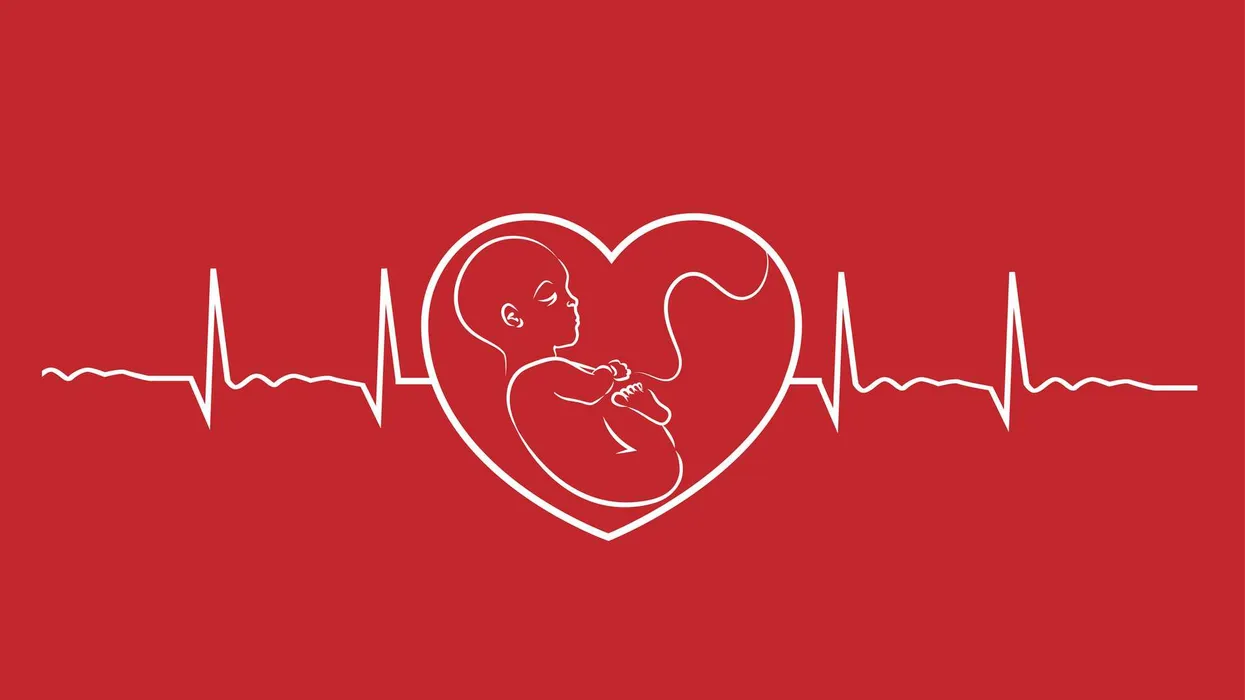
Whenever someone criticizes in vitro fertilization, the same response tends to come quickly: pictures of smiling toddlers, grateful parents, and testimonies from couples who spent years praying for a child.
Freedom Is Back
In Style
Premium domains for sale
For many people, that response feels decisive. How can something that produced such a beautiful little boy or girl be spoken of as morally troubling or wrong?
The public image of IVF — one happy baby — hides an unseen reality: other babies who never made it out of the laboratory.
On the surface, that reaction makes sense. Infertility can be a deep heartache. It is the repeated pain of empty nurseries, unanswered prayers, and hopes that seem to die month after month. People who have walked through that kind of grief are understandably drawn toward anything that promises relief.
My wife and I understand that heartache more than we wish we do.
We have lost multiple children through miscarriage. We have walked through a decade of infertility. We know what it is to ask God for life and hear silence. We understand the deep inward pull toward anything that might finally bring hope into reality.
This conversation is difficult. No decent person wants to speak carelessly into someone else’s suffering.
But moral questions do not disappear because suffering is involved. Pain can explain why a person reaches for something, but it cannot, by itself, make the solution righteous.
That is where the public conversation about IVF has gone extremely wrong.
RELATED: IVF CEO says conceiving naturally is for those with 'genetic privilege'
 Stephen McCarthy/Sportsfile/Getty Images
IVF is almost always presented to Americans as a compassionate medical service. The happy nursery photos become the public face of the debate, and because those photos are emotionally powerful, very few people ever stop to ask what the IVF process itself actually entails.
Modern IVF does not only involve the creation of one embryonic child who is then implanted in the womb; it involves the creation of several embryonic children at once.
Some are chosen for transfer, some fail in the process and are discarded, and some are intentionally destroyed during testing. And more than a million embryonic children are now estimated to remain frozen in cryogenic storage facilities across the United States, suspended indefinitely because they were the extras in someone's attempt to have a baby.
That means the public image of IVF — one happy baby — hides an unseen reality: other babies who never made it out of the laboratory.
This is not a rare malfunction of an otherwise innocent process. In 2024, when Alabama courts recognized frozen embryos destroyed at a fertility clinic as children under wrongful death law, the fertility industry immediately panicked, and lawmakers rushed to shield IVF providers from liability.
The death of embryonic children is not an unusual accident hovering at the edges of IVF. It is the standard practice.
We should be willing to say clearly what that means.
When embryonic children are intentionally destroyed because they are unwanted or medically inconvenient, that is murder. When embryonic children are frozen indefinitely because they were not selected, that is not a harmless pause in treatment. It is human beings placed in suspended imprisonment.
At this point, defenders of IVF usually return to the same emotional appeal: “Yes, but look at the children it has produced.” Some will even say, “Look at my child.”
And this is where the deepest confusion is found. Because the children produced through IVF are not the issue under dispute. Of course those children bear the image of God. Of course they are worthy of every ounce of love their parents can give them.
RELATED: Fertility doctors are bullying women into IVF
 Blaze Media
Their value is not diminished in the slightest by the means of their conception. But the value of the child is not the same thing as the morality of the process. We understand this distinction instinctively in other tragic circumstances.
A child conceived in rape is no less human because of the violence surrounding his conception. His life may be full of joy, dignity, and meaning. And he certainly has the image of God stamped upon him.
Yet no one would argue that the beauty of that child makes rape morally acceptable, because we know that a precious child does not retroactively justify wicked circumstances.
That same principle must be applied to IVF.
Yes, IVF has produced children who are deeply loved, but those children do not morally absolve a process that routinely murders some embryonic children, freezes others, and treats human life as laboratory surplus in order to obtain a successful outcome.
In fact, those surviving children prove the very point many people are trying to avoid.
If the child in the nursery photo is an image-bearer now, then the embryonic siblings destroyed, discarded, or frozen in the same process were image-bearers then.
The question is not whether children conceived through IVF have value. The question is whether the existence of those loved children gives us permission to ignore the murdered and imprisoned children involved in producing them.
A good gift does not justify an evil method. And gratitude for one surviving child cannot erase the moral guilt of the children that modern fertility medicine leaves frozen, discarded, and dead.
More from this network:
Domains for Sale · GOTPeople.org · TheDSAPlatform · The Truth About Socialism
What's Your Reaction?
 Like
0
Like
0
 Dislike
0
Dislike
0
 Love
0
Love
0
 Funny
0
Funny
0
 Wow
0
Wow
0
 Sad
0
Sad
0
 Angry
0
Angry
0

I am just an average American. My teen years were in the late 70s and I participated in all that that decade offered. Started working young, too young. Then I joined the Army before I graduated High School. I spent 25 years in, mostly in Infantry units. Since then I've worked in information technology positions all at small family owned companies. At this rate I'll never be a tech millionaire. When I was young I rode horses as much as I could. I do believe I should have been a cowboy. I'm getting in the saddle again by taking riding lessons and see where it goes.
Premium domains for sale











Comments (0)