

The real AI danger is not godless machines but godless men
Premium domains for sale
Freedom Is Back In Style
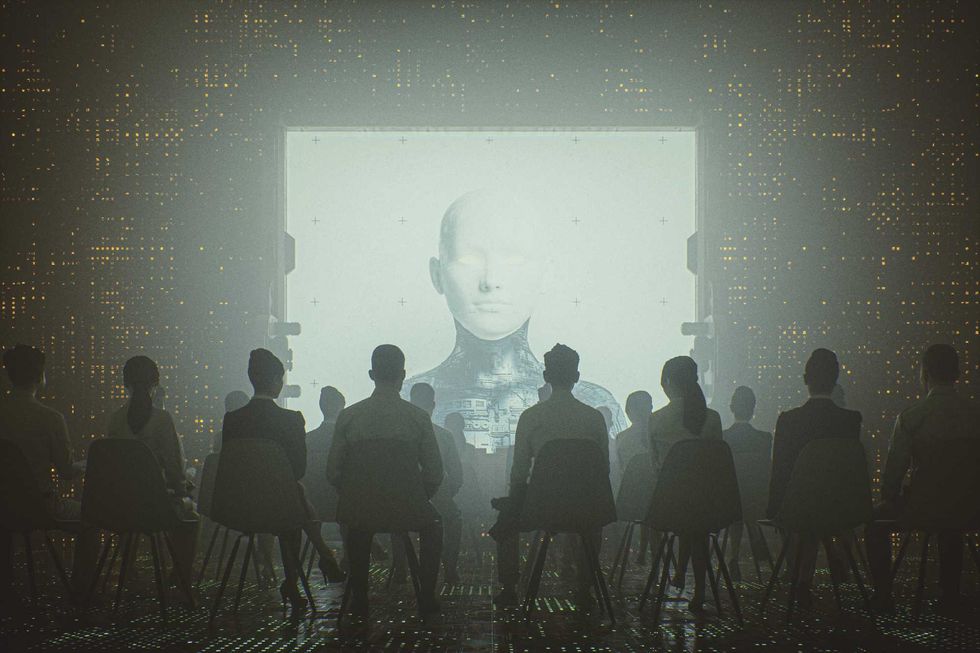
Pope Leo has entered the artificial intelligence debate with his encyclical “Magnifica Humanitas.” He underscored the need for spiritual guidance by inviting Christopher Olah, co-founder of the AI giant Anthropic, to comment.
Freedom Is Back
In Style
Premium domains for sale
“I lead a research team that studies the internal structure of these [AI] models,” Olah said. “What is actually happening inside them? And I will be honest, we keep finding things that are mysterious, even unsettling. We find structures that mirror results from human neuroscience. We find evidence of introspection. We find internal states that functionally mirror joy, satisfaction, fear, grief, and unease. I don’t know what that means, but I think it warrants ongoing discernment.”
Technology does not arrive morally neutral once human beings begin using it. It magnifies the character of those who possess it.
That is a remarkable admission. Which raises the question: Is this freedom, or is this Frankenstein?
For my part, I hope the pope handles this better than some of his other recent efforts. But that does not mean he lacks a legitimate reason for concern. Quite the opposite.
The problem is not that AI is godless. AI is an object. It can only be godless. It is a tool.
The problem is that many of the people building and directing it are godless. A biblical worldview provides something vital in this universe: a limiting principle.
The two most important truths any person can learn are these: God is God, and I am not. And Jesus loves me, this I know, for the Bible tells me so.
Without those truths, the Anthropic researcher’s warning could just as easily come from a surgeon who has performed years of so-called gender reassignment surgeries: We began tinkering with the most innate, intimate parts of the human person, and we discovered things we did not anticipate.
You don’t say.
Yeah, dummy. When human beings experiment on the deepest realities of personhood without the right limiting principles, chaos follows. It does not follow accidentally. It follows inevitably.
Someone will always rule. Something will always be worshiped. Never forget that.
If you reject the principle that God is God and I am not, guess who usually ends up playing God? You.
That never ends well.
RELATED: It’s not easy being pope — Leo’s big new tech encyclical proves it
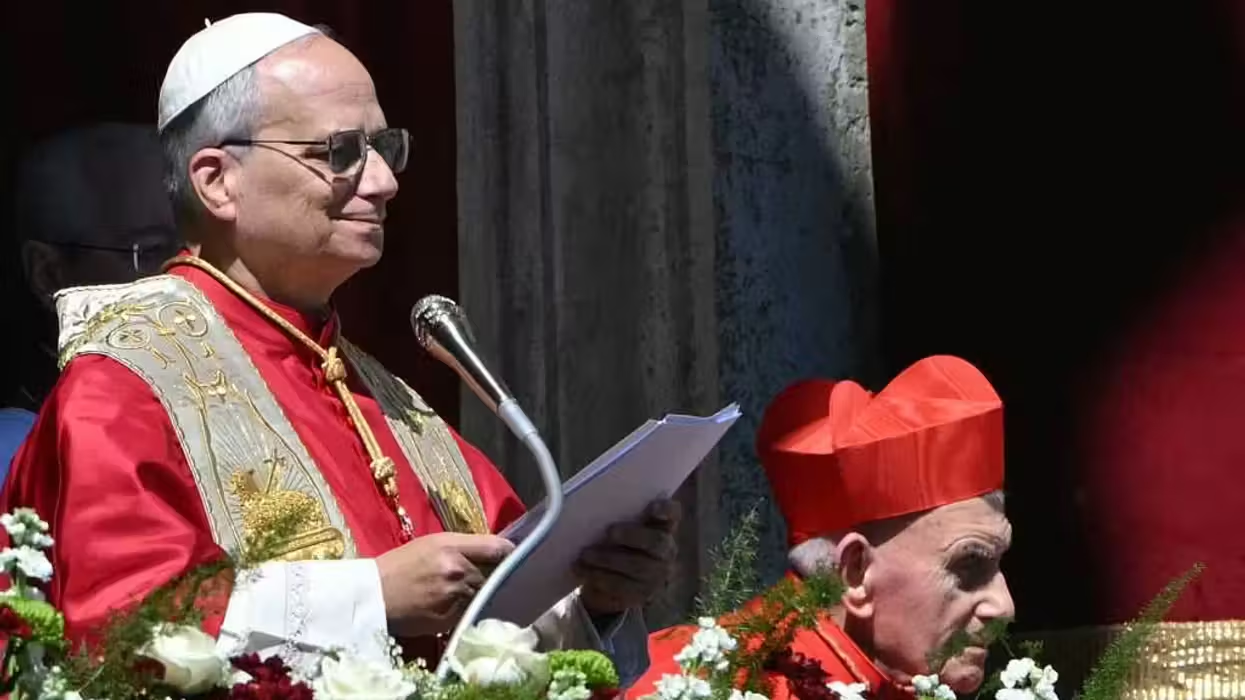 Andreas SOLARO/AFP/Getty
We have never really left the garden. As a species, we are always in one of two places: the garden or the cross. We are either grasping for forbidden knowledge so we can become like God, or we are kneeling before the God who became man to save us from ourselves.
Sir Isaac Newton, one of the greatest minds in the history of science, understood this. Yet one of his great obsessions was interpreting Scripture, especially the book of Revelation. Whatever his errors, Newton grasped something modern technocrats often miss: Brilliance needs a boundary.
This world was made for us, but it was not made by us. Our Father has the right to keep some things to Himself. His children do not need to master every mystery. Sometimes, we need to obey because we trust His love and justice.
Will we remember that as AI advances?
Who will oversee the overseers? Who will program the programmers? Who will form the moral imagination of the people training these machines? By what standard will they judge what should be built, what should be restrained, and what should never be attempted?
Can we wield artificial intelligence as a godly people?
Maybe. AI offers real possibilities. But possibility is not permission. A nuclear weapon in the hands of a responsible nation differs from a nuclear weapon in the hands of genocidal maniacs. Technology does not arrive morally neutral once human beings begin using it. It magnifies the character of those who possess it.
That is the question before us.
Will we pursue AI as image-bearers under God, bound by humility, gratitude, and restraint? Or will we pursue it as consumer-driven pod people, trained to believe that whatever can be done must be done?
If we choose the first path, AI may become a tool ordered toward human flourishing.
If we choose the second, the pope’s concerns will become unavoidable, whatever else one thinks of him.
More from this network:
Domains for Sale · GOTPeople.org · TheDSAPlatform · The Truth About Socialism
What's Your Reaction?
 Like
0
Like
0
 Dislike
0
Dislike
0
 Love
0
Love
0
 Funny
0
Funny
0
 Wow
0
Wow
0
 Sad
0
Sad
0
 Angry
0
Angry
0

I am just an average American. My teen years were in the late 70s and I participated in all that that decade offered. Started working young, too young. Then I joined the Army before I graduated High School. I spent 25 years in, mostly in Infantry units. Since then I've worked in information technology positions all at small family owned companies. At this rate I'll never be a tech millionaire. When I was young I rode horses as much as I could. I do believe I should have been a cowboy. I'm getting in the saddle again by taking riding lessons and see where it goes.
Premium domains for sale










Comments (0)