

The senator Trump mocked became his best diplomat
Premium domains for sale
Freedom Is Back In Style
“A diplomat who says ‘yes’ means ‘maybe,’” the great French statesman Charles-Maurice de Talleyrand is supposed to have said. “A diplomat who says ‘maybe’ means ‘no,’ and a diplomat who says ‘no’ is no diplomat.” Whether Talleyrand actually said it hardly matters. The spirit is right: Diplomacy, like politics, is the art of the possible.
Freedom Is Back
In Style
Premium domains for sale
Put another way, diplomacy is the art of getting what you want without needlessly making it impossible for the other side to give it to you.
For the first time in decades, an American secretary of state has a plausible path to the pantheon.
By that standard, the United States has produced few truly great diplomatic tenures in the past half-century. There have been capable secretaries of state and important agreements, but remarkably few achievements with the durability of the great settlements of earlier eras.
Madeleine Albright's tenure remains inseparable from NATO expansion and the deterioration of relations with post-Soviet Russia. Colin Powell's is shadowed by his 2003 presentation at the United Nations and the Iraq War. Condoleezza Rice brought competence, but no settlement that transformed America's strategic position.
Hillary Clinton's much-advertised “reset” with Russia aged badly. John Kerry helped produce the Trans-Pacific Partnership and the Iran nuclear deal, both of which were abandoned by the first Trump administration. Rex Tillerson never found his footing. Mike Pompeo was more effective, but his major diplomatic projects did not fundamentally reorder America's position abroad.
Antony Blinken helped oversee AUKUS with Britain and Australia, an important strategic arrangement, though more an extension and deepening of existing alignments than a new diplomatic architecture.
America's earlier history offers a much higher bar. Thomas Jefferson, John Quincy Adams, William Seward, Hamilton Fish, John Hay, George Marshall, George Kennan, and Henry Kissinger helped shape American diplomacy in ways that outlasted the administrations they served.
Their work changed not merely the headlines of the day but America's long-term position in the world.
A few years ago, almost no one would have guessed that Marco Rubio might be the next American diplomat with a plausible claim to join that company.
When Trump nominated Rubio for secretary of state, commentators wondered whether he would moderate the president's more unpredictable foreign-policy instincts. Old Republican voices, sidelined after Trump's rise, and left-leaning academics alike expected friction between Trump and a man long identified with the GOP's interventionist wing.
That prediction has not held up.
RELATED: Trump is continuing JFK’s war on communist subversion
 The senator Trump mocked became his best diplomat Jakub Porzycki/NurPhoto/Getty Images
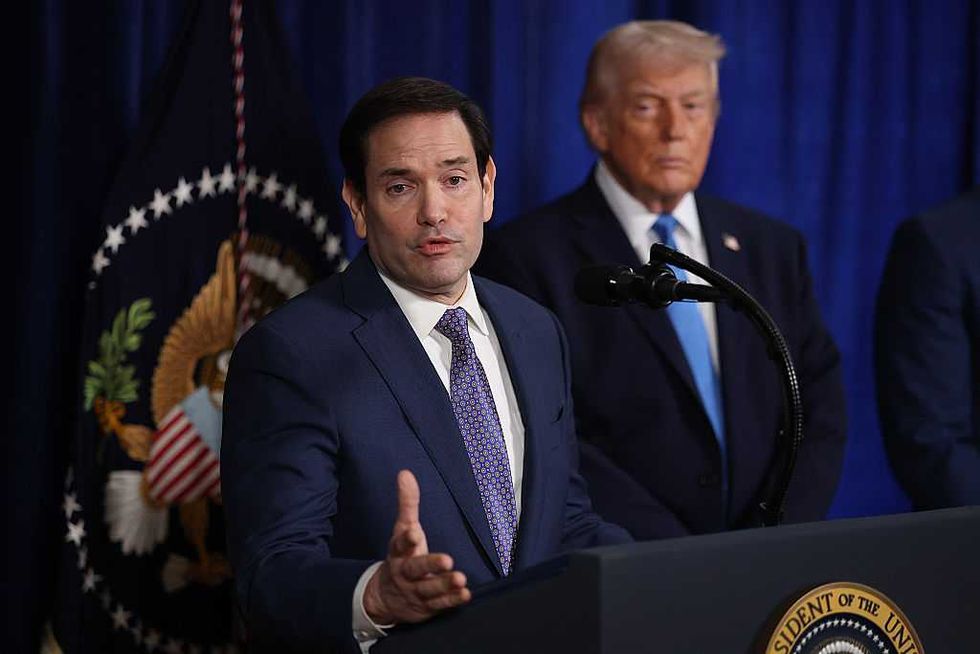
On his second day in office, Rubio told State Department personnel that their mission was to ensure American foreign policy remained centered on the national interest: whatever makes the country “stronger, safer, and more prosperous.”
He added that conflict would sometimes be unavoidable, but never at the expense of national security, the national interest, or America's core values.
The language signaled a break from the old habit of treating international approval as an end in itself.
That shift can be dismissed as political adaptation. It is also evidence that Rubio has absorbed something larger: The pre-Trump Republican foreign policy consensus is gone, and a new one is being built in its place.
At the Munich Security Conference this year, Rubio delivered a broadside against unfettered free trade, deindustrialization, mass migration, and an international order detached from the interests and identities of the nations expected to sustain it.
He also spoke explicitly about the shared language, religion, culture, and ancestry connecting Europe and America — language difficult to imagine from a secretary of state only a few years ago.
The record is becoming more substantial.
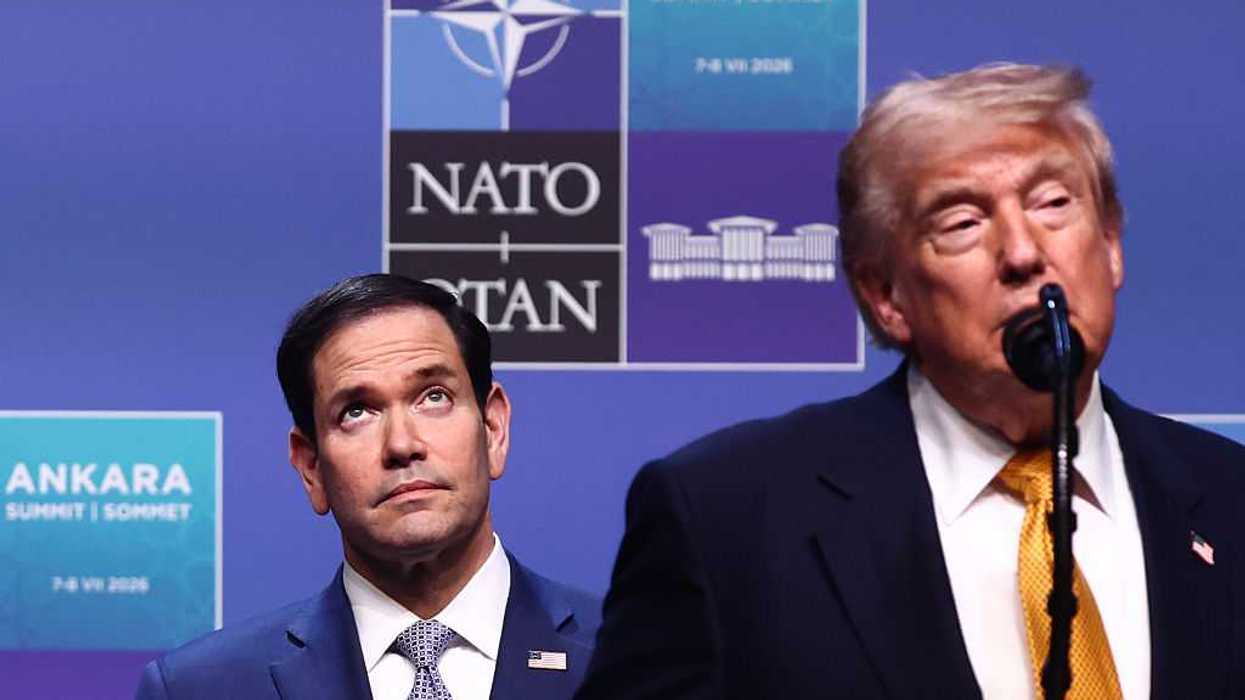
In 2025, Rubio played an important role as NATO members agreed to a new 5% defense spending commitment by 2035. He has kept open the possibility of negotiations with Iran, even amid anger from some Israelis over the administration's approach.
He has repeatedly pursued efforts to bring Ukraine and Russia toward negotiations after years in which diplomacy between the two sides largely stagnated.
And on Venezuela, Rubio has been credited as a central figure in the administration's campaign against Nicolás Maduro, a dramatic reversal in U.S.-Venezuela relations.
On Cuba, Rubio has paired pressure with calls for political change and dialogue, while also speaking directly to the Cuban people.
Rubio has therefore become something unusual: a secretary of state who is not merely influential inside the administration but increasingly visible to the public.
In 2026, he has at times seemed to eclipse nearly every other Cabinet official in political stature. His popularity among Republican voters is especially striking for a secretary of state, an office that usually produces prestige without a mass constituency.
Barely 18 months into his tenure, that does not yet make Rubio a great secretary of state. It does make the possibility serious.
RELATED: Gen Z is reopening America’s cold cases
 Bettmann/CORBIS/Bettmann Archive/Getty Images
The unanswered questions are enormous: Iran, Venezuela, Cuba, Ukraine, North Korea, and the Ortega regime's recent actions in Nicaragua could all complicate or diminish his record.
Durability is the test. A diplomatic achievement that vanishes with the next administration is not much of an achievement at all.
But Rubio has already helped push NATO toward higher defense commitments, pursued talks over Ukraine, increased pressure on Cuba and Venezuela, and strengthened Washington's effort to counter Chinese influence around the Panama Canal.
If those gains endure — and if he can turn today's openings into settlements that survive Trump — Rubio's legacy will look very different from that of the secretaries of state who preceded him.
The pantheon is not his yet. But for the first time in decades, an American secretary of state has a plausible path to it.
And why stop there?
More from this network:
Domains for Sale · GOTPeople.org · TheDSAPlatform · The Truth About Socialism
What's Your Reaction?
 Like
0
Like
0
 Dislike
0
Dislike
0
 Love
0
Love
0
 Funny
0
Funny
0
 Wow
0
Wow
0
 Sad
0
Sad
0
 Angry
0
Angry
0

I am just an average American. My teen years were in the late 70s and I participated in all that that decade offered. Started working young, too young. Then I joined the Army before I graduated High School. I spent 25 years in, mostly in Infantry units. Since then I've worked in information technology positions all at small family owned companies. At this rate I'll never be a tech millionaire. When I was young I rode horses as much as I could. I do believe I should have been a cowboy. I'm getting in the saddle again by taking riding lessons and see where it goes.
Premium domains for sale




Comments (0)