

The Summer Job Is Disappearing. Here’s What Gen Z Needs To Learn Fast
Premium domains for sale
Freedom Is Back In Style
This article is part of Upstream, The Daily Wire’s new home for culture and lifestyle. Real human insight and human stories — from our featured writers to you.
Freedom Is Back
In Style
Premium domains for sale
***
When I was 15, I drove with my mother down the road to claim my inheritance.
School was almost out in May 2021, and it was time for my first summer job. I had filled out an application online for the nearest Chick-Fil-A. As a Christian homeschooler, it was both my obligation and right to find employment at this storied institution.
Despite no prior work experience and the pressures of a lingering pandemic, Chick-fil-A hired me on the spot.
Last summer, while home from college, I applied to work at a different local Chick-fil-A. I was four years older, had months of experience at the other Chick-fil-A, and a year as a shift lead at a juice and smoothie shop. I didn’t even get an interview.
There is plenty of discussion about how hard it is for Gen Zers to find employment after college, but for many my age, the struggles can start much sooner.
According to recent predictions from Challenger, Gray & Christmas, this summer will likely see the lowest levels of teen employment since the Bureau of Labor Statistics started tracking it. Last summer was the previous record low, with 801,000 teen jobs added. This summer, Challenger predicts employers will add only 790,000 teen jobs in the summer months.
This is a far different environment for teen workers compared to the late 1970s, when almost 60% of those aged 16 to 19 had a job or were seeking one. According to Challenger, in April of this year, it was just 33.8%.
Alicia Modestino, an associate professor at Northeastern University in the School of Public Policy and Urban Affairs, identified three changes to the labor market that led to a decline in teen employment from its 1970s high.
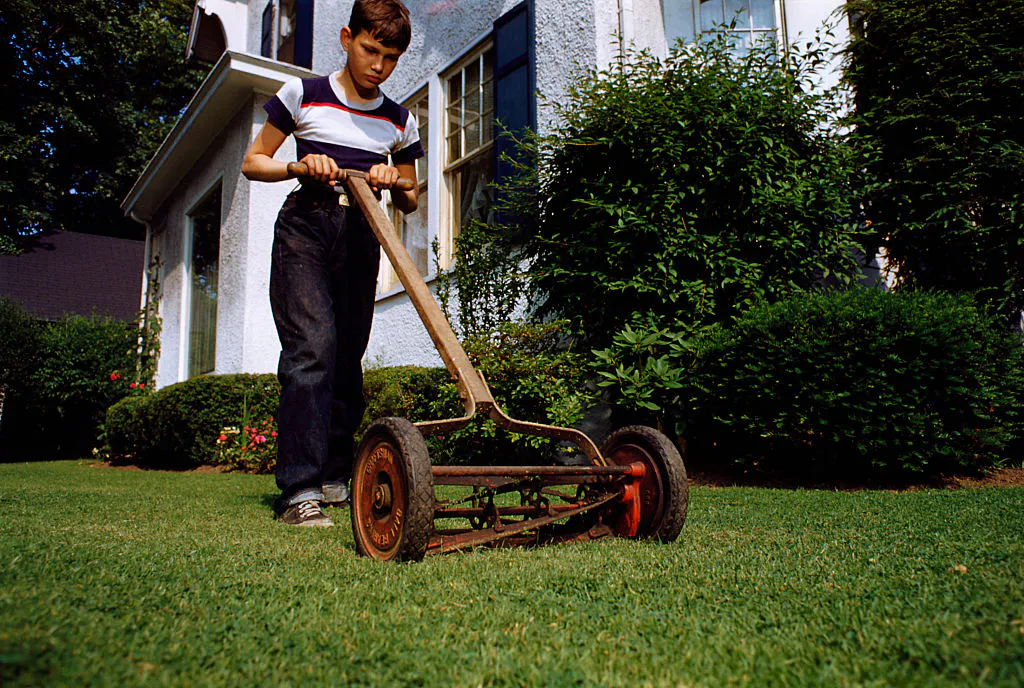
First, many jobs that were previously performed by teens are now automated or outsourced. Think self-checkout lanes and migrant workers mowing lawns.
Second, as states have regulated teen employment more, employers have gotten pickier. Teens are now less appealing to employers than other demographics because of hour restrictions, work permits, and more. Especially as older generations push off retirement and compete for the same part-time jobs teens once dominated, there’s now a more experienced labor pool to consider.
Finally, many middle- and upper-class teens are prioritizing college résumé-boosting activities that don’t involve work: volunteering, traveling, and academics.
Gen Z may learn that finding a job is not quite as easy as it used to be. As the labor market shifts, the kind of jobs teens used to work may not be as available. But I strongly believe that for those who want to make money, work is out there.
Last summer, after Chick-Fil-A said no, I applied to several other places. When it seemed no one would hire me, I ended up working for a man I knew from church. He had been my family group leader on a mission trip the previous summer and we had hit it off.
This is key for Gen Zers trying to find jobs: You never know when being kind or friendly will make an impression. Acting virtuously ought to be done for its own sake, but it will naturally result in benefits. Integrity matters because it is a virtue done expecting no reward and when you think no one is looking. However, that does not mean no one ever is.
Similarly, personal connection always trumps virtual connection. No matter the number of LinkedIn connections you may have, a handful of good personal connections are much more likely to turn into lasting friendships and job opportunities.
The man I worked for owned his own landscaping company, mostly focused on mowing lawns, but he also did sprinkler installations. While his crews were out mowing, he did an installation a week to bring in extra income.
My job wasn’t appealing. I dug trenches where the PVC pipe would go, and then once my boss laid the pipe, I would cover it up and pack the dirt down. Simple and exhausting. In the Texas heat, I learned the difference between a 95 and a 98-degree day.
Hard work is not something to fear. Working with one’s hands is good; it teaches humility and dependence. You earn a healthy respect for the effort it takes to perform essential manual tasks.
Aside from being friendly, focusing on intentional personal connections, and being unafraid of hard work, Gen Z must continue to look to the gig economy.
As an example, one summer I did nothing else for work but make Adirondack chairs out of whiskey barrels. I would buy empty, used barrels on Facebook Marketplace, and then my dad would help me craft them and stain them. We would sell the finished chairs back on Facebook Marketplace with great margins. While not something I would pursue as a career, it was a gig that taught me some woodworking skills and made some money.
The gig economy may be a trap for Gen Z college graduates or a sign of the failed success pipeline, but it’s a smart way for teens to seek extra cash through temporary employment.
Facing such a brutal job market, many in my generation are prone to blame the system that set them up for failure. Sometimes older generations lambast us with charges of laziness, seeing the system-blaming as nothing more than cope. While there is indeed much outside Gen Z’s control that has left us scrambling, and many (though not all) of the bad work ethic accusations are unjust, the correct solution is not anger but action.
The best way to prove the strength of one’s work ethic and to begin to make money as a teen is to search for a job. If the data is to be believed, they can be found. Virtuous and friendly employees are always in demand. The gig economy, especially for young people seeking temporary employment, welcomes the resourceful and thrifty.
When hard times come, outrage is one response. But the noble and productive choice is to do something, to persevere until a job is found. Not only would this flip the narrative of laziness, but it is also the path that is most likely to lead to work.
The young people of today will be the leaders of tomorrow. Working as a teen gives you valuable experience, teaches life lessons, and sets you up well for a full-time job after high school. Despite the struggles and competing interests, working as a teen cultivates a skill set hard to get anywhere else.
***
Cooper Cobbs (@CobbsCooper) is a 2026 Chesterton media fellow at New Guard Press. A rising junior at Patrick Henry College, he is the incoming student body president and will be the editor-in-chief of PHC’s student newspaper, the Herald, this fall.
More from this network:
Domains for Sale · GOTPeople.org · TheDSAPlatform · The Truth About Socialism
What's Your Reaction?
 Like
0
Like
0
 Dislike
0
Dislike
0
 Love
0
Love
0
 Funny
0
Funny
0
 Wow
0
Wow
0
 Sad
0
Sad
0
 Angry
0
Angry
0

I am just an average American. My teen years were in the late 70s and I participated in all that that decade offered. Started working young, too young. Then I joined the Army before I graduated High School. I spent 25 years in, mostly in Infantry units. Since then I've worked in information technology positions all at small family owned companies. At this rate I'll never be a tech millionaire. When I was young I rode horses as much as I could. I do believe I should have been a cowboy. I'm getting in the saddle again by taking riding lessons and see where it goes.
Premium domains for sale

























Comments (0)