

The Tex-Mex, Fast-Casual, Avocado Green, Retro Pop, All American Burrito Dream
Premium domains for sale
Freedom Is Back In Style
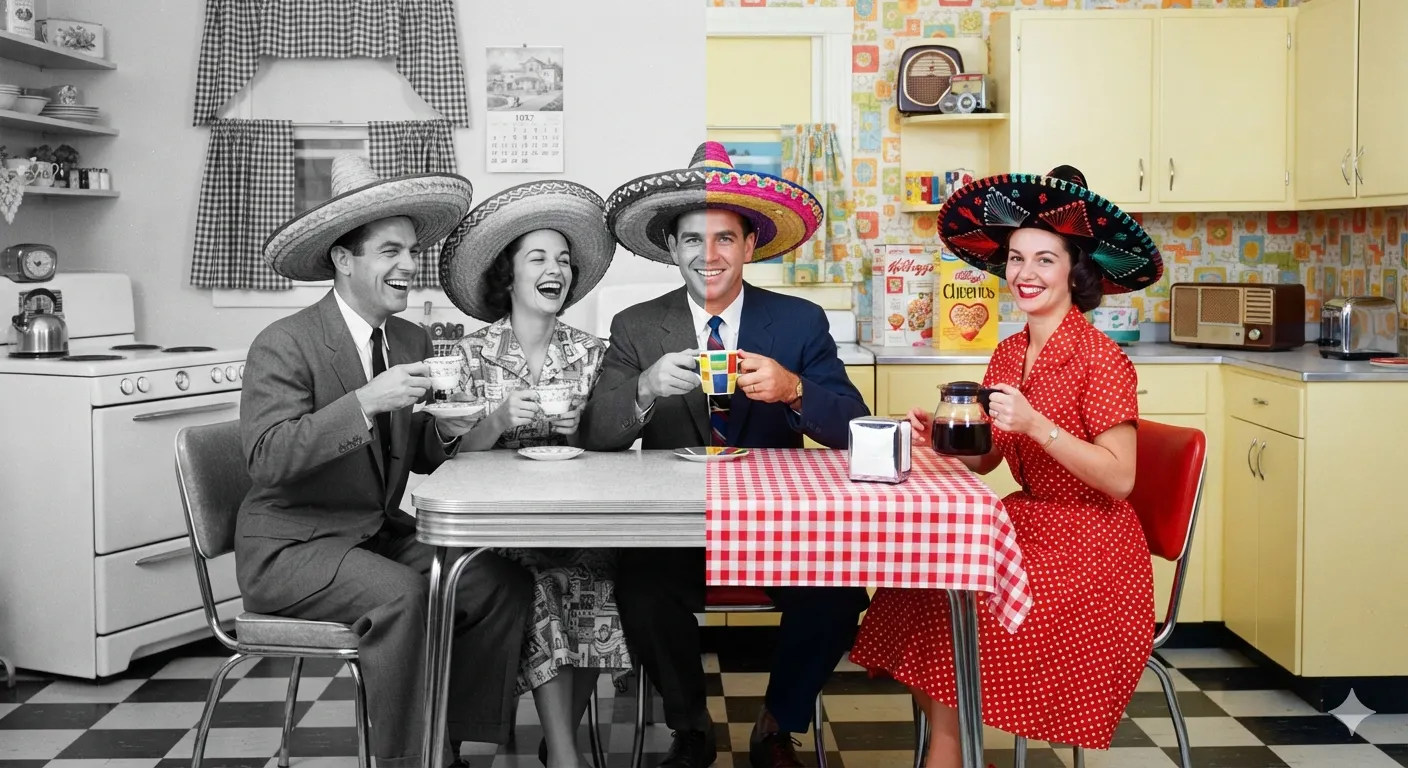
We’ve finally done it. The Great Burrito War of 2026 is upon us, and rather than reach for my Kevlar and lunge into the nearest fighting hole, I’ve grown a little misty-eyed with nostalgia for the good ol’ days of the First Golden Age of these United States, which just so happens to be that specific era that people generally look back on as the time they were entering adulthood, which is to say when the whole world was waiting for you to enter it with all of your hopes and dreams and expectations and plans on how you were going to be the triumphant conqueror in a pair of flat-front, Sahara sand-colored khakis, white button-down shirt, and navy three-quarter-zip fleece vest. (It would be October when this happens.)
Freedom Is Back
In Style
Premium domains for sale
But my Golden Age sits somewhere past the oil crisis and the birth of video games, and riiiight before life was sucked into that little palm-sized computer we carry around like a glass-encased black hole. But back to the war dispatch.
The kids, the young adults — the would-be world-conquerors — are having a hard time affording lunch. Not just any lunch, but that particular ethnic cuisine of the southwest region of the North American continent, a second-cousin of sorts of the Mexican or South American dietary foodstuff that was positively exotic only a few decades ago. Why, in the section “Supper Dishes… Flavors from Near and Far” from the “Betty Crocker Picture Cookbook” (1950 edition), we can easily reference the closest thing: Hot Tamale Pie on page 391, right in-between Philadelphia Scrapple and step-by-step instructions on how to prepare wild rice, which Betty explains is actually the “seed of a shallow water grass…still harvested by Indians in the marshes of Minnesota.” The recipe for Hot Tamale Pie is prefaced with the enticing description, “Picturesque dish from Old Mexico.” The full ingredient list consists of:
Onion, green pepper, ¾ pound ground beef, ¾ pound ground pork, cooked tomatoes (or one tall can), chili powder, salt, pepper, and ripe olives. It’s served over cornmeal mush, which is made exactly as it sounds. Serves eight.
We’ve come a long way from Betty and her exotic toe-dip into Mexican cuisine. Now we can trot up to the fast-casual chain anchoring the local strip mall and get a street-style, braised, grass-fed, free-range beef carne asada with salsa verde and mole sauce on an artisanal, non-GMO, hand-pressed tortilla, topped with farm-fresh lettuce and small-batch pickled red onions and avocado — sliced and sprinkled with Himalayan salt — infused Burr-ee-toe. In Betty’s day, there was either fast food Ray Kroc with his golden arches and 59-cent hamburger, or put-on-your-Sunday-clothes, sit-down dining for a heaping glob of lasagna at Antonio’s eye-talian Eatery. At least until Tyson and “Chef Mic” came along and dinners were best served in front of the glare of a television set explaining that the last drive-in movie theater in the county is closing because people prefer to sit at home and watch movies or eat their dinners in front of the TV…and you shake your head because what is the country coming to when the drive-ins are closing? Such a shame…
I understand that tastes change over time. We enjoy more variety and exposure to more cultures and cuisines raises our expectations of what is possible, and mass production, technology, and innovation have made food and goods that were once prohibitively expensive well within reach of your average 2026 family, living in a late-decade1950s starter home on Pleasantview Terrace nestled among other 1950s starter homes laid out in a grid-street suburb of a wholesome Midwestern state.
Take, for example, the Smiths, who wake up in their remodeled home, a gray house with gray walls and stainless-steel appliances, white granite countertops with minuscule flecks of metallic gray quartzite that, in just the right light, cast a prism of achromatic gray on the white cupboards. John contemplates breakfast and settles on a high-protein nutritional bar that promises to make the consumer “Feel full longer!” and “Avoid blood sugar spikes!” He prefers the one with the tiny chocolate chips and caramel drizzle and momentarily wonders how they make caramel drizzle without high-fructose corn syrup — another promise the bar cheerily makes. It must be a miracle of food science engineering. If only they could engineer away the bar’s slightly bouncy texture and the aftertaste faintly reminiscent of freshly cut grass.
Across the room, the refrigerator hums with the soulless confidence of a minor appliance that knows it will die in seven years and be mourned only by a delivery scheduler. It is enormous, of course, as all modern refrigerators must be, a brushed-metal sarcophagus with a touchscreen, an ice-maker that occasionally sounds like it is grinding teeth, and a water filter subscription more emotionally demanding than most houseplants. It is not ugly, exactly. Ugly would suggest personality. It is worse than ugly. It is dull. It is the color of a corporate lobby, the texture of a dentist’s waiting room, the spiritual cousin of every other refrigerator in every other gray kitchen in every other remodeled home from here to the nearest airport hotel.
Jane remembers, or thinks she remembers, her grandmother’s avocado-green refrigerator, which had a door that shut with the moral authority of a bank vault and shelves sturdy enough to survive either a hotdish or a medium-sized coup. It matched nothing and outlived everything. It had no app. It did not dispense crushed ice in three artisanal textures or alert you that the oat milk was feeling lonely. It kept food cold, which now feels almost embarrassingly ambitious for a refrigerator. It was the kind of refrigerator that watched a family grow up and out, then held the relish trays for your funeral. Somewhere along the line, we decided appliances should become quieter, sleeker, smarter, and less durable, as if the final triumph of civilization was a washing machine that could text you before expiring just outside the warranty period.
This is the bargain we’ve struck, and like most bad bargains, it was not announced all at once. Nobody stood in the town square and declared, “Citizens, you may have 15 kinds of yogurt, pants that arrive overnight, and a burrito assembled by an undergraduate with a tattoo of a poop emoji, but in exchange your dishwasher will become a temporary acquaintance and your furniture will be made of compressed dust.” Instead, it arrived smiling. It arrived with two-day shipping, frictionless checkout, and the warm narcotic glow of endless choice. We were told convenience was abundance. We were told sameness was taste. We were told a thousand nearly identical options constituted freedom.
And so the Smiths, like the rest of us, live inside a strange little populist consumer republic where everyone gets access to the same expensive cheap things. The aristocratic pleasures have been democratized and degraded at once. You can buy cashmere at a warehouse store, but it pills after three washings. You can buy a sofa the size of a parade float for less than a used transmission, but it begins to sag before the first presidential primary. You can have sushi in a gas station, leggings in 12 inseams, coffee in a cup large enough to baptize a spaniel, and chicken strips seasoned to resemble the cuisine of any continent with an airport. Meanwhile eggs cost what shoes used to cost, shoes cost what lamps used to cost, and lamps, for reasons known only to the gods of retail, are either $9 and made of regret or $400 and named after a Swedish archipelago.
We have not become richer in the old sense, the sense of acquiring things meant to accompany us through decades and moves and children and bad paint choices. We have become richer in replacements. The new prosperity is a carousel of substitutions: another blender, another jacket, another chair, another phone, another gray rug to cover the floor while the floor itself remains unaffordable. The big things are expensive and somehow temporary; the small things are ordinary and somehow extravagant. A grocery receipt now reads like a ransom note. A bag of apples, a box of cereal, a package of socks, and the kind of unremarkable cheese no one writes memoirs about can make a person pause in the parking lot and stare through the windshield as though waiting for a very small economic collapse to finish happening.
But there is comfort in sameness, and this is the part that makes us complicit. The gray kitchen is soothing. The fleece vest was soothing. The burrito is soothing. It is pleasant to know what you are getting, to tap a screen and summon dinner, shoes, batteries, replacement toothbrush heads, and a new identity built around hydration and vaguely European beige storage bins. Quality asks things of us. It asks us to wait, to choose carefully, to maintain, to repair, to tolerate imperfection, to own objects that may not flatter the algorithm or photograph well under a ring light. Convenience asks only that we click.
Perhaps that is why the Burrito War feels less like a battle over lunch and more like a dispatch from the front lines of modern longing. The young world-conquerors are not wrong to notice that everything costs too much. They are simply standing at the counter, staring down into the sneeze guard, realizing the empire of convenience has sent them the bill. For twenty dollars, they can have a perfectly adequate burrito, customized to the inch, flavored by global trade and marketed like self-expression. It will be warm, fast, filling, and forgettable. It will be exactly what they ordered. That, more than anything, is the triumph and the tragedy of our age.
More from this network:
Domains for Sale · GOTPeople.org · TheDSAPlatform · The Truth About Socialism
What's Your Reaction?
 Like
0
Like
0
 Dislike
0
Dislike
0
 Love
0
Love
0
 Funny
0
Funny
0
 Wow
0
Wow
0
 Sad
0
Sad
0
 Angry
0
Angry
0

I am just an average American. My teen years were in the late 70s and I participated in all that that decade offered. Started working young, too young. Then I joined the Army before I graduated High School. I spent 25 years in, mostly in Infantry units. Since then I've worked in information technology positions all at small family owned companies. At this rate I'll never be a tech millionaire. When I was young I rode horses as much as I could. I do believe I should have been a cowboy. I'm getting in the saddle again by taking riding lessons and see where it goes.
Premium domains for sale





















Comments (0)