

Anthony Fauci Held in Contempt of Senate Committee: Now What?
Premium domains for sale
Freedom Is Back In Style
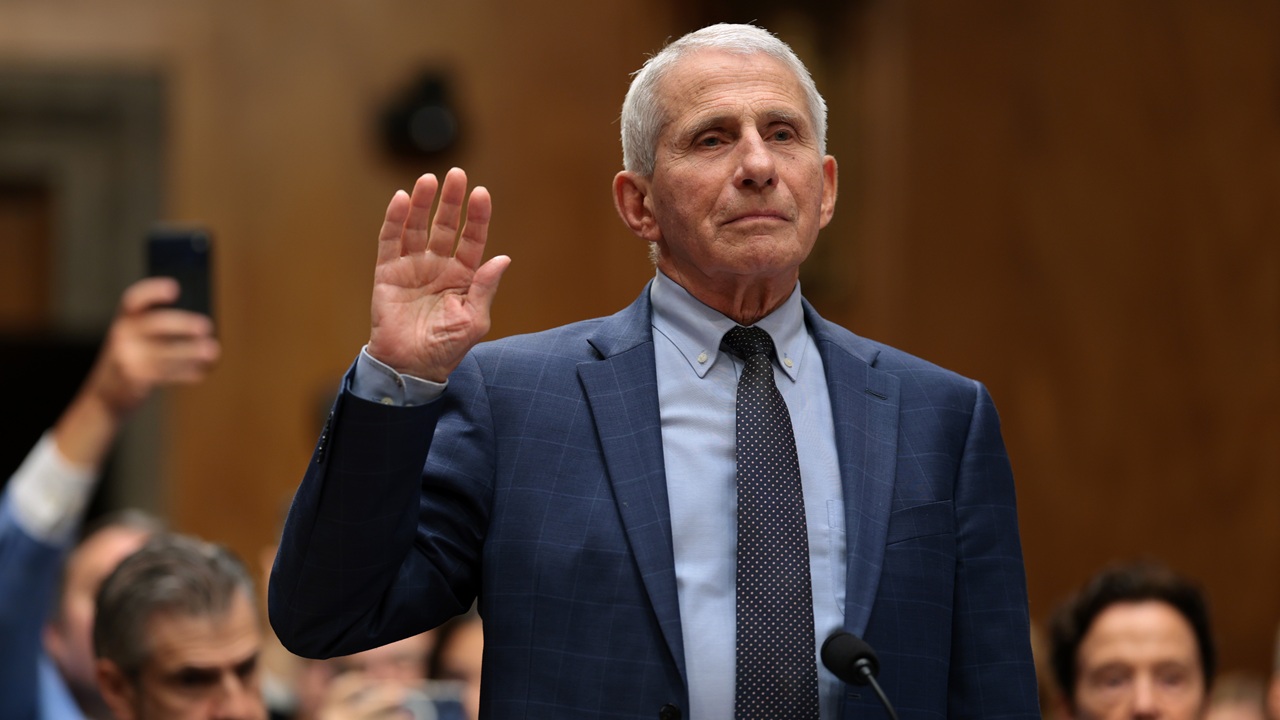
Now that the Senate Homeland Security and Governmental Affairs Committee has voted along party lines to hold Anthony Fauci in contempt of Congress, the inevitable question is: What happens next?
Freedom Is Back
In Style
Premium domains for sale
The answer is both straightforward and complicated. The statute is clear; the politics are not. And the history of contempt referrals teaches a familiar Washington lesson: Congress may speak loudly, but the executive branch often decides whether there will be criminal consequences.
The starting point is 2 U.S.C. § 192, the federal contempt of Congress statute. In plain English, any person summoned by either chamber of Congress, or by a committee of either chamber, to testify or produce documents who willfully defaults, refuses to produce records, or refuses to answer a pertinent question, commits a misdemeanor. The punishment is modest on paper but serious in principle: not less than one month and not more than twelve months in jail, and a fine that ranges from $100 to $1,000.
Congress, of course, cannot try criminal cases. It can investigate, subpoena, question, and hold a witness in contempt. But criminal adjudication belongs to Article III courts, and criminal charging decisions belong to prosecutors.
That is where 2 U.S.C. § 194 comes in.
Section 194 sets out the next step. Once a witness’s failure or refusal is reported out of committee and filed with the president of the Senate or the speaker of the House, that officer is directed to certify the statement of facts under the seal of the Senate or House to the appropriate United States attorney, “whose duty it shall be to bring the matter before the grand jury for its action.”
If the Senate follows the letter of the law, Chairman Rand Paul, R-Ky., or committee staff, will prepare the factual statement and send it to the president of the Senate. Despite what people may think, the president of the Senate is not the majority leader, Sen. John Thune, R-S.D. Under Article I, Section 3, Clause 4 of the Constitution, it is the vice president of the United States, J.D. Vance.
Senate leadership would then have to decide whether to bring the committee’s contempt resolution before the full Senate. If the full Senate adopts the resolution, it can direct the president of the Senate to certify the contempt citation to the appropriate United States attorney—here, the U.S. attorney for the District of Columbia.
Perhaps to avoid the arcane Senate filibuster rules, Paul, as chairman of the Committee, decided to fast-track the process, drafted the contempt referral, and sent it directly to the Justice Department.
At first blush, each part of Section 194 sounds mandatory. But experienced lawyers know better than to stop reading at “shall.” Courts and the Department of Justice have long recognized a measure of prosecutorial discretion in this area. That discretion is not theoretical. It has been exercised in high-profile contempt cases before. Furthermore, Section 194 does not require the full Senate to take a vote on the contempt referral.
The obvious comparison is Lois Lerner. In 2014, after the House Oversight and Government Reform Committee voted to hold Lerner in contempt for refusing to answer questions about the IRS’s targeting of conservative organizations, the full House voted 231-187 to adopt the contempt resolution and directed then-Speaker John Boehner to certify the matter to the District of Columbia U.S. Attorney’s Office.
Then-U.S. Attorney Ronald C. Machen Jr. declined to prosecute. In a letter to Boehner, Machen concluded that Lerner had not waived her Fifth Amendment privilege by making a general opening statement denying wrongdoing. He also took the position that it would not be appropriate to present the matter to a grand jury where, in his view, the Constitution supplied an absolute defense. That decision was controversial then, and it remains instructive now.
What’s Next?
Fauci’s lawyer, David Schertler, is no novice. He is a former assistant U.S. attorney for the District of Columbia and a seasoned Washington criminal defense lawyer. He has represented a wide array of clients, including Blackwater defendants prosecuted after the 2007 Nisour Square shooting in Iraq. In Washington legal circles, he is regarded as one of the best. (In the interest of full disclosure, he is a friend of the author.)
Assuming Fauci authorizes him to fight, Schertler will almost certainly mount a layered defense designed to stop any prosecution before trial. Expect arguments that the contempt finding was defective from the start; that Fauci had a valid Fifth Amendment privilege; that the committee exceeded its legitimate legislative purpose; that certain questions were not pertinent to any proper inquiry; and that the hearing was less about legislation than it was about creating a perjury trap.
The validity of some of those arguments will almost certainly be questioned if they are made. Fauci reportedly enjoyed a broad pardon from President Joe Biden covering actions within his professional responsibilities from 2014 through the end of the Biden term. If that pardon applies, it narrows any credible fear of prosecution for covered conduct during that period. In practical terms, it makes a blanket invocation of the Fifth Amendment harder to defend.
The Fifth Amendment is not a magic wand. A witness may invoke it when a truthful answer could reasonably furnish a link in the chain of evidence needed to prosecute him. But the privilege is ordinarily assessed question by question. If a witness refuses to answer every question, including innocuous questions that could not plausibly incriminate him, the committee will almost certainly argue that the invocation was overbroad and abusive.
None of this is preordained. If the full Senate does not adopt the committee’s recommendation, the matter may end there. If the Senate does adopt it, the contempt citation goes to the president of the Senate for certification. If it is certified to the U.S. attorney for the District of Columbia, the charging decision moves from the political branches to the prosecutorial branch.
Because contempt under Section 192 is a misdemeanor, the process may not unfold exactly like the statutory text’s reference to a grand jury suggests. The U.S. attorney could decide to charge by information where procedurally available, decline prosecution, or seek further review within the Department of Justice. Whatever route she chooses, her decision will be scrutinized through a political lens.
If the U.S. Attorney charges Fauci, the defense will probably respond with a barrage of pretrial motions. Those motions will likely seek to dismiss the case outright or, at a minimum, narrow it dramatically. They will attack pertinency, legislative purpose, privilege, notice, committee procedure, and the scope and effect of any pardon.
If the case survives those motions, Fauci would face a strategic choice. Because the maximum penalty is one year, he could elect a jury trial. He could also seek a bench trial if the government agrees. A District of Columbia jury is hardly a hostile venue for Fauci. Nor is it difficult to imagine a District of Columbia Superior Court trial judge viewing the case through a skeptical lens, especially if the court believes the contempt referral is bound up with partisan combat rather than a clean assertion of congressional authority.
And even if Fauci were convicted, the practical consequences could be modest. A judge could impose no jail time and a nominal fine. That would give Congress a symbolic victory but not much more.
So Why Is This Important?
The committee vote is important. It signals that the Senate committee believes Fauci obstructed legitimate congressional oversight. But a committee vote is not a conviction, and a contempt citation is not self-executing.
The contempt referral has a long way to go before ultimate legal resolution.
That is the difference between law on the page and law in Washington. The statute gives Congress a weapon. Whether that weapon is fired, and whether it hits anything, depends on politics, prosecutorial judgment, constitutional defenses, venue, and judicial discretion.
So where does this go next? Possibly nowhere. Possibly to a misdemeanor charge. Possibly to years of motions and headlines.
But Fauci’s refusal to answer questions was sweeping, and Congress has a serious institutional interest in pressing the matter. Congressional subpoenas are not invitations. Oversight is not optional. And witnesses—even famous ones—do not get to decide for themselves which lawful questions Congress is entitled to ask.
More from this network:
Domains for Sale · GOTPeople.org · TheDSAPlatform · The Truth About Socialism
What's Your Reaction?
 Like
0
Like
0
 Dislike
0
Dislike
0
 Love
0
Love
0
 Funny
0
Funny
0
 Wow
0
Wow
0
 Sad
0
Sad
0
 Angry
0
Angry
0

I am just an average American. My teen years were in the late 70s and I participated in all that that decade offered. Started working young, too young. Then I joined the Army before I graduated High School. I spent 25 years in, mostly in Infantry units. Since then I've worked in information technology positions all at small family owned companies. At this rate I'll never be a tech millionaire. When I was young I rode horses as much as I could. I do believe I should have been a cowboy. I'm getting in the saddle again by taking riding lessons and see where it goes.
Premium domains for sale









Comments (0)