

The Trump Administration Strikes A Big Blow To China’s Chip Chain And Its Spy Game
Premium domains for sale
Freedom Is Back In Style
On Monday, the Trump administration set the record straight on Chinese companies affiliated with Beijing’s military. Back in February, the Pentagon published, then quickly deleted, an updated version of its “1260H List,” a reference to the section of the National Defense Authorization Act (NDAA) that requires the Department of War to publish lists of Chinese companies linked to the People’s Liberation Army (PLA). The list helps government contractors avoid national security threats and cautions private companies about the material and reputational risk of partnering with PLA-aligned actors.
Freedom Is Back
In Style
Premium domains for sale
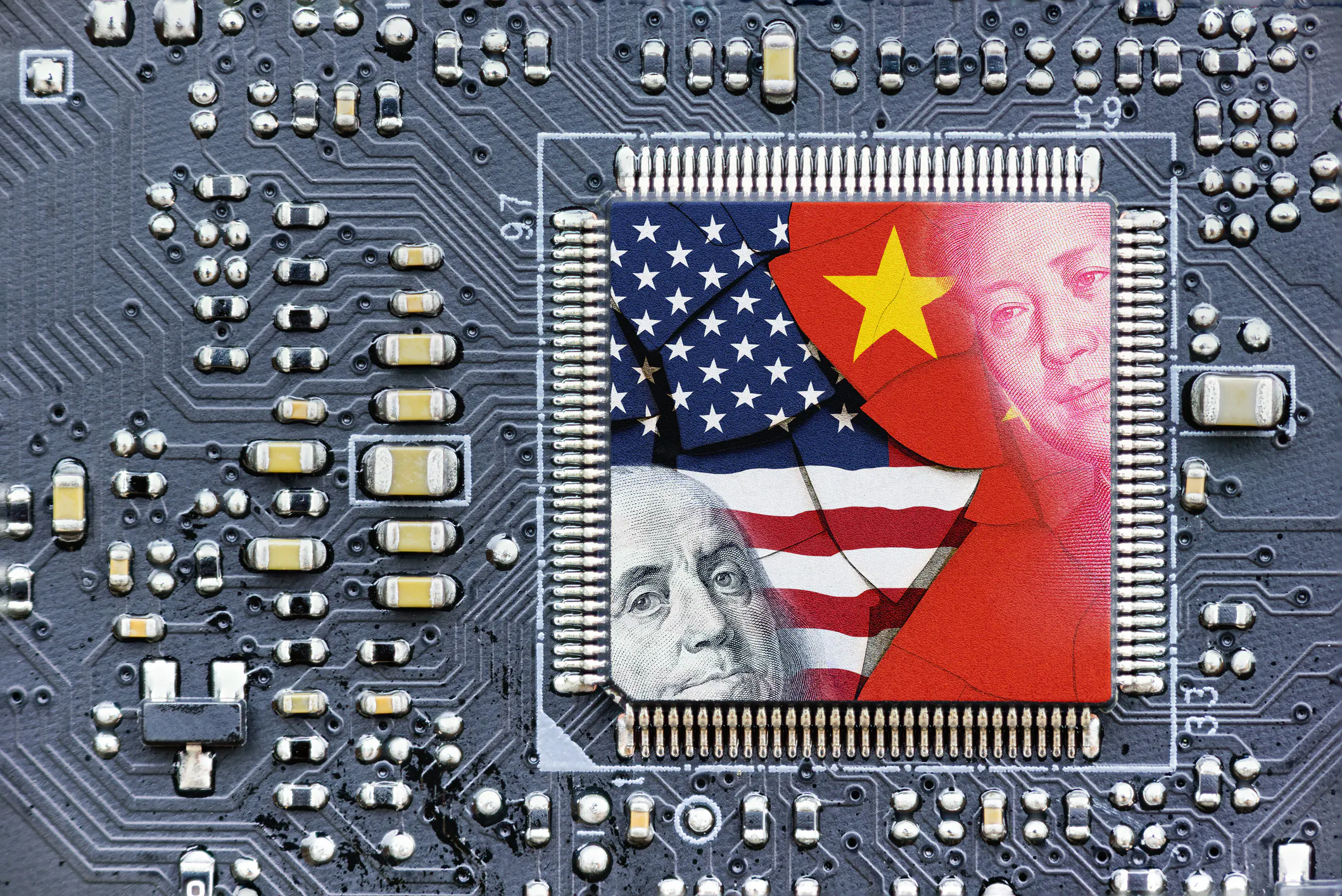
The administration was right to reissue the list, and even more justified in new additions. Notable new entries to the 1260H list are ChangXin Memory Technologies (CXMT) and Yangtze Memory Technologies Corp (YMTC). Both companies participate in the Chinese Communist Party’s (CCP) military-civil fusion strategy and present data security and espionage risks to U.S. defense supply chains. President Donald Trump is doing important work in decoupling America’s access to critical minerals from CCP-controlled supply chains. He has now taken a significant step toward doing the same for memory chips.
Memory chips play a supporting but critical role in the AI revolution. Unlike graphics processing units (GPUs), the compute devices that perform mathematical operations in AI models, memory chips store and ferry the data that GPUs process. Without them, the world’s most powerful AI chips sit underutilized. The AI boom has boosted the valuations of memory chip companies like Samsung, SK Hynix, and Micron due to demand for memory chips. These “big three” companies accounted for 90% of the global market share for memory chips in 2025. But demand is outpacing supply, and multiple companies are warning of prolonged shortages, with prices trending upward.
Enter CXMT and YMTC. Last year, CXMT held 6% global market share for DRAM chips, and YMTC cornered 11% of the market for NAND chips. Despite their small presence, both companies are capturing the attention of U.S. tech giants. According to the People’s Republic of China (PRC) media, Apple is considering purchasing memory chips from both CXMT and YMTC to defray rising costs from Japanese and American providers. Dell and HP are also reportedly turning to CXMT for cheaper chips. Notably, both Chinese companies are reportedly collaborating to develop high-bandwidth memory (HBM) chips, which would compete directly with cutting-edge products from Samsung, SK Hynix, and Micron.
The lure of cheap chips in a tight market is real. Beijing’s industrial strategy is primed to exploit these dynamics and gobble up market share, just as it has done in other critical industries. In 5G telecommunications, Huawei undercut global competition with below-market pricing to dominate markets in Europe, the Middle East, and Southeast Asia. Chinese display companies are doing the same with memory chip technology. As Micron officials recently warned members of Congress, the same playbook that handed Beijing dominance over solar panels, lithium batteries, and rare earth refining could launch CXMT and YMTC from marginal players to global titans.
By some measures, their prices undercut their competitors’ rates by 15%. According to a CCP united front source, CXMT and YMTC both receive financial assistance from China’s Integrated Circuit Industry Investment Fund (colloquially called the “Big Fund”) and participate in China’s drive for semiconductor self-sufficiency. To wit: Beijing has apparently directed CXMT to phase out older consumer-grade memory products in favor of server and AI-focused chips. Meanwhile, YMTC is building a third fab in Wuhan with more than half its equipment sourced domestically.
These companies are not competing on merit. They are state-subsidized national champions executing a deliberate industrial strategy designed and underwritten by the CCP. As such, policymakers should consider the national security risks if Washington does nothing to head off CXMT and YMTC’s global rise.
The most immediate concern is supply chain exposure. In 2010, Beijing halted rare earth exports to Japan over a territorial dispute. In 2025, it imposed export controls on gallium, germanium, and other defense-critical heavy minerals to the United States. Memory chips could be next in line. If America’s AI infrastructure relies on affordable memory chips from CXMT and YMTC, Beijing would have its thumb on the scale of U.S. computing. In such a world, private competitors in America, Japan, and elsewhere may not survive for long.
Moreover, several concerns arise from the chips themselves. Memory chips embedded in government systems and defense-adjacent infrastructure are not passive devices. They receive firmware updates that control and shape their operation. When manipulated by a foreign adversary, that firmware presents a potential attack vector. Policymakers cannot presume that chips from companies subject to PLA direction and CCP data-sharing requirements are reliable or safe. Congress recognized this in the FY2023 NDAA, which restricted the U.S. government from procuring components from PRC companies, including CXMT and YMTC. Compromised chips could also enable persistent access or data exfiltration that may be difficult to detect. In a crisis, Beijing could weaponize Chinese memory chips in U.S. systems to cut off supply or possibly sabotage American infrastructure. For all these reasons, policymakers on both ends of Pennsylvania Avenue should act now to hamstring Beijing’s gambit to dominate memory chips.
The Trump administration has done its part by reissuing the 1260H list and including CXMT and YMTC. Congress crafted this authority precisely to highlight risks from PRC entities that blur the line between commercial enterprise and the PLA. Moreover, Congress should also move to deny these companies the tools to compete globally. The bipartisan Multilateral Alignment of Technology Controls on Hardware (MATCH) Act would accomplish this objective, either by diplomacy or extraterritorial export controls. Washington has momentum now, and policymakers should seize this moment. America cannot win the AI race with U.S. data centers housed by CCP-controlled chips.
***
Michael Sobolik is a senior policy fellow at the Hudson Institute.
More from this network:
Domains for Sale · GOTPeople.org · TheDSAPlatform · The Truth About Socialism
What's Your Reaction?
 Like
0
Like
0
 Dislike
0
Dislike
0
 Love
0
Love
0
 Funny
0
Funny
0
 Wow
0
Wow
0
 Sad
0
Sad
0
 Angry
0
Angry
0

I am just an average American. My teen years were in the late 70s and I participated in all that that decade offered. Started working young, too young. Then I joined the Army before I graduated High School. I spent 25 years in, mostly in Infantry units. Since then I've worked in information technology positions all at small family owned companies. At this rate I'll never be a tech millionaire. When I was young I rode horses as much as I could. I do believe I should have been a cowboy. I'm getting in the saddle again by taking riding lessons and see where it goes.
Premium domains for sale























Comments (0)