

The Weight Loss Shot Is Rising, But What Happened To The American Family Table?
Premium domains for sale
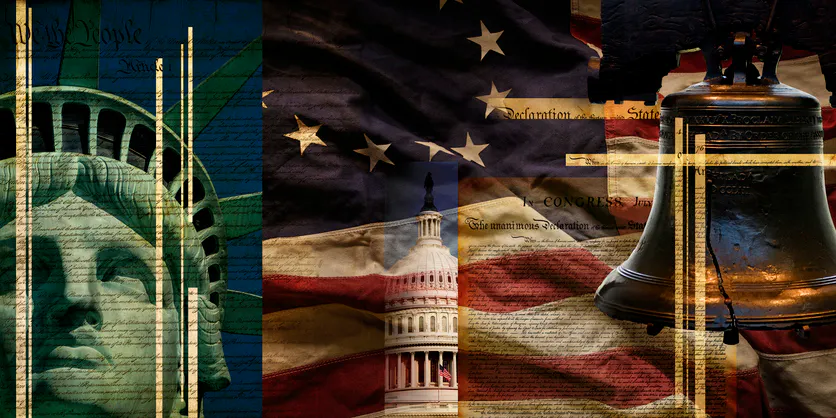
Freedom Is Back In Style
This article is part of Upstream, The Daily Wire’s new home for culture and lifestyle. Real human insight and human stories — from our featured writers to you.
Freedom Is Back
In Style
Premium domains for sale
***
The rise of Ozempic is as much a story of American ingenuity as it is of our culture’s posture toward its food. For every excess pound Americans gain, the pharmaceutical industry is just a few steps behind, developing band-aid after band-aid for our crisis of chronic disease. Yet while our alarm bells only recently began sounding over the obesity epidemic and its cascade of related health issues, the roots of our disordered relationship with food run decades deeper, back to the second wave of feminism and the rise of a convenience-driven culture that ushered in mass dependence on ultra-processed foods. This deeper crisis is not one we can medicate ourselves out of: We are a nation that has deliberately forgotten how to feed itself.
Feeding America well is less about nostalgia than stopping a tangible, observable public health and environmental crisis. By now, data regarding our obesity, hypertension, and related deaths, diseases, and disorders saturates popular discourse almost too deeply to bear repeating, but the fact that our poor health has become a cliché doesn’t make it any less true. Much of this crisis, unsurprisingly, begins in the kitchen. The “cooking illiterate,” a term coined by the New York Times, is reproducing faster than ever, with younger generations decreasingly likely to know how to cook. More than a quarter of millennials say they couldn’t make a cake from a box mix, and under a third of 18-to-29-year-olds say they feel “confident” in the kitchen. It isn’t an issue of free time, either; the COVID-19 lockdowns led to a spike in DoorDash and Uber Eats, not a renaissance of home cooking.
Our obsession with convenience culture is not a coincidence. Rather, it’s the direct result of devaluing work such as homemaking, caregiving, and food preparation, traditionally women’s work, as lesser forms of work. This shift then combined with rising dual-income households to create a cultural and logistical void in domestic food production as households’ mothers entered the workforce. Industrial food companies were all too quick to rush into that void, seeking markets for post-WWII manufacturing capacity. Corporate interests aligned all too conveniently with the “you can have it all” ethos, promoting shelf-stable, processed foods as “freedom” from and “progress” beyond the home. This cultural transformation was hardly intentional; in many ways, it was barely even a conscious one. Nevertheless, markets picked up on our demonstrated preferences, and our homemade food was replaced by manufactured supplements that quickly became substitutes.
Industry replaced the family kitchen, filling a vacuum with promises that were too good to be true. Additives and preservatives were marketed as “science,” frozen and boxed meals were sold as “liberation,” and the rise of the microwavable dinners framed speed as ingenuity. Generational skills eroded as cooking, gardening, and food knowledge were outsourced, and food quality plummeted as additives, preservatives, artificial ingredients, refined seed oils, and industrial-scale commodity crops became dietary staples. Systems once centered around nourishment came to serve America’s new favorite god: efficiency.
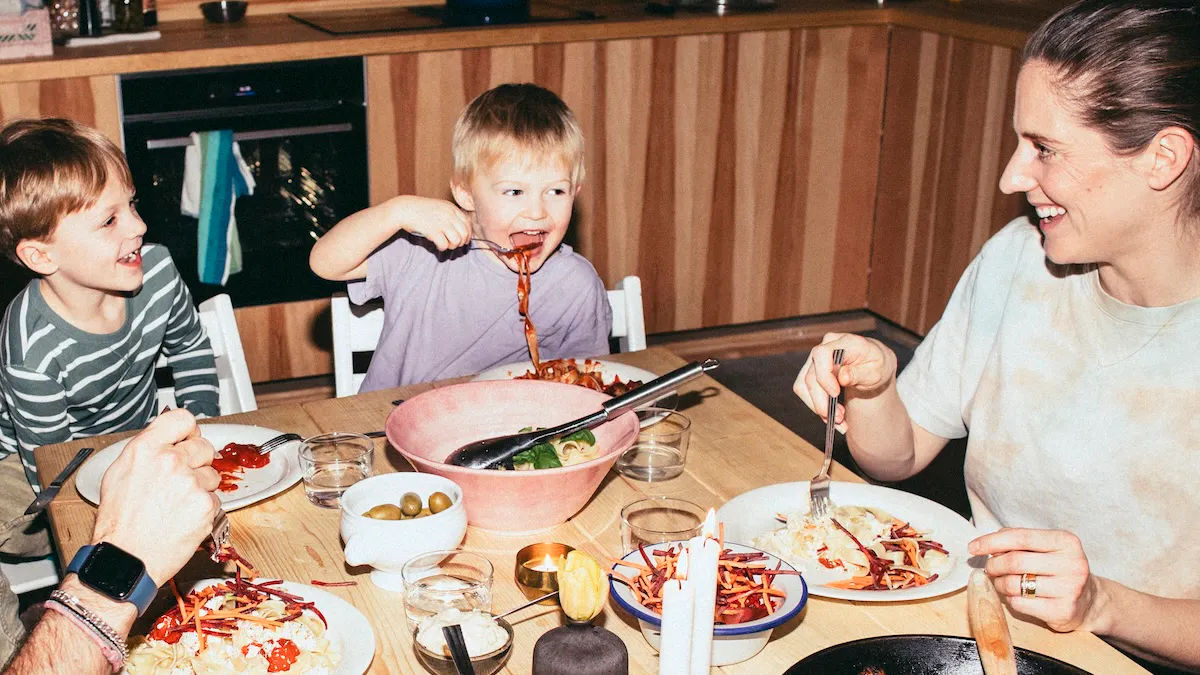
With our food sequestered away in boxes and plastic, cobwebs began to grow around tables where we soon forgot how to commune. Feeding ourselves became a necessary evil rather than an excuse to socialize, exacerbating America’s declining social capital along with its biomarkers. Rates of metabolic disease climbed along with the number of ingredients in our staple foods and our distance — physical and cognitive — from our foods’ origins. Today, less than a third of children aged 7-11 can identify a beet or a zucchini, though few kids have the same struggle recognizing logos for McDonald’s or M&M’s. The decline in familiarity with food may have begun with the decline in farming and cooking, but it has accelerated over just a few generations to a full-fledged outsourcing of our culinary and nutritional autonomy.
The consequences of our predicament are difficult to overstate. Our country is now unsuccessfully battling parallel rises in childhood chronic disease, allergies, autoimmune disorders, and metabolic illness, and our decline in food literacy means that children who don’t know where food comes from can’t learn from their equally clueless parents. While the biotech industry may be able to patch up some of our health issues, it cannot heal a sick culture. Our loss of connection to food is also an atrophy of cultural rituals, among them shared meals, family identity, and an intergenerational knowledge transfer we cannot rebuild with an injectable, pill, or patch. All of this is underscored by our deteriorating relationship with the land we call home, as industrial food production has increased our land degradation, reliance on synthetic inputs, and biodiversity loss, reinforcing a cycle where the cheapest calories are the least nutritious and most environmentally damaging.
Making America healthy again will require rewiring the broken systems that have made her sick. We need to fix the regulatory frameworks that make it easier to produce processed food at scale than to support small farms, diversified agriculture, or nutrient-rich perishables. We need to address the permitting barriers currently hindering regional food processing, regenerative farm expansion, and the infrastructure needed for local food systems. Most of all, we need to accept that a healthy America requires aligning food policy with human health and environmental integrity — not just agricultural output — and we need to write agricultural policy that reflects that. Ultimately, success would look like an inversion of the industrial food supply chain that prioritizes export capacity and shelf-stability over nutrient density and ecological health.
And yet policy alone cannot save us. The real work begins in the home, with the deeply pro-human and pro-family pursuits of reclaiming shared meals and rebuilding a relationship with what we eat. Promoting food literacy, normalizing cooking as a basic life skill, and restoring the dignity of the farm and the kitchen are all efforts that will need to begin from the ground up, not an executive order or a farm bill. Restoring agency over the food that sustains our bodies and communities is a project that will take several generations and, if we’re successful, save several more.
America cannot be healthy again until families, communities, and institutions reclaim the ability to produce, prepare, and understand real food. We’re mistaken to believe that the fallout we’re enduring is merely biological, and equally mistaken to believe its solutions are merely political. Our country’s health is a project capable of nourishing a nation starving socially, culturally, and environmentally, if we choose to pursue it. Restoring it promises both the work and the reward of a lifetime.
***
Danielle Butcher Franz is CEO of the American Conservation Coalition. As a founding member of ACC, Danielle has dedicated her career to building bridges between traditional conservative values and environmental advocacy.
The views expressed in this piece are those of the author and do not necessarily represent those of The Daily Wire.
More from this network:
Domains for Sale · GOTPeople.org · TheDSAPlatform · The Truth About Socialism
What's Your Reaction?
 Like
0
Like
0
 Dislike
0
Dislike
0
 Love
0
Love
0
 Funny
0
Funny
0
 Wow
0
Wow
0
 Sad
0
Sad
0
 Angry
0
Angry
0

I am just an average American. My teen years were in the late 70s and I participated in all that that decade offered. Started working young, too young. Then I joined the Army before I graduated High School. I spent 25 years in, mostly in Infantry units. Since then I've worked in information technology positions all at small family owned companies. At this rate I'll never be a tech millionaire. When I was young I rode horses as much as I could. I do believe I should have been a cowboy. I'm getting in the saddle again by taking riding lessons and see where it goes.
Premium domains for sale












Comments (0)