

'Traitor': Former FBI spy-catcher spills interrogation secrets in gripping new book
Premium domains for sale
Freedom Is Back In Style

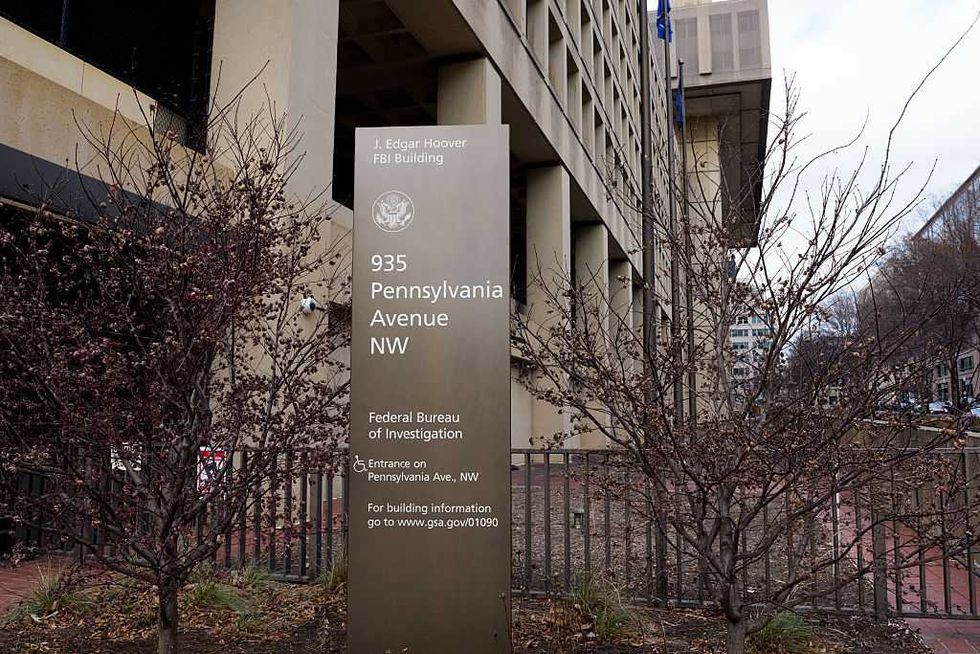
Former FBI counterintelligence agent Wayne Barnes says one of the best ways to catch a spy is to ask a simple question — like when his birthday is.
Freedom Is Back
In Style
Premium domains for sale
Barnes, whose new book "A Traitor in the FBI: The Hunt for a Russian Mole" came out last month, spent nearly 30 years in counterintelligence, where he debriefed a record number of Soviet and Soviet-Bloc assets. In an interview with Align, Barnes described the psychological tactics, subtle tells, and ethical contrasts that defined Cold War espionage.
'You have to have the straightest poker face you could ever imagine.'
Born yesterday
While Barnes acknowledges that his career could occasionally involve the kind of dramatic deception shown in the movies, he often employed more mundane subterfuge.
Take the man from Afghanistan who applied to join the FBI in the 1980s. While his background could have made him a useful asset, Barnes, then working as a security officer in Washington, D.C., wanted to vet him first.
The interview happened in late December. Noticing that the man had listed his birthday as January 1 on his application, Barnes decided to see how he handled a simple question.
"I asked, 'Do you have any plans for your birthday?' and he said, 'Why'd you ask that?' And I said, 'Well, it's in a couple weeks.'"
Without thinking, the man corrected Barnes: "Oh no, my birthday is July 6."
"For most people, the day they were born is a day that they won't forget," Barnes remembers telling the applicant.
From there, the man's story began to fall apart. Eventually the agency concluded that the applicant was working for the Afghan mujahideen.
RELATED: The doomer delusion
 Nathan Posner/Anadolu Agency/Getty Images
Poker face
Barnes describes his interview technique as a "verbal polygraph"; it's not an exact science, but if you know what you're doing, it will "ferret out" a lot of people.
That required intense discipline from FBI agents themselves. When debriefing Soviet intelligence officers or defectors, Barnes says agents had to carefully conceal what they already knew.
"You have to have the straightest poker face you could ever imagine," he says.
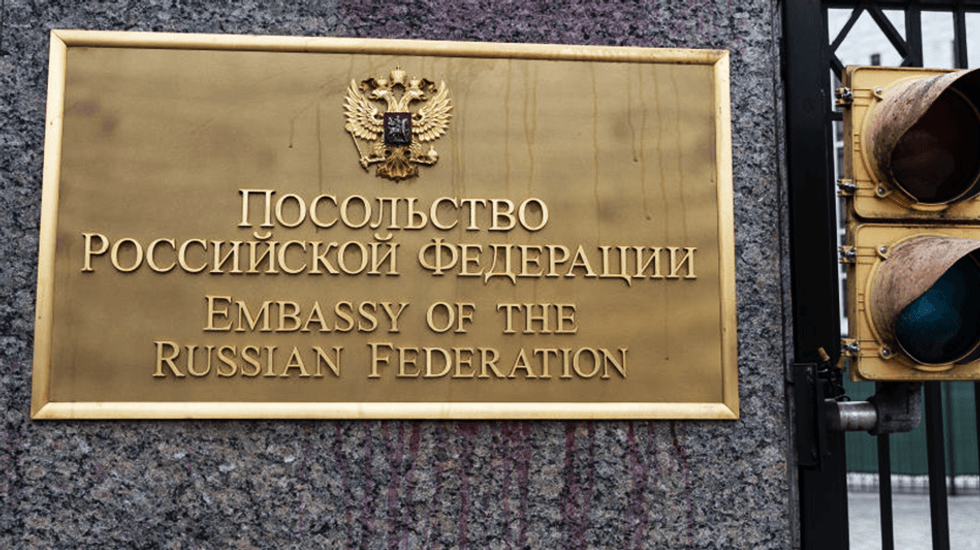
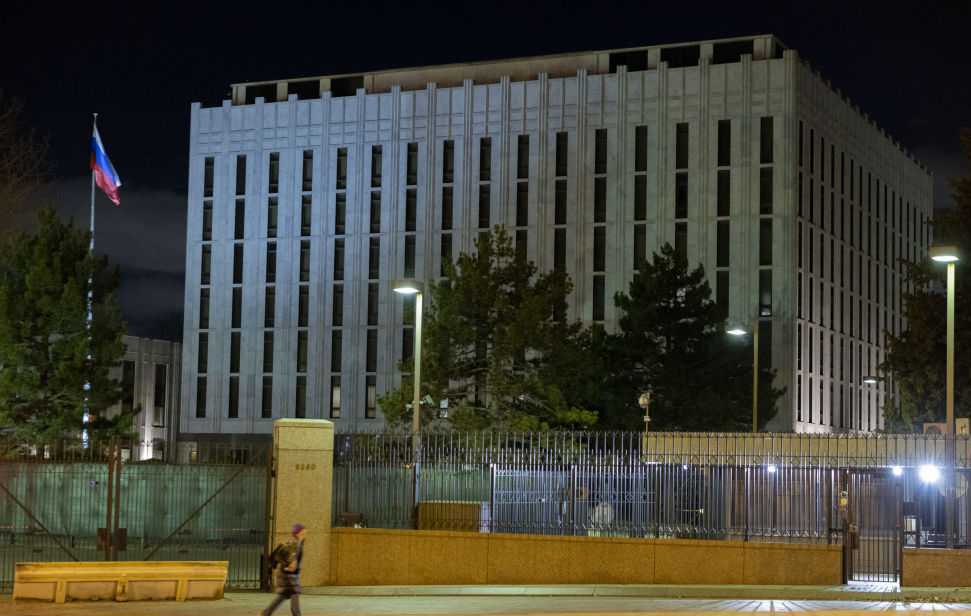
Agents would sometimes spread out photographs of Soviet embassy personnel they suspected of spying and casually ask whether the subject had seen them at a restaurant, training class, or bar. Every response mattered — not just what was said, but how long someone spoke, how nervous they appeared, or whether they seemed too rehearsed.
"[Did] he talk about him too long? Did he talk about him too short?" Barnes explains. "Debriefing intelligence officers is very tricky ... and ... very narrow."
Barnes also notes that it was standard for agents from the Soviet Bloc to claim they had already compromised Western forces.
"Whether the Romanians or Czechs, or Poles or Hungarians, they always say, 'Oh, we have you penetrated.'"
On the hook
Barnes also describes how Soviet operatives recruited Americans willing to sell secrets.
"Follow a guy from the Soviet embassy in his car. He leaves at 5:30, and [you] see he lives in a garden apartment someplace in Alexandria, Virginia," Barnes details.
"He goes inside, and you have a note in your hand, and you put it under his windshield wiper, and the next morning he gets it. It says, 'I have secrets to sell ...'"
"The Russians almost always followed through," Barnes says.
At first, the payments were small — just enough to create leverage.
"They'd say, 'This was good stuff, but it's only worth $5,000. If you want another $5,000, you need to bring more.'"
Once an American accepted money, Barnes says, fear and blackmail often kept them cooperating. In reality, however, the chances of the Russians exposing a spy were slim.
"The Russians won't turn him in," Barnes explains, as their priority is to extract as much information as possible.
 Aaron Schwartz/Bloomberg/Getty Images
Moral difference
The Soviets were also not above pressuring their own agents by threatening family members, Barnes says.
"If your brother's in college, his life is over," Barnes says. "That's the leverage [they] had on the KGB people."
For Barnes, that dynamic highlighted what he viewed as a major moral difference between the United States and the Soviet Union. While Soviet intelligence services allegedly threatened defectors' families, American handlers often tried to help them — including offering medical assistance or protection.
Many Soviet defectors, Barnes adds, changed sides not because of ideology, but because they realized they had been lied to about life in America.
"They'd come here and see stores full of food — entire stores just selling cheese," Barnes says. "It was a, 'They've been lying to me,' sort of realization."
That contrast, he says, often planted the seed for future cooperation with American intelligence.
"We live in a land of freedom," Barnes concludes. "Compared to the Soviet Union, there's nothing like America. ... Their system was set up in such a way that was so different than ours. ... So it was really a terrible place."
Like Blaze News? Bypass the censors, sign up for our newsletters, and get stories like this direct to your inbox. Sign up here!
More from this network:
Domains for Sale · GOTPeople.org · TheDSAPlatform · The Truth About Socialism
What's Your Reaction?
 Like
0
Like
0
 Dislike
0
Dislike
0
 Love
0
Love
0
 Funny
0
Funny
0
 Wow
0
Wow
0
 Sad
0
Sad
0
 Angry
0
Angry
0

I am just an average American. My teen years were in the late 70s and I participated in all that that decade offered. Started working young, too young. Then I joined the Army before I graduated High School. I spent 25 years in, mostly in Infantry units. Since then I've worked in information technology positions all at small family owned companies. At this rate I'll never be a tech millionaire. When I was young I rode horses as much as I could. I do believe I should have been a cowboy. I'm getting in the saddle again by taking riding lessons and see where it goes.
Premium domains for sale








Comments (0)