

Trump Didn’t Sell America on War in Iran. He Doesn’t Need To.
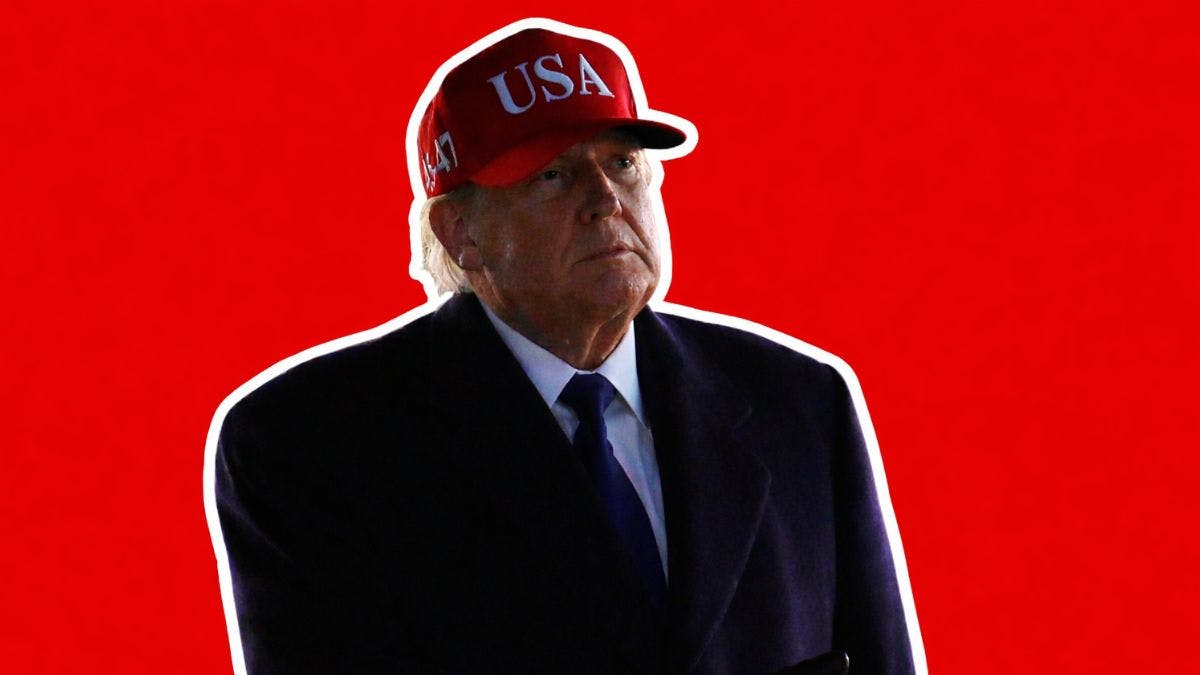
Donald Trump understands something fundamental about foreign policy that most politicians don’t — including ones who have been active in this space for a very long time.
Live Your Best Retirement
Fun • Funds • Fitness • Freedom
In the run-up to Operation Epic Fury, the critique circling on Capitol Hill wasn’t quiet. Republicans were concerned that, given the risk factors involved in a major regime change war — even one that was undertaken overwhelmingly by air and sea, not Army boots on the ground — the president had done little or nothing to warn the American people of the potential losses inherent in any attack.
Unlike the precision strikes Trump has used in the past — amazing feats of military technological capability, yes, but with lower potential loss of American lives — going after the Iranians meant inevitably setting off a barrage of missiles and drones that could attack all America’s forces in the Middle East, as well as our allies and regional partners.
Exfiltrating Nicolás Maduro and his wife without the loss of a single American life was an incredible achievement, one that was only possible thanks to the bravery and commitment of a terribly wounded helicopter pilot. Things could’ve gone sideways very quickly. Instead, the American forces under Trump pulled it off without one death. Assign it to good fortune, good planning, or the grace of God, but this is not the way such missions are expected to go.
The line from one old military hand to me in the run-up to the Iran strike was simple: How long can the old man keep going back to the table and coming up aces?
That risk, for a normal politician, would require advance mitigation. Think back to the lengthy effort George W. Bush and his associates put into making the case for war in Iraq. The many briefings, public speeches, presentations before the United Nations, and an open effort on television and in op-ed pages to make the case for war were meant to warn people of the potential loss of life and materiel. The message was clear: Steel yourselves for the worst, but understand we’re doing this because we think it needs doing. Saddam Hussein’s weapons of mass destruction require it.
Of course, after the WMD turned out to be a pittance of what was expected, and Hussein’s threats turned out to be the actions of a blowhard maintaining his hold on power, the Bush administration was forced into an uncomfortable pivot toward a war built on positive vibes and spreading democracy. The whole prewar case turned out to be built on falsehoods, albeit falsehoods every intelligence service in the West purportedly believed.
Trump became, like so many Americans, an outspoken critic of this war after the fact, as it dragged on interminably and descended into chaos that cost American lives and resources. He took the lesson, as did many politicians in the rising generation, that boots-on-the-ground regime-change wars without clear goals in mind are a pointless and expensive exercise.
But Trump seems to have taken another lesson from it, too: that the messaging build up to such action is unwise and unnecessary.
So, if the political critique of President Trump’s approach in Iran is that he didn’t make the case to the American people, it’s true — he didn’t. He understands that he doesn’t need to.
Americans assess foreign policy and national security not as ever-running aspects of their daily lives, but as a binary: success, or failure. We like to win. We hate to lose.
What Trump has done is show that he knows more about the reality of these issues politically than any longstanding politician, consultant, or commentator. He understands the importance of unpredictability. He makes his decisions in his own time and believes Americans will judge him only if his effort is unsuccessful. And if it is a failure, no amount of prior argument — readying the ground with an awareness of risk, detailing the potential benefits to energy markets or a destabilized China — will make a difference anyway.
It’s a fundamental change in the way an administration conducts foreign policy. It’s in keeping with Trump’s roll the dice approach. And it’s also based on enormous confidence in what the United States military is capable of when you ask them to blow something up instead of changing hearts and minds.
Donald Trump understands the old Vince Lombardi dictum applies here: Winning isn’t everything — it’s the only thing.
What's Your Reaction?
 Like
0
Like
0
 Dislike
0
Dislike
0
 Love
0
Love
0
 Funny
0
Funny
0
 Wow
0
Wow
0
 Sad
0
Sad
0
 Angry
0
Angry
0

I am just an average American. My teen years were in the late 70s and I participated in all that that decade offered. Started working young, too young. Then I joined the Army before I graduated High School. I spent 25 years in, mostly in Infantry units. Since then I've worked in information technology positions all at small family owned companies. At this rate I'll never be a tech millionaire. When I was young I rode horses as much as I could. I do believe I should have been a cowboy. I'm getting in the saddle again by taking riding lessons and see where it goes.












Comments (0)