

Viktor Orbán Loses Reelection; What’s Next for Hungary?
Premium domains for sale
Freedom Is Back In Style
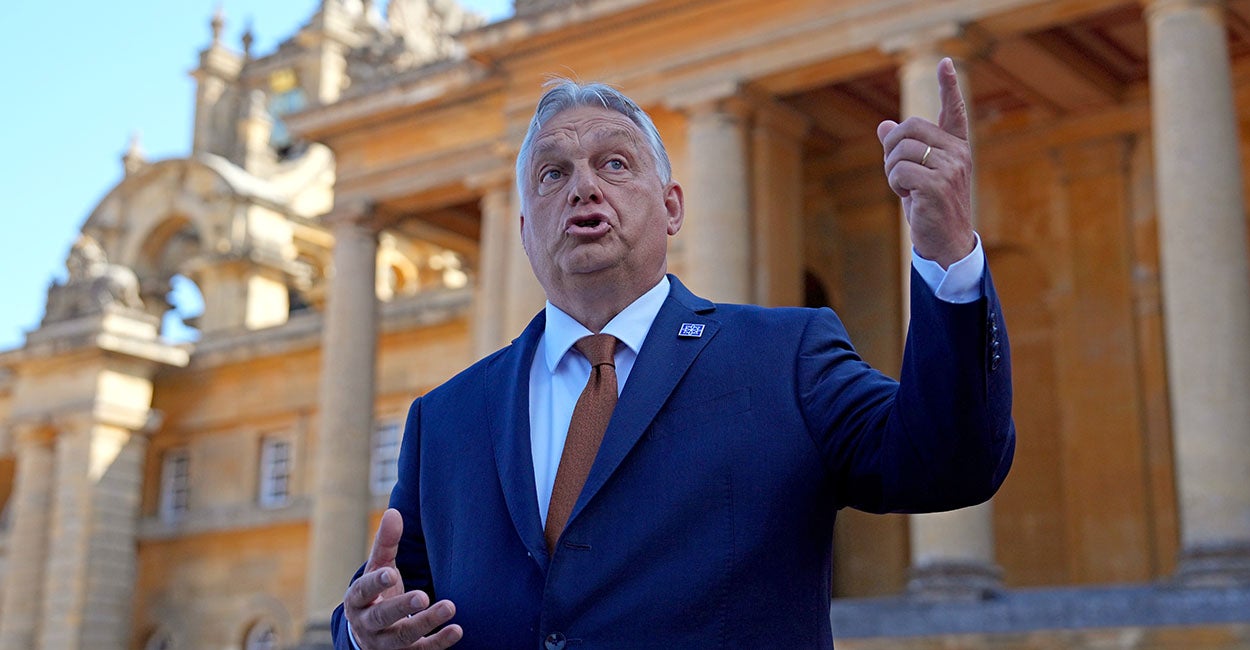
Hungarian Prime Minister Viktor Orbán will lose his position at the head of Hungary’s government after 16 years in power, but his replacement—Tisza Party leader Péter Magyar—represents less of a political sea change than a correction after alleged corruption.
Freedom Is Back
In Style
Premium domains for sale
Orbán conceded the election to Magyar on Sunday after Tisza secured more than two-thirds of the seats in Parliament. Since Hungary has a parliamentary system, the winning Tisza Party will assemble a government at a later date, replacing the current Fidesz government.
“I don’t think this is a revolutionary change in Hungary,” Nile Gardiner, director of the Margaret Thatcher Center for Freedom at The Heritage Foundation, told The Daily Signal on Monday in response to the election. “Hungary has not opted for a left-wing radical socialist government.”
“We did it,” Magyar told a crowd near Budapest’s parliament building Sunday night, the BBC reported. “Together we overthrew the Hungarian regime.”
According to preliminary election results based on 98% of counted votes, Tisza would secure 138 seats in the Central European country’s 199-seat governing body, leaving 55 for Fidesz and six for the Our Homeland Party.
Magyar ran on an anti-corruption platform, alleging that Orbán’s 16-year government had undermined checks and balances and other good-governance measures in the country. External observers had predicted that Orbán might contest a Tisza victory, but the prime minister conceded.
“The result of the election is clear and painful,” Orbán said, thanking the approximately 2.5 million Hungarians who voted for him. “The days ahead of us are for us to heal our wounds.”
What Changes?
Magyar promised to reverse Orbán’s changes to education and health, to root out corruption, restore an independent judiciary, and end the system of patronage known as NER that allegedly enriched party loyalists and squandered state resources.
He promised changes to the constitution that would require a two-thirds majority in Parliament (133 seats), and his lopsided election victory suggests he will achieve at least some of those changes.
That said, Magyar may not alter many of Orbán’s policies, Gardiner told The Daily Signal.
“We’ll see the continuation of Orbán’s approach in some key areas, including most importantly in the area of border security and defending Hungary against mass migration,” the Heritage scholar explained. “This is an incredibly important issue for Hungary, and I don’t expect you’re going to see the new government shifting away from Orbán’s hard-line approach.”
“This is not a rejection of conservatism,” Gardiner emphasized. “This was a rejection of Orbán’s government, which is not a surprise after 16 years.”
Foreign Policy Changes
The largest shift, Gardiner predicted, will come in foreign policy.
“This will be a more pro-EU government in Hungary,” he said, calling this a “negative” for the country. He noted that the EU “invested a great deal of time and effort in trying to get Magyar elected and Orbán out.”
Gardiner also saw Magyar moving in a positive direction, however.
“On the positive side here, the new Hungarian government’s going to have a more combative approach toward Russia and China, which is a path that should have been taken under Orbán,” he noted.
Conservative Background
While Magyar will end Orbán’s 16-year run, he comes from a conservative background. In fact, Magyar had been a member of Fidesz since 2002, and his ex-wife, Judit Varga, had once been considered a potential successor to Orbán.
After earning a law degree from a Catholic university in 2003, Magyar provided pro bono legal services to anti-government protesters arrested during violent opposition to the then-Socialist government. After marrying Varga in 2006, he moved to Brussels, where Varga worked advising a Hungarian member of the European Parliament.
Magyar spent some time as a stay-at-home father in Brussels, but also worked for Hungary’s Foreign Ministry and as a diplomat to the European Union.
The couple returned to Hungary in 2018, and Varga became justice minister in 2019. In 2023, however, the two divorced.
Varga later resigned in 2024 amid a scandal involving the Fidesz president pardoning a convicted accomplice in a child abuse case. For his part, Magyar broke with Fidesz, announced the Tisza Party, and accused Orbán’s government of systemic corruption.
Tisza won 30% of the vote in European Parliament elections in 2024.
Magyar campaigned this year on two key issues: rooting out corruption and improving economic growth.
Hungary has struggled economically in recent years, and it scores remarkably poorly on the Heritage Foundation’s Index of Economic Freedom. The Central European nation ranks as “moderately free,” with a score of 62.5, making it 79th out of 184 ranked countries—but 39th out of 44 countries in Europe.
The post Viktor Orbán Loses Reelection; What’s Next for Hungary? appeared first on The Daily Signal.
More from this network:
Domains for Sale · GOTPeople.org · TheDSAPlatform · The Truth About Socialism
What's Your Reaction?
 Like
0
Like
0
 Dislike
0
Dislike
0
 Love
0
Love
0
 Funny
0
Funny
0
 Wow
0
Wow
0
 Sad
0
Sad
0
 Angry
0
Angry
0

I am just an average American. My teen years were in the late 70s and I participated in all that that decade offered. Started working young, too young. Then I joined the Army before I graduated High School. I spent 25 years in, mostly in Infantry units. Since then I've worked in information technology positions all at small family owned companies. At this rate I'll never be a tech millionaire. When I was young I rode horses as much as I could. I do believe I should have been a cowboy. I'm getting in the saddle again by taking riding lessons and see where it goes.
Premium domains for sale













Comments (0)