

Virginia May Enact Disastrous Public Sector Collective Bargaining Legislation
Premium domains for sale
Freedom Is Back In Style
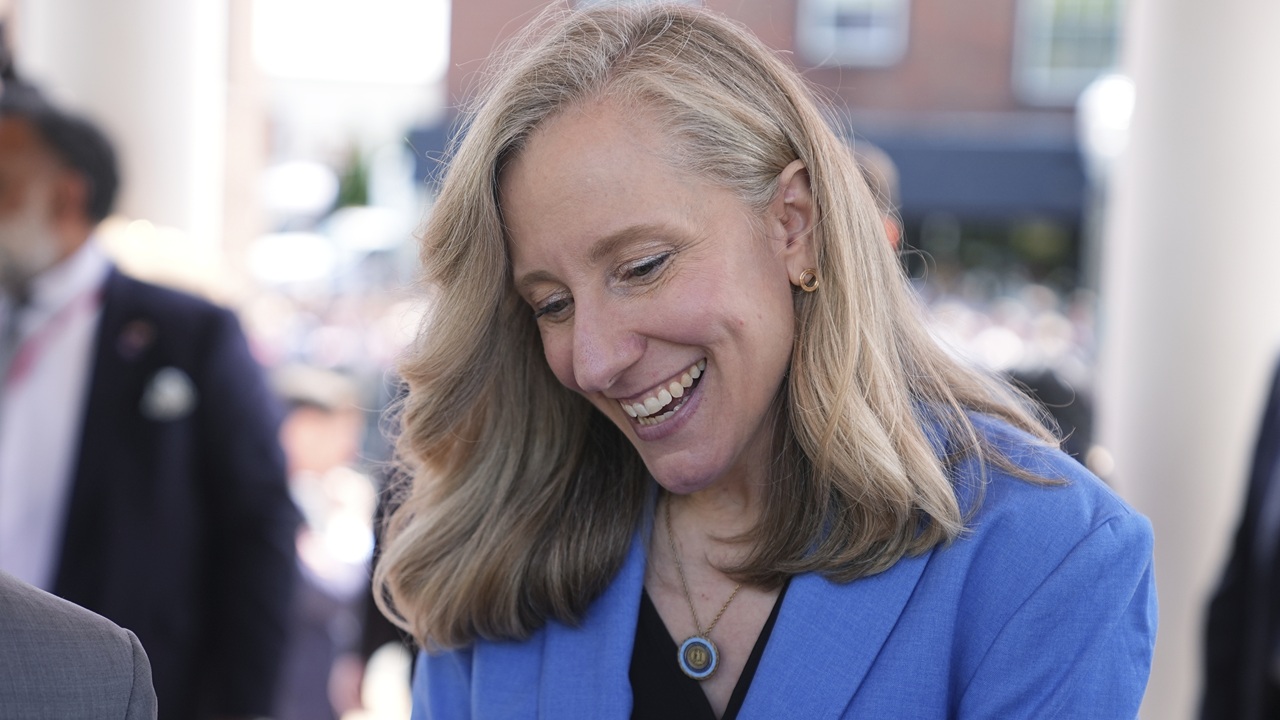
A pair of bills sits on Virginia Gov. Abigail Spanberger’s desk that, if enacted, would expand public sector union power at the expense of taxpayers.
Freedom Is Back
In Style
Premium domains for sale
Late last month, the Virginia House and Senate sent HB1263 and SB378 to the governor for her signature. Both bills would remove longstanding prohibitions on collective bargaining for public sector employees, paving the way for widespread unionization. The legislation would also create the Public Employee Relations Board, a five-member body tasked with certifying union representation, defining bargaining units, and adjudicating labor disputes.
Although localities have been permitted to authorize collective bargaining since 2020, the proposed legislation would make the new board the mandatory arbiter in all disputes involving government workers. That change would shift authority away from local governments and centralize it in Richmond.
Indeed, this transfer of power from community to capital has caused consternation between Spanberger and local mayors. The mayors of Chesapeake, Portsmouth, Suffolk, and Virginia Beach urged the governor to reject the bills, claiming “We believe these challenges are not minor technical fixes, but rather fundamental concerns that warrant a more deliberate and collaborative approach.”
The bills previously reached former Gov. Glenn Youngkin, who vetoed them, arguing that mandatory collective bargaining for government employees would increase costs for taxpayers and degrade public services.
And those costs are truly astronomical.
One need only look at the disastrous impact teachers unions have had on public education to extrapolate why allowing a cartel of public sector employees to dictate policy is a bad idea. In 2018, the United Teachers of Los Angeles demanded a retroactive 6% pay increase, an amount that would have drained the Los Angeles Unified School District’s $1.7 billion reserve in a single swipe.
They eventually achieved a 3% retroactive pay raise with a 3% total pay raise by holding the city’s students and taxpayers hostage via strike. All for a school system that hemorrhages nearly 14,000 students a year and passes just 40% of them on to college.
What a trade-off!
As further proof of the exorbitant nature of public union demands, the Texas Public Policy Foundation estimated that unfunded state and local pension liability negotiated by public unions is around $1.5 trillion, an eye-watering amount guaranteed by incestuous negotiations between unions and the politicians they elect.
Past simply gouging taxpayers, public sector unions can negatively impact public safety.
In a 2007 paper, Heritage Foundation analysts James Carafano and James Sherk argued that collective bargaining at the Department of Homeland Security could hinder operational flexibility. “Collective bargaining would force the government to trade off between greater security and union demands,” they wrote, noting that many public-sector unions prioritize seniority-based systems over merit-based advancement.
But perhaps Spanberger needs someone from her own side of the aisle to prove public sector unions are a disaster. She need look no further than arch-progressive Franklin Roosevelt.
“The process of collective bargaining, as usually understood, cannot be transplanted into the public service,” Roosevelt said. “Since their own services have to do with the functioning of the Government, a strike of public employees manifests nothing less than an intent on their part to prevent or obstruct the operations of Government until their demands are satisfied.”
Spanberger now has the opportunity to follow her predecessor’s lead and veto the legislation. There is some indication she might, as she has already proposed amendments, though the legislature rejected them.
The real test comes at the end of the 30-day review period, when she must either sign the bills, veto them, or quietly allow them to become law without her signature. A veto appears unlikely. Her objections thus far have focused on implementation timelines rather than on opposition to public sector unions themselves.
Spanberger pushed “allowing for state employees to go first in the process of going through creating their bargaining units if they choose to collectively bargain and really ensuring that we have a process that works. She added, “And then 18 months later would be the point in time when local public sector employees could begin their own process.”
We’ve seen this play out before. Public sector unions serve no one but themselves, making life worse for the average American while filling their own pockets. Gov. Spanberger would be right to veto this legislation and save Virginia’s taxpayers both headaches and their hard-earned cash.
We publish a variety of perspectives. Nothing written here is to be construed as representing the views of The Daily Signal.
More from this network:
Domains for Sale · GOTPeople.org · TheDSAPlatform · The Truth About Socialism
What's Your Reaction?
 Like
0
Like
0
 Dislike
0
Dislike
0
 Love
0
Love
0
 Funny
0
Funny
0
 Wow
0
Wow
0
 Sad
0
Sad
0
 Angry
0
Angry
0

I am just an average American. My teen years were in the late 70s and I participated in all that that decade offered. Started working young, too young. Then I joined the Army before I graduated High School. I spent 25 years in, mostly in Infantry units. Since then I've worked in information technology positions all at small family owned companies. At this rate I'll never be a tech millionaire. When I was young I rode horses as much as I could. I do believe I should have been a cowboy. I'm getting in the saddle again by taking riding lessons and see where it goes.
Premium domains for sale





















Comments (0)