

Waiting to exhale? Trump’s EPA just made it possible.


The Trump administration has rescinded the Obama administration’s 2009 Greenhouse Gas Endangerment Finding for gases such as carbon dioxide. You may now exhale without worrying that the carbon dioxide in your breath will contribute to global warming.
Live Your Best Retirement
Fun • Funds • Fitness • Freedom
After all, with 8.3 billion people on the planet exhaling an average of 2.3 pounds of CO2 per person per day, roughly 9.5 million tons of CO2 are respired into the atmosphere daily. That is a lot of hot air — literally.
If you have been holding your breath while waiting for more sensible environmental regulations that focus on both people and the planet, you may now breathe easier.
Fortunately, plants use the air we exhale. It is part of the life cycle that sustains a healthy biosphere. Add the full carbon cycle — in which carbon is sequestered and released throughout the living and nonliving components of the global ecosystem — and a natural balance is generally maintained.
The serious question has been whether human activity, especially the increasing use of fossil fuels since the late 1800s, has tipped that balance.
The major “consensus science” conclusions tied to the endangerment finding include the confident assertion that modern climate change can be attributed to people burning fossil fuels and releasing greenhouse gases into the atmosphere. According to one professional organization, these human-caused changes “are larger and faster than any humanity is known to have endured over the last 10,000 years.” The same view also holds that many harmful impacts already under way will intensify and outweigh any benefits.
Yet another perspective deserves consideration. One of the greatest forces lifting people out of poverty has been the burning of fossil fuels. The progression from coal to oil to natural gas — along with advances in pollution controls — has helped produce dramatically higher living standards in societies that use their energy resources well.
Arguably, the human-caused improvements in comfort, productivity, and longevity made possible by fossil fuels are also “larger and faster than any humanity is known to have [enjoyed] over the last 10,000 years.”
As for harmful impacts, the rhetorical pattern often looks familiar: find an extraordinary weather event and blame it on anthropogenic global warming. Extreme heat? Human activity. Extreme cold — as the United States recently experienced? Human activity again.
At least most scientists acknowledge that positive effects exist. These include substantial increases in global vegetation and the advantages of warmer temperatures over colder ones for human well-being and development.
RELATED: 5 truths the climate cult can’t bury any more
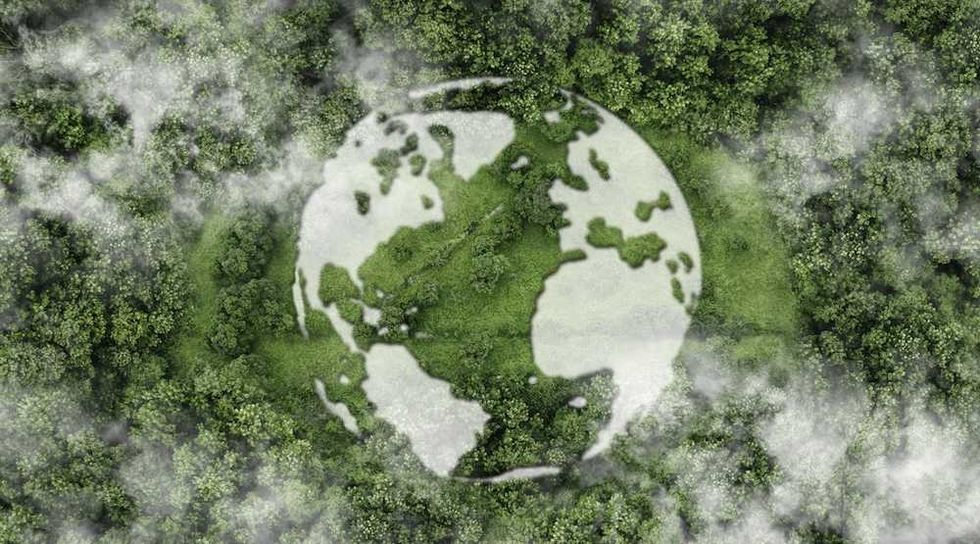 Khanchit Khirisutchalual via iStock/Getty Images
Any honest assessment of climate change and its effects on people, infrastructure, and the natural world should weigh both benefits and harms. Complex systems demand that kind of accounting.
The current retraction of the endangerment finding will be a particular breath of fresh air for the auto industry. In essence, the Environmental Protection Agency concluded that it “lacks statutory authority under Section 202(a) of the Clean Air Act to prescribe standards for [greenhouse gas] emissions” from “new motor vehicles and new motor vehicle engines.”
According to the EPA:
As a result of these changes, engine and vehicle manufacturers no longer have any future obligations for the measurement, control, and reporting of [greenhouse gas] emissions for any highway engine and vehicle, including model years manufactured prior to this final rule. This final action is only related to [greenhouse gas] emissions and does not affect regulations on any traditional air pollutants. Rather, this action realigns EPA’s regulatory framework with the best reading of the CAA, which does not authorize EPA to regulate [greenhouse gas] emissions from new motor vehicles.
As the agency notes, traditional health-based air pollutants such as sulfur dioxide, nitrogen dioxide, ground-level ozone, particulate matter, lead, and carbon monoxide — not CO2 — are unaffected by this EPA action.
So if you have been holding your breath while waiting for more sensible environmental regulations that focus on both people and the planet, you may now breathe easier.
Editor’s note: A version of this article appeared originally at American Thinker.
What's Your Reaction?
 Like
0
Like
0
 Dislike
0
Dislike
0
 Love
0
Love
0
 Funny
0
Funny
0
 Wow
0
Wow
0
 Sad
0
Sad
0
 Angry
0
Angry
0

I am just an average American. My teen years were in the late 70s and I participated in all that that decade offered. Started working young, too young. Then I joined the Army before I graduated High School. I spent 25 years in, mostly in Infantry units. Since then I've worked in information technology positions all at small family owned companies. At this rate I'll never be a tech millionaire. When I was young I rode horses as much as I could. I do believe I should have been a cowboy. I'm getting in the saddle again by taking riding lessons and see where it goes.
























Comments (0)