

You May Not Care About the National Debt, but the Debt Cares About You
Premium domains for sale
Freedom Is Back In Style
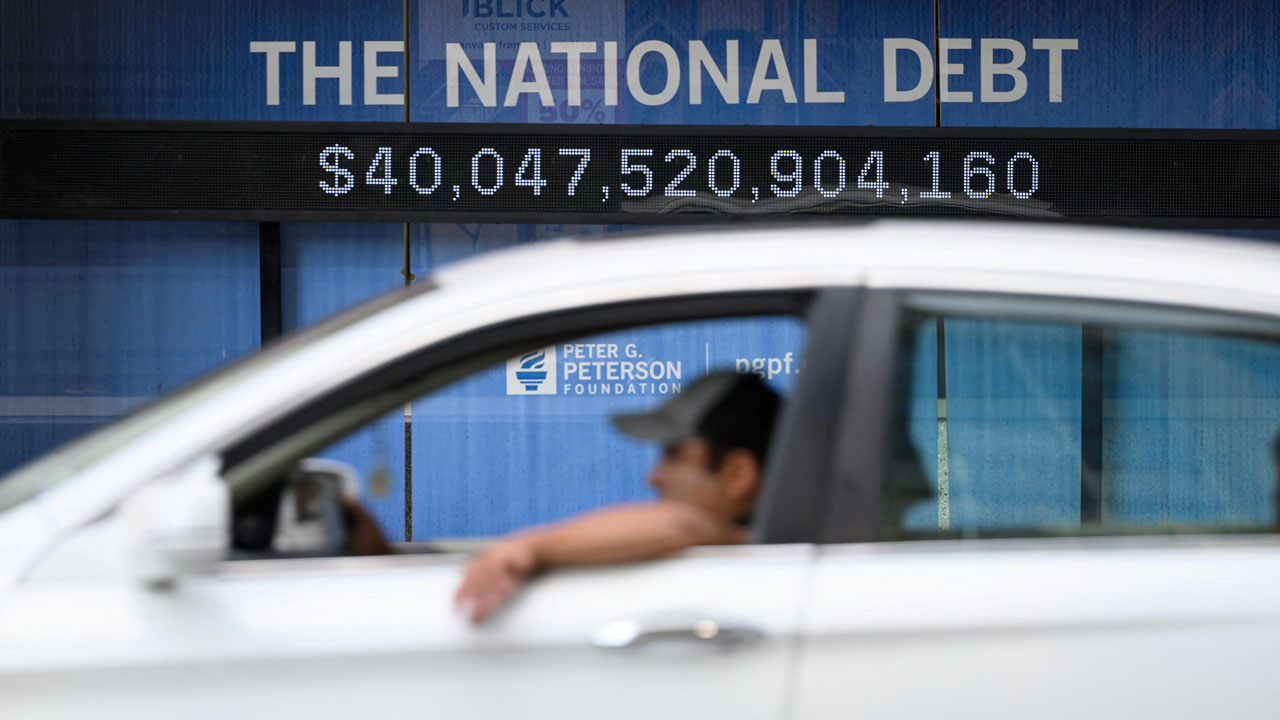
The national debt just crossed $40 trillion, months ahead of schedule. For many Americans, though, that sentence lands with a thud rather than a jolt. That’s unfortunate because the debt matters far more than people understand, and it’s already helping fuel today’s cost-of-living crisis. Things will only get worse if we ignore the problem.
Freedom Is Back
In Style
Premium domains for sale
Six months ago, the Congressional Budget Office figured federal borrowing would top out near $39.4 trillion this fiscal year. Washington blew through that before summer ended, and the $41.1 trillion debt limit Congress set last year now feels ominously close.
But Americans are desensitized to this news in part because, for 40 years, fiscal conservatives have warned that the debt was about to bury us—at $1 trillion, at $5 trillion, at $20 trillion. Then there was talk about debt-to-GDP ratios and points of no return.
But as the language grew more apocalyptic, the deadline kept moving, and the bomb never went off. Folks cried wolf so often that Americans stopped worrying about the debt almost entirely. This didn’t mean the debt was harmless, but rather that Americans didn’t recognize the harm when it arrived.
Since 2019, consumer prices have risen more than 30%. From the Treasury’s side of the ledger, a dollar borrowed in 2020 is repaid today in money worth about 70 cents compared to just a few years ago. The real value of everything Washington had to repay fell significantly without shaving a dime off the federal budget.
That is the oldest maneuver in public finance. When a central bank such as the Federal Reserve creates money to cover the bill for excessive government debt issuance, the value of a nation’s currency is eroded. It’s fundamentally a tax—and every American today is paying for it.
The national debt is often thought of as a bill for future generations, but inflation is a bill today.
People have wondered when the growing debt will cause not just inflation but hyperinflation or some kind of total economic collapse. What’s the magic debt-to-GDP ratio? Simply put, there isn’t one.
Japan has run gross debt above 200% of GDP for decades, and Britain carried more than that after the Napoleonic Wars. Meanwhile, Argentina has defaulted at ratios that look tame in comparison.
Furthermore, debt-to-GDP isn’t even a good metric because it compares a stock to a flow, as opposed to two stocks, like debt and assets. Household income relative to the balance owed on a mortgage isn’t a very useful metric, but household income relative to the monthly mortgage payment is.
Different countries on different continents in different centuries have all had different breaking points. It’s less a mathematical question as it is a psychological one. The crisis begins when the bond market stops extending the benefit of the doubt—when buyers demand materially more yield to compensate for the risk of repayment in devalued dollars (or the risk of no repayment at all).
That judgment is made by human actors weighing credibility, and credibility cannot be determined scientifically. It erodes slowly, then breaks suddenly. As Ernest Hemingway succinctly wrote in “The Sun Also Rises,” “‘How did you go bankrupt?’ Bill asked. ‘Two ways,’ Mike said. ‘Gradually, then suddenly.’”
But the debt didn’t just unexpectedly grow. Congress spent too much—for decades. Both parties have perfected the art of promising spending cuts that never materialize and turning every temporary emergency spending bill into an entrenched outlay that never goes away. This complete and total lack of fiscal discipline in Congress is also strangling the private sector.
Savings are finite. When the Treasury borrows $2 trillion a year, that capital is bid away from businesses that never get started and families that can’t get mortgages. The largest borrower on earth competes against every entrepreneur and homebuyer in America, and it isn’t a fair fight.
When Washington bids up the price of money, mortgage rates follow, along with business loans, auto loans, credit cards, student loans, and more. The family priced out of a starter home doesn’t blame the House Appropriations Committee, but it should.
Forty trillion dollars isn’t just a warning about the future but an explanation for the current cost-of-living crisis. It’s an invoice for the present, already embedded in your grocery bill, mortgage interest rate, and utility bills. The only real remedy is the one Congress refuses to attempt: cutting spending.
Until then, Americans will continue facing additional inflationary pressure in the economy. And as the average interest rate on the national debt continues to climb along with the total amount owed, the financing charges alone will continue exploding higher, driving the debt up faster.
If you think this isn’t a problem, just remember the last six years.
More from this network:
Domains for Sale · GOTPeople.org · TheDSAPlatform · The Truth About Socialism
What's Your Reaction?
 Like
0
Like
0
 Dislike
0
Dislike
0
 Love
0
Love
0
 Funny
0
Funny
0
 Wow
0
Wow
0
 Sad
0
Sad
0
 Angry
0
Angry
0

I am just an average American. My teen years were in the late 70s and I participated in all that that decade offered. Started working young, too young. Then I joined the Army before I graduated High School. I spent 25 years in, mostly in Infantry units. Since then I've worked in information technology positions all at small family owned companies. At this rate I'll never be a tech millionaire. When I was young I rode horses as much as I could. I do believe I should have been a cowboy. I'm getting in the saddle again by taking riding lessons and see where it goes.
Premium domains for sale



















Comments (0)