

3rd State Strikes Latest Blow Against Media Blacklists
Premium domains for sale
Freedom Is Back In Style
South Carolina is the latest state to push back against media-rating organizations that have helped blacklist conservative news outlets.
Freedom Is Back
In Style
Premium domains for sale
In the 2026-27 state budget, lawmakers included a provision barring state agencies from spending taxpayer dollars with advertising companies that use media-monitoring systems to determine which news outlets receive advertising dollars.
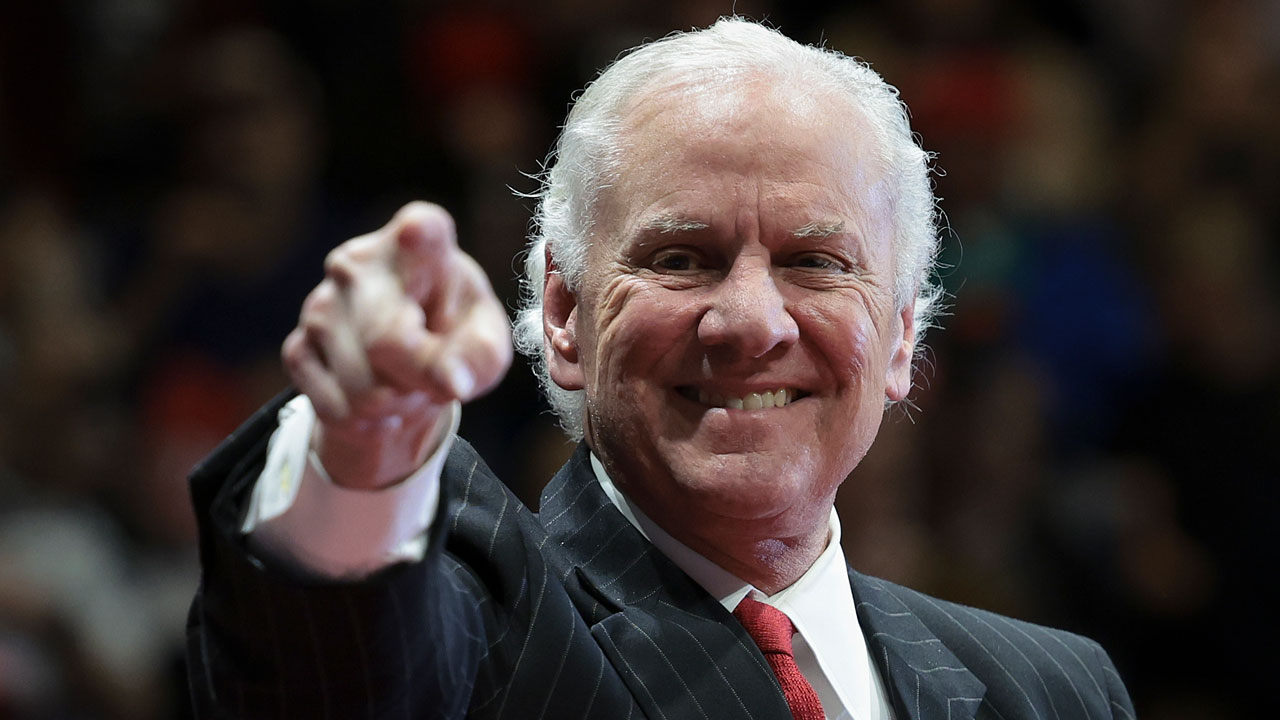
Gov. Henry McMaster signed the budget into law Monday, bolstering a growing movement to limit the influence of ideological gatekeepers in government advertising.
Media-rating organizations such as NewsGuard, Ad Fontes Media, and the Global Disinformation Index have a record of rating conservative outlets in ways that can cause advertisers to steer clear of them.
Full disclosure: I serve as an officer of the Independent Media Council, which is leading efforts in states and at the federal level to combat media censorship and protect independent outlets from advertising blacklists.
Momentum Against Media Blacklists
South Carolina’s action follows similar efforts in Florida and West Virginia to bar state agencies from contracting with advertising firms that rely on media monitors.
“South Carolina lawmakers deserve credit for recognizing the growing threat media blacklists pose to free speech and a free press,” said Christine Czernejewski, spokeswoman for the IMC. “Taxpayer-funded advertising should not be filtered through ideological gatekeepers masquerading as neutral watchdogs. South Carolina’s action sends a clear message that government should not subsidize private censorship schemes.”
Analyses of NewsGuard’s ratings have found a strong anti-conservative bias. For example, MRC Free Speech America analyzed news organizations and found NewsGuard “overwhelmingly favored left-leaning outlets over right-leaning ones.”
MRC researchers determined that NewsGuard provided a stellar average ‘credibility’ rating of 91/100 for ‘left’ and ‘lean left’ outlets (e.g. The New York Times, The Washington Post, TIME, Vox). At the same time, it dinged ‘right’ and ‘lean right’ outlets like Fox News, the New York Post and The Daily Wire with an outrageously abysmal average score of 65/100.
Although conservative outlets have often been the targets of these ratings systems, the larger concern is whether a small group of media-rating organizations should wield influence over which publishers receive advertising support and which are excluded.
The implications extend beyond advertising to artificial intelligence.
Concerns Extend to AI
As AI chatbots rely on ratings and other indicators to evaluate sources, NewsGuard can influence which voices are amplified and which are marginalized in the answers you receive from ChatGPT or Claude.
In addition to those popular AI models, NewsGuard created its own proprietary AI chatbot. Unlike general-purpose AI tools that draw on information from across the web, NewsGuard AI limits itself to sources that satisfy NewsGuard’s own ratings criteria.
We’re already seeing the consequences. In June, Aaron Sibarium of the Washington Free Beacon reported on an AI “model trained on NewsGuard’s ratings would treat many American sources as less reliable than Chinese propaganda.”
NewsGuard, which warns that ‘foreign disinformation’ has ‘infected’ the responses of Western chatbots, gives the state-owned China Daily a reliability score of 44.5—more than twice the score of the conservative outlet Newsmax, which earns just 20.
Stand Against Censorship
As more states and the federal government confront media blacklists, it’s encouraging that political leaders are stepping forward to ensure taxpayer dollars support free expression rather than viewpoint discrimination.
With South Carolina’s action this week, opposition to media blacklists is quickly becoming a national movement.
For the second consecutive year, Florida enacted a similar provision in its state budget. West Virginia passed the First Amendment Preservation Act, which Gov. Patrick Morrissey signed into law in April.
At the federal level, Congress has repeatedly included language in the National Defense Authorization Act restricting federal contracts with advertising agencies that use media-monitoring systems for military recruitment campaigns.
The Federal Trade Commission is now scrutinizing the digital advertising ecosystem as well. Under the leadership of Chairman Andrew Ferguson, the FTC announced in April that it was more closely scrutinizing viewpoint-based discrimination under the guise of “brand safety” and “misinformation.”
That’s why South Carolina’s action matters. This is a fight over whether government money should help enforce media blacklists that punish disfavored viewpoints. Taxpayers should not be forced to underwrite censorship, and lawmakers across the country are beginning to recognize that fact.
More from this network:
Domains for Sale · GOTPeople.org · TheDSAPlatform · The Truth About Socialism
What's Your Reaction?
 Like
0
Like
0
 Dislike
0
Dislike
0
 Love
0
Love
0
 Funny
0
Funny
0
 Wow
0
Wow
0
 Sad
0
Sad
0
 Angry
0
Angry
0

I am just an average American. My teen years were in the late 70s and I participated in all that that decade offered. Started working young, too young. Then I joined the Army before I graduated High School. I spent 25 years in, mostly in Infantry units. Since then I've worked in information technology positions all at small family owned companies. At this rate I'll never be a tech millionaire. When I was young I rode horses as much as I could. I do believe I should have been a cowboy. I'm getting in the saddle again by taking riding lessons and see where it goes.
Premium domains for sale














Comments (0)