

A Historic Women’s Organization Couldn’t Define ‘Woman’
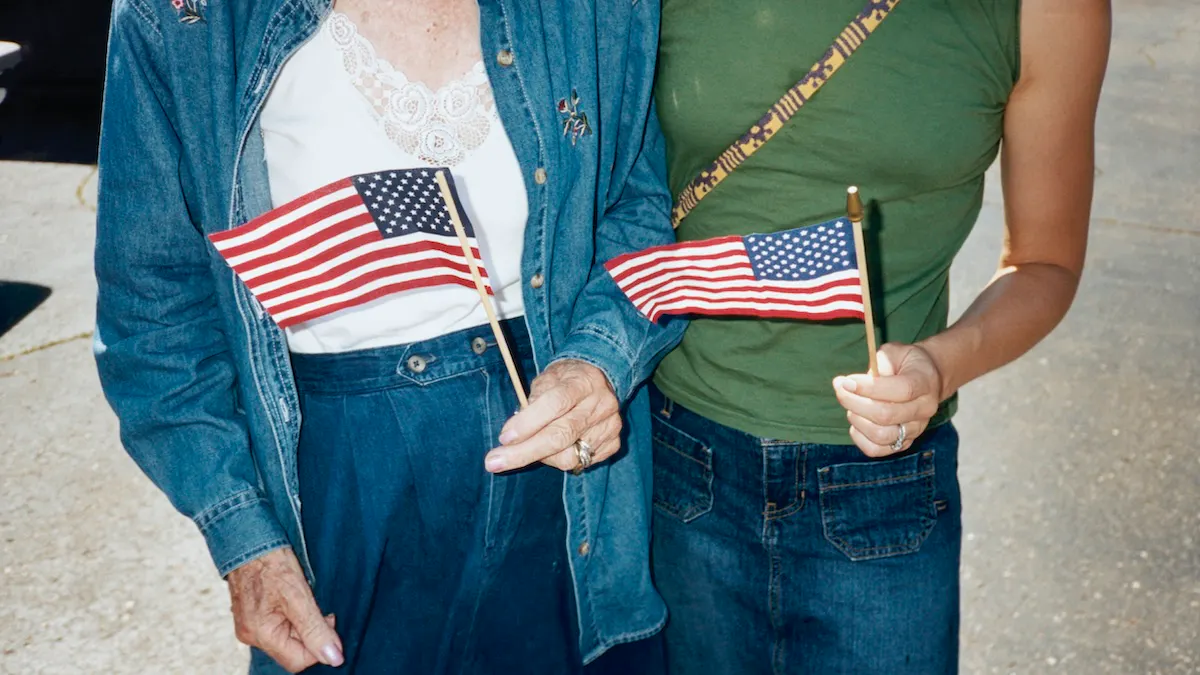
Premium domains for sale
Freedom Is Back In Style
What happens when an organization founded to preserve history decides it can no longer preserve the very definitions upon which it was founded?
Freedom Is Back
In Style
Premium domains for sale
Recently, at its Continental Congress, the Daughters of the American Revolution rejected a proposed bylaw amendment that would have defined “woman” for purposes of membership. The resolution read: “Resolved, That in Article III, Section 1 of the Bylaws, the term ‘woman’ shall be understood to clearly mean a woman who was born female, and therefore, individuals who were born male shall not be eligible for membership.” By rejecting this bylaw amendment, the organization chose not to adopt language that supporters believed would preserve DAR as a female-only organization.
In the days that followed the vote, many chapters expressed disappointment with both the outcome and the organization’s response. The official DAR message failed to address their central concern over whether the organization intends to remain a space for women only.
If you’re not in DAR, it’s easy at first glance to give this a “so what?”
DAR exists to preserve history, and, ironically, an organization dedicated to preserving truth about the past is now struggling to acknowledge objective reality in the present. But bigger than that, it represents one more step in a broader cultural movement where we are asking — rather, guilting — women to surrender spaces created specifically for them.
Created to preserve American history and uphold constitutional ideals, DAR was founded by women in 1890. The organization exists and is deeply rooted in service because descendants accepted a responsibility to preserve these ideals, not merely sit in the privilege of being born of them. That calling comes with the responsibility to acknowledge hard truths.
My own journey into DAR wasn’t easy. It took years of genealogical research alongside my grandmother, gathering documentation and verifying lineage. I originally intended to join under the lineage of Oliver Wolcott on my maternal grandfather’s side, linking me to the signing of the Declaration of Independence. This was complicated by a courthouse fire where all records were destroyed, so I opted to take the path of joining under my maternal grandmother, a path where the documents were easier to find. This linked me to some horse thieves instead, but, hey, they were patriots nonetheless. Every document I located felt like another thread reconnecting my family to the American story. There were so many hoops I had to jump through, and the deeper I dug, the more I appreciated that patriotism is not merely inherited; it is cultivated through understanding the sacrifices that came before us, and that patriotism and our history must be preserved — the good and the bad.
DAR asks its members to honor historical truth. Every application depends upon documents that cannot be altered to fit our preferences. Birth records matter. Marriage records matter. Death records matter. Genealogy is built on objective facts. Historical preservation depends upon objective facts. If those two things are true, why is it not expected that women’s organizations should likewise depend upon objective definitions? If an organization explicitly dedicated to historical accuracy cannot maintain a clear distinction between a man and a woman, both equally important to our society in their own right, that organization risks undermining its own credibility.
DAR was created by women. Women built it. Women have sustained it for generations. Women deserve organizations created specifically for women, and DAR itself is part of women’s history. At a time when women had few opportunities to lead national civic organizations, these women built one of their own. Preserving that legacy is itself an act of historical preservation.
Increasingly, women are told that maintaining female-only spaces is exclusionary rather than legitimate. The burden has shifted from explaining why men should enter women’s organizations to explaining why women should have organizations of their own. For women, it is a burdensome responsibility to explain routinely why we matter and why we uniquely bring value. Supporting women’s spaces is not hostility or hate toward anyone else.
DAR is not without real historical failures. Black women were wrongly excluded despite qualifying ancestry — an incorrect decision that took us far too long as an organization to rectify. And now, we face another one of those moments where we are failing women, women whose ancestors were the reason our nation exists today.
The question before today’s DAR is whether an organization founded by and for women should remain one. In the pursuit of making every institution open to everyone, we risk forgetting that some institutions exist precisely because they were created to serve a particular purpose.
One of my favorite stories from DAR came during my first visit to its museum in Washington, D.C. Displayed prominently is one of President James Monroe’s 1817 armchairs. After the chair was sold from the White House grounds in the 19th century, it eventually found its way into DAR’s collection. Years later, when the White House sought to reacquire pieces of its original furnishings, DAR refused to part with it. The women who said that chair belonged with DAR felt their responsibility was not to surrender history for cash, but to safeguard it for future generations — an edict they would never abandon. I cannot help but wonder what those women would think of today’s debate over preserving the organization’s own identity.
Women who believe this decision departs from the organization’s founding purpose must stand up and speak out about it. Courage requires speaking up when it is uncomfortable. I do not relish this controversy. I do not like the copious amount of hate I receive because I believe in the importance of protecting women and our spaces, but the courage to do what is right and just means speaking unpopular truths.
The women who founded DAR understood that preserving history required courage. Sometimes that courage meant preserving stories that were uncomfortable. Today, it means preserving truths that are unpopular. Institutions are not preserved through silence but through conviction.
When an organization founded to preserve history decides it can no longer preserve the very definitions upon which it was founded, we already know what happens. Institutions slowly lose sight of the very purpose they were created to preserve. If we cannot, and will not, preserve the truths closest to us, we should not be surprised when future generations stop trusting us to preserve the truths of those who came before us.
***
Taylor Hathorn is a visiting fellow at Independent Women. She has over 10 years of experience in cybersecurity, policy, public relations, and nonprofit management.
This article is part of Upstream, The Daily Wire’s new home for culture and lifestyle. Real human insight and human stories — from our featured writers to you.
More from this network:
Domains for Sale · GOTPeople.org · TheDSAPlatform · The Truth About Socialism
What's Your Reaction?
 Like
0
Like
0
 Dislike
0
Dislike
0
 Love
0
Love
0
 Funny
0
Funny
0
 Wow
0
Wow
0
 Sad
0
Sad
0
 Angry
0
Angry
0

I am just an average American. My teen years were in the late 70s and I participated in all that that decade offered. Started working young, too young. Then I joined the Army before I graduated High School. I spent 25 years in, mostly in Infantry units. Since then I've worked in information technology positions all at small family owned companies. At this rate I'll never be a tech millionaire. When I was young I rode horses as much as I could. I do believe I should have been a cowboy. I'm getting in the saddle again by taking riding lessons and see where it goes.
Premium domains for sale






















Comments (0)