

AI’s PR is in the toilet — for good reason
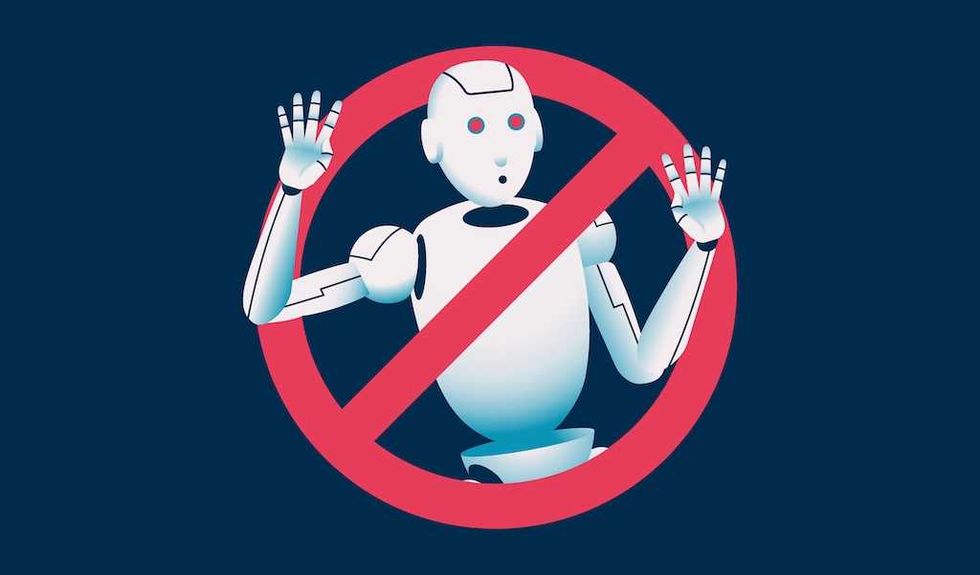
It may be one of the most remarkable technological breakthroughs in human history. Ask the American public, though, and you’ll hear something else entirely about artificial intelligence.
Live Your Best Retirement
Fun • Funds • Fitness • Freedom
A recent NBC News survey asked registered voters how they feel about a range of public figures and political topics. The results were striking. While Pope Leo posted a net favorability rating of +34, artificial intelligence came in at -20. That puts AI near the bottom of the list, ranking ahead of only the Democratic Party and Iran. According to the poll, only 26% responded “positive” to AI, while 46% responded “negative.”
Who designs the systems? Whose values do they embed? Who gets accountability when they fail? The public does not have satisfying answers, and the industry hasn’t given them many.
Think about that for a moment.
A technology widely touted as capable of curing diseases, discovering new materials, and unlocking unprecedented productivity is viewed more negatively than every U.S. politician and institution included in the poll.
Artificial intelligence may be revolutionary, but unless its architects confront the distrust surrounding it, AI risks losing the public confidence it will ultimately depend on.
A perfect storm of distrust
As someone who follows AI closely, I can’t point to a single cause of the unease. It looks more like a perfect storm.
For decades, science fiction trained audiences to associate AI with dystopia. From “2001: A Space Odyssey” to “The Terminator,” AI often appears as the moment humanity loses control of its own creation. Fiction isn’t the whole story, but it primes the public to expect the worst.
Many Americans also worry about what AI will do to the workforce. Automation has threatened certain industries for years, but AI scales the threat. It now appears poised to hit huge swaths of white-collar work, including creative fields and even decision-making roles once assumed to require human judgment.
Then came the explosion of what critics call “AI slop.” Across the internet, AI-generated articles, videos, images, and posts flood the feed. Much of it is low-effort content built to attract clicks, not provide value. The internet already buckles under misinformation and spam. AI has supercharged this problem.
Americans also distrust the companies building these systems. The left has long been skeptical of massive corporations wielding too much power. The right grew more suspicious after years of fights over social media censorship and ideological activism. ESG efforts, which used corporate power to reshape incentives around political priorities, only reinforced the sense that tech and finance elites want to run the country by proxy.
In short, both sides now distrust many of the institutions developing artificial intelligence. That is a bad position for an industry trying to introduce world-changing technology.
When the experts sound the alarm
Public unease also draws fuel from the people closest to the machine. Several prominent voices in the AI world have issued stark warnings about risk.
Elon Musk has suggested there may be “only a 20% chance of annihilation” from future advanced AI systems. Anthropic CEO Dario Amodei has cited a 25% chance AI development goes “really, really badly.” Geoffrey Hinton, often called the “godfather of AI,” has floated human extinction-level risk in the 10% to 20% range over the coming decades.
When the builders of a technology openly speculate about catastrophic outcomes, it’s not surprising the public grows uneasy. To the average voter, it can sound like civilization is playing Russian roulette — and the people loading the cylinder are asking to be trusted.
RELATED: Ex-NFL player asked ChatGPT for advice after allegedly murdering his fiancée
 Photo by Wesley Hitt/Getty Images
Power, control, and fear of the unknown
Beyond jobs and misinformation, a deeper concern lies underneath: AI is becoming an infrastructure of decision-making.
Algorithms already shape what news we see, what products we buy, and what ideas spread online. As AI grows more capable, it will influence public opinion, political discourse, and cultural norms even more.
In authoritarian systems, that becomes an obvious tool of surveillance and control. But even in a constitutional republic, concentrating that much power in a handful of corporations — or in government — raises hard questions. Who designs the systems? Whose values do they embed? Who gets accountability when they fail? The public does not have satisfying answers, and the industry hasn’t given them many.
The AI industry should pay attention
Despite the excitement in Silicon Valley and Washington, the NBC poll reveals a simple truth: Much of the public does not trust AI. For the companies racing to build ever more powerful systems, that should be a wake-up call.
The industry often sells AI in near-utopian terms: medicine, energy breakthroughs, scientific discovery. Those gains may come. But many Americans see something else. They see massive data centers consuming energy while the internet fills with synthetic garbage. They see tech firms raising and spending billions while ordinary life gets harder. They see executives talking openly about betting civilization on tools they admit they don’t fully control.
If AI’s architects want public buy-in, they will have to address these fears directly.
A good place to start would be a clear public commitment to the constitutional principles Americans still expect: free speech, individual liberty, and personal autonomy. If AI will play a larger role in shaping information and decisions, the public needs confidence that these systems will protect fundamental freedoms rather than erode them.
AI will be shaped, in part, by trust. Right now, that trust is in short supply.
What's Your Reaction?
 Like
0
Like
0
 Dislike
0
Dislike
0
 Love
0
Love
0
 Funny
0
Funny
0
 Wow
0
Wow
0
 Sad
0
Sad
0
 Angry
0
Angry
0

I am just an average American. My teen years were in the late 70s and I participated in all that that decade offered. Started working young, too young. Then I joined the Army before I graduated High School. I spent 25 years in, mostly in Infantry units. Since then I've worked in information technology positions all at small family owned companies. At this rate I'll never be a tech millionaire. When I was young I rode horses as much as I could. I do believe I should have been a cowboy. I'm getting in the saddle again by taking riding lessons and see where it goes.









Comments (0)