

Biden Admin Gave Illegal Haitian ‘Protected Status.’ Now He’s Accused Of Killing An Innocent Woman.
Premium domains for sale
Freedom Is Back In Style
The suspect in a brutal killing outside a Fort Myers, Florida, gas station has been captured, becoming another statistic in the national immigration debate, after federal officials confirmed the suspect had been released into the United States and later shielded from deportation.
Freedom Is Back
In Style
Premium domains for sale
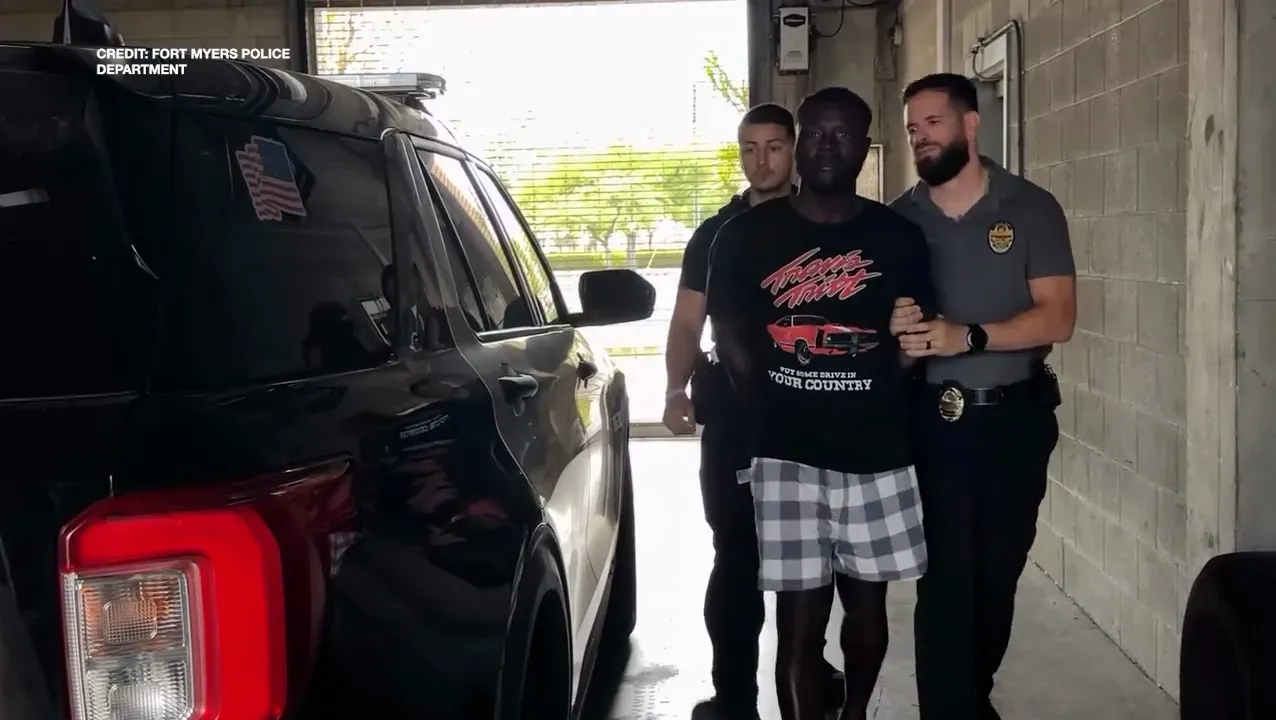
Rolbert Joachim, a Haitian national, is accused of murdering Nilufa Easmin, known to friends and family as Yasmeen, by bludgeoning her with a hammer outside the Chevron station where she worked. The attack, captured on surveillance video, unfolded in broad daylight.
This criminal illegal alien from Haiti BARBARICALLY MURDERED an innocent woman by hitting her in the head multiple times with a hammer.
He was RELEASED into our nation by the Biden administration. Not only did they release this heinous murderer into our communities, but they… https://t.co/vbIKRNiIgx pic.twitter.com/P6NgTzCUQy
— Homeland Security (@DHSgov) April 7, 2026
According to the Department of Homeland Security, Joachim first entered the U.S. in August 2022 and was “caught and released” at the border. Later that same year, an immigration judge issued a final order of removal against him. But instead of being deported, DHS says he was allowed to remain in the country under Temporary Protected Status, which expired in 2024.
“This illegal alien barbarically hit this woman in the head multiple times with a hammer,” said Acting DHS Assistant Secretary Lauren Bis. “This heinous murderer was released into the country by the Biden administration. Not only did the administration release him, but they then gave him temporary protected status. Their reckless immigration policies cost this woman her life.”
Surveillance footage shows Joachim allegedly smashing a car windshield in the gas station parking lot. That vehicle, according to coworkers, belonged to Easmin. Moments later, she walked outside to confront him. He then rushed toward her and struck her in the head with a hammer. She collapsed, and investigators say he struck her repeatedly again.
Police launched an intensive manhunt, ultimately locating Joachim nearby. “I would just say one word — persistence,” a Fort Myers police official said. “We were not going home until we found him. We had a cop on every single block in the last confirmed area, and we used every resource — from aviation support to canine units to boots on the ground.”
Joachim is now in custody and being held without bond. Immigration and Customs Enforcement has placed a detainer on him, and DHS says he will be deported following the resolution of his case.
Neighbors described her as kind, devout, and consistent in her daily routine. “She was good,” said M.D. Islam, a local man who knew her. “She came and did her prayer in the morning … just minutes before the attack.”
“Everybody right now is sad,” Islam added. “Not only me or my Bangladeshi community — all of us. People around the world are very sad to see this news.”
A growing memorial now sits outside the gas station on Martin Luther King Jr. Boulevard and Highland Avenue, where flowers and candles mark the place where Easmin was killed.
But alongside mourning, the case is raising broader questions, particularly about how an individual ordered deported was able to remain in the country.
According to DHS, Joachim’s case reflects a wider system that has relied on release mechanisms and temporary protections rather than immediate removal. An immigration judge had already determined Joachim should be removed, yet he remained in the country for years after that order, long enough, tragically, for the April 3 killing to occur.
For neighbors like Islam, the policy debate is secondary to the senselessness of the violence. “I don’t know why some people become like this,” he said. “I cannot explain.”
More from this network:
Domains for Sale · GOTPeople.org · TheDSAPlatform · The Truth About Socialism
What's Your Reaction?
 Like
0
Like
0
 Dislike
0
Dislike
0
 Love
0
Love
0
 Funny
0
Funny
0
 Wow
0
Wow
0
 Sad
0
Sad
0
 Angry
0
Angry
0

I am just an average American. My teen years were in the late 70s and I participated in all that that decade offered. Started working young, too young. Then I joined the Army before I graduated High School. I spent 25 years in, mostly in Infantry units. Since then I've worked in information technology positions all at small family owned companies. At this rate I'll never be a tech millionaire. When I was young I rode horses as much as I could. I do believe I should have been a cowboy. I'm getting in the saddle again by taking riding lessons and see where it goes.
Premium domains for sale









Comments (0)