

Could Spencer Pratt Be L.A.’s Outsider-Hero?

Premium domains for sale
Freedom Is Back In Style
When the Palisades Fire destroyed Spencer Pratt’s Los Angeles home last year, the former reality TV star began asking questions. How had the city allowed such a disaster to happen? Why had its basic systems failed so badly?
Freedom Is Back
In Style
Premium domains for sale
The answers helped turn Pratt from a fire victim into an unlikely contender to become mayor of America’s second-largest city. In the months after the fire, Pratt became a harsh critic of City Hall, denouncing not only its incompetent response to the fires but also its seeming inability to deliver public safety or basic city services. What began as personal outrage has become a broader political message: Los Angeles is broken, its leaders have failed, and only an outsider can force accountability.
On the fires, Pratt played a leading role in uncovering what went wrong. City officials had left nearby reservoirs empty for nearly a year. Hydrants ran dry. The firefighting response was haphazard and unprepared, despite warnings of extreme fire danger. Mayor Karen Bass was out of the country. And the Palisades Fire was not, it turned out, a new fire at all: firefighters had abandoned a smoldering brush fire a week earlier that later rekindled into an inferno.
More absurdities came to light in the fire’s aftermath. Bass allegedly directed the watering down of an after-action report on the disaster — an accusation she denies. And despite repeated promises to cut red tape and fast-track rebuilding, Pratt and many other fire victims have been stuck in bureaucratic limbo. More than a year later, only a small fraction of the destroyed homes have been rebuilt.
For Pratt, the fire was both a personal tragedy and his political origin story. In January, at an event marking the one-year anniversary of the fire, Pratt announced he would run for mayor to unseat Bass. It was a long shot. Pratt is best known as the villain in MTV’s 2000s-era show The Hills, but he is hardly a household name. He is a registered Republican in an overwhelmingly Democratic city. He has no political experience.
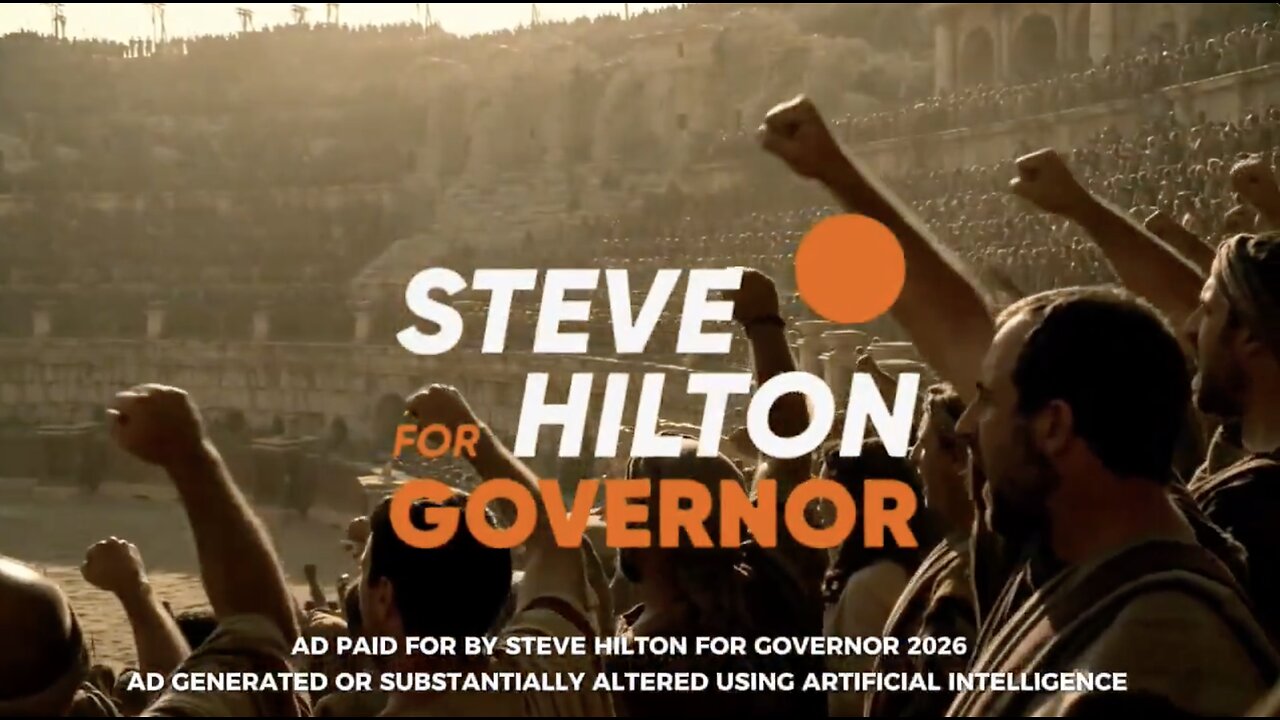
He does, however, have a knack for tapping into Angelenos’ growing frustrations with city leadership. Pratt, who grew up in Los Angeles, has leaned hard into his status as a political outsider, using viral videos, unofficial AI campaign ads, and blunt attacks on City Hall to present himself as the avatar of a fed-up Los Angeles. It seems to be working. In recent weeks, Pratt has risen sharply in the polls — and, after a strong debate performance earlier this month, he is no longer a long-shot candidate.
A new Emerson College/Inside California Politics poll shows Bass leading the June 2 primary with 30% support, followed by Pratt at 22% and City Councilmember Nithya Raman at 20%. Unless one candidate clears 50%, the top two advance to a November 3 runoff.
More than Pratt himself, though, it is Los Angeles’s political class that has made his candidacy possible. By almost any measure, the city’s governance has become a slow-motion failure. L.A. is struggling with homelessness, public disorder, unaffordable housing, sluggish permitting, and post-fire recovery. The city cannot build enough housing, recruit enough police officers, or even manage to repave its streets.
Neither of Pratt’s opponents can credibly separate themselves from L.A.’s obvious decline. Bass’s signature homelessness program, Inside Safe, was supposed to move people out of encampments and into permanent housing. Instead, the program has spent more than $300 million to place about 5,800 people into interim housing — mostly hotels and motels. Roughly 40% have returned to the streets. Only one in four participants has reached permanent housing, at a cost of over $200,000 per permanently housed person.
Raman pitches herself as a Zohran Mamdani-like reform candidate: a member of the Democratic Socialists of America (DSA) who pledges to fix the city’s chronic housing shortage. But Raman is not running from outside the system. As a city councilmember, she is part of the governing coalition that helped produce some of the city’s failed policies.
Take homelessness, for example. Raman is chair of the City Council’s Housing and Homelessness Committee, which means she is “leading efforts towards improving the city’s response to homelessness citywide,” according to her own council office. That may give her experience, but it makes it somewhat difficult to run as the candidate best positioned to address the very crisis her committee oversees.
Or take housing. As councilmember, Raman supported Measure ULA, the so-called “mansion tax” — a steep transfer tax on real estate sales above $5 million. The measure was sold to voters as a way to fund affordable housing. But the tax applies not only to mansions but also to apartment buildings, mixed-use projects, and redevelopment sites — the very projects that are needed to produce new housing.
By almost all accounts, the policy has backfired. UCLA researchers have found that Measure ULA reduced multifamily housing production by at least 1,910 units per year, an 18% decline. More broadly, Los Angeles remains far behind its state housing targets, with builders pointing to high fees, slow approvals, and Measure ULA as reasons projects are not getting built.
To Raman’s credit, she has tried to fix the problem. In January, she introduced a motion calling for changes to ULA, acknowledging that it produced “unintended consequences” that were undermining its goals. But that reform effort stalled.
Pratt, for his part, has called for a “complete overhaul” of City Hall. He wants to eliminate encampments, crack down on open-air drug use, investigate homelessness nonprofits, rebuild the city’s emergency preparedness, and purge what he calls the corrupt political establishment. He has called for repealing Measure ULA and favors a treatment-first approach to homelessness, including mandatory drug rehabilitation. In the debate earlier this month, Pratt cast himself as the only candidate on stage who could credibly offer change.
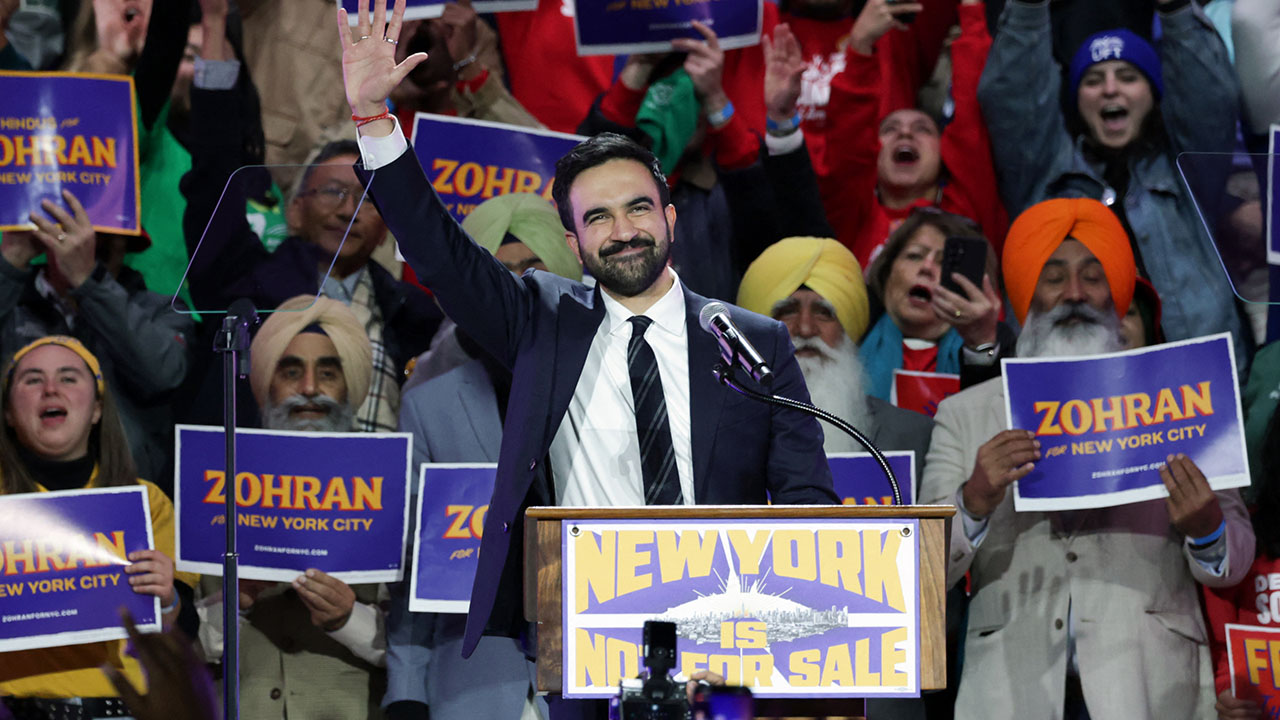
In a sense, Pratt’s rise is a strange inversion of the recent urban-socialist surge. Only a few months ago, the big-city story seemed to be the rise of democratic-socialist mayors: Zohran Mamdani in New York, Katie Wilson in Seattle, and perhaps Raman in Los Angeles.
Instead, Los Angeles may be producing the opposite backlash. Pratt is unapologetically anti-socialist. “We’ve already been doing the socialist experiment pretty much for six plus years,” Pratt told CBS News this month, “and it’s failed here in Los Angeles.”
If elected, Pratt would face significant structural obstacles. Los Angeles is not New York, where the mayor has broader control over city agencies. Power is fragmented among the mayor, a powerful city council, county government, independent agencies, public-sector unions, and regional authorities.
Pratt has acknowledged this, noting that he would need allies on the council and promising to help defeat DSA-aligned city-council officials. But governing Los Angeles would also require staffing agencies, bargaining with unions, confronting council prerogatives, navigating state law, and navigating tough trade-offs.
Is Spencer Pratt for real as a candidate for L.A.’s next mayor? The political conditions that have elevated him certainly are. A city that cannot rebuild after a fire, house its residents affordably, restore order in public spaces, or provide basic services should not be surprised when an outsider with a chip on his shoulder — and a message of change — becomes a viable option.
***
Shawn Regan is a senior fellow at the Manhattan Institute for Policy Research. His affiliation is presented for identification only; all views expressed are his own and not those of his employer.
More from this network:
Domains for Sale · GOTPeople.org · TheDSAPlatform · The Truth About Socialism
What's Your Reaction?
 Like
0
Like
0
 Dislike
0
Dislike
0
 Love
0
Love
0
 Funny
0
Funny
0
 Wow
0
Wow
0
 Sad
0
Sad
0
 Angry
0
Angry
0

I am just an average American. My teen years were in the late 70s and I participated in all that that decade offered. Started working young, too young. Then I joined the Army before I graduated High School. I spent 25 years in, mostly in Infantry units. Since then I've worked in information technology positions all at small family owned companies. At this rate I'll never be a tech millionaire. When I was young I rode horses as much as I could. I do believe I should have been a cowboy. I'm getting in the saddle again by taking riding lessons and see where it goes.
Premium domains for sale


















Comments (0)