

'Bugonia' and Hollywood's most post-Christian Academy Awards yet
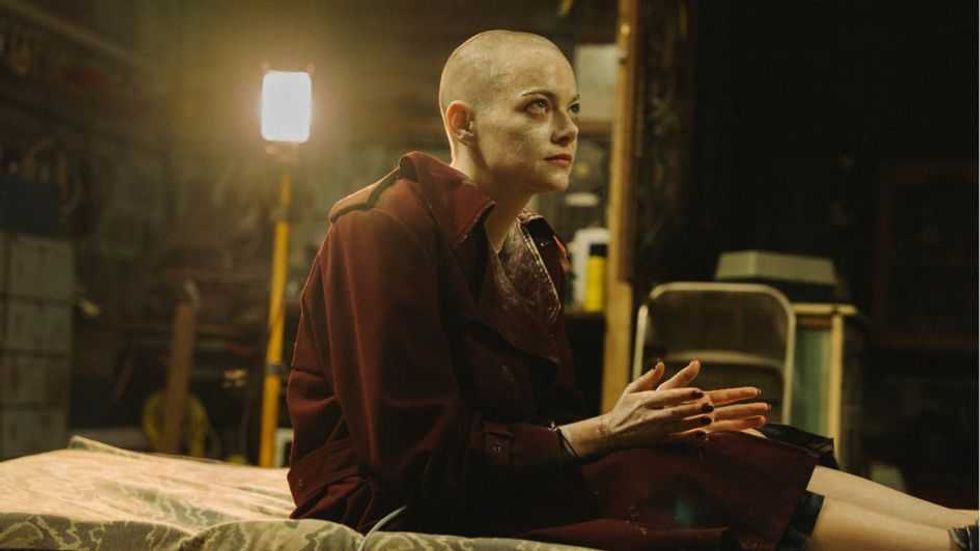

Last night’s Academy Awards brought the usual mix of celebration, surprises, and disappointment.
Live Your Best Retirement
Fun • Funds • Fitness • Freedom
It also offered a revealing glimpse into how modern storytelling wrestles with the problem of human evil. Again and again, our stories invent new creators and judges — aliens, scientists, political systems — while avoiding the possibility that the answer might be the one Christianity has proposed all along.
Interestingly, the film’s bleak ending inadvertently highlights the beauty of the alternative.
We see this pattern clearly in this year’s Best Picture winner, "One Battle After Another." In that film, humanity’s problems are framed largely as political ones: injustice embedded in systems that must be overcome through struggle here on earth.
The problem of evil
The year’s other nominees approach the same problem from different angles. "Frankenstein" warns about the dangers of human beings assuming the role of creator, while "Sinners" treats Christianity itself as a corrupting force rather than a remedy for human brokenness. The stories differ in tone and message, but they circle the same question: Why does humanity repeatedly descend into violence, cruelty, and exploitation?
And then there's "Bugonia," Yorgos Lanthimos' ambitious science-fiction drama. Although the film failed to take home Best Picture or any of the four Oscars for which it was nominated, its unsettling message reveals much about our post-Christian frame of mind.
The film proposes a provocative premise: Humanity was seeded on Earth by extraterrestrial beings known as Andromedans. But when humanity fails to live up to their expectations — ravaging the planet, waging war, exploiting one another — the aliens decide to erase the experiment and reboot the world.
Spoiler alert: They succeed.
Failed experiment
In the film’s closing act, the Andromedans judge humanity irredeemable. Our history of violence, greed, and environmental destruction becomes the evidence against us. Like scientists abandoning a failed experiment, they extinguish the human race in order to start again.
The premise is morally haunting because it contains a kernel of truth. Humanity has indeed fallen short of what we know to be right. Our history is filled with wars, cruelty, and exploitation of both people and planet. Watching the film, you can almost understand why an external observer might conclude that humanity is incapable of redemption.
But the film’s central idea contains a deeper philosophical problem that it never addresses.
In "Bugonia," aliens replace God.
Persistent theory
Instead of an eternal Creator, we are told that advanced beings from another star system planted life on Earth. Humanity, in other words, is merely the product of a cosmic experiment. The idea echoes the pseudoscientific theories popularized decades ago by Swiss author Erich von Däniken, most famously in his 1968 best-seller "Chariots of the Gods?" He argued that ancient monuments and religious traditions were evidence that extraterrestrials had visited Earth and influenced — or even created — human civilization.
Despite the popularity of those claims, they have been widely rejected by scientists and historians as speculative at best and misleading at worst. Yet the underlying idea persists in popular culture, resurfacing in films, television shows, and speculative fiction like "Bugonia."
The problem is that such explanations never truly answer the deepest question. They merely move it one step back: If the Andromedans created humanity, who created them?
The difficulty with theories that attempt to explain existence without God is that they ultimately arrive at an illogical conclusion — that somehow the material universe emerged from nothing. Matter, life, and consciousness simply appeared. The universe, in effect, would have to create itself.
Every effect requires a cause. Every creation requires a creator. If alien life exists somewhere in the universe — and it very well may — those beings would still be part of the created order. They, too, would owe their existence to something greater and eternal.
A different story
"Bugonia" imagines alien overseers who judge humanity and wipe the slate clean when the experiment fails. But the story humanity actually lives in is far different.
According to Scripture, there was indeed a moment when God chose to “reset” the world. In the story of Noah, humanity had become so violent and corrupt that God sent a flood and preserved only Noah and his family to begin again. Humanity was, in a sense, rebooted.
But even after the flood, humanity fell short again. We continued to quarrel, exploit, and destroy. The human story remained one of brokenness mixed with moments of grace.
The difference between the God of Scripture and the Andromedans of "Bugonia" is not power. It is mercy.
The aliens in the film conclude that humanity’s failures justify annihilation. God reached a radically different conclusion. Rather than abandon His creation, He entered into it.
The eternal God sent His Son, Jesus Christ, into the world — not to condemn humanity but to redeem it. Where the Andromedans choose extermination, God chooses sacrifice.
This is the heart of the Christian story. Humanity fails again and again. Yet instead of discarding us as a failed experiment, God offers forgiveness and transformation.
RELATED: What Shia LaBeouf's public struggle shows us about Christian redemption
 MEGA/GC Images via Getty Images
Quiet revolution
Even then, the story does not become one of instant perfection. People who follow Christ still struggle. They still fall short. The difference is not that believers suddenly become flawless, but that they now have a path toward redemption.
One of the most profound summaries of that path comes from John the Baptist, who famously said of Christ: “He must increase; I must decrease” (John 3:30).
Those few words describe the quiet revolution at the heart of Christianity. The transformation of humanity does not come from our own power or moral superiority. It comes from learning humility — placing God at the center rather than ourselves.
And that humility has consequences. A world shaped by self-interest breeds the very problems "Bugonia" highlights — violence, greed, environmental destruction, and exploitation. A world shaped by love of neighbor and reverence for a Creator begins to look very different.
Radical vision
Interestingly, the film’s bleak ending inadvertently highlights the beauty of the alternative.
In "Bugonia," humanity is judged solely by its failures. There is no grace, no redemption, no possibility that flawed beings might grow into something better.
The Christian story, by contrast, insists that redemption is the point of the whole drama. God promised after the flood that He would not destroy the world again in such a way. The ultimate reset came not through annihilation but through Christ — through renewal.
For all its imaginative power, "Bugonia" ultimately imagines a universe governed by distant creators who abandon their creation when it disappoints them.
The Christian vision offers something far more radical: a Creator who loves His creation enough to save it.
What's Your Reaction?
 Like
0
Like
0
 Dislike
0
Dislike
0
 Love
0
Love
0
 Funny
0
Funny
0
 Wow
0
Wow
0
 Sad
0
Sad
0
 Angry
0
Angry
0

I am just an average American. My teen years were in the late 70s and I participated in all that that decade offered. Started working young, too young. Then I joined the Army before I graduated High School. I spent 25 years in, mostly in Infantry units. Since then I've worked in information technology positions all at small family owned companies. At this rate I'll never be a tech millionaire. When I was young I rode horses as much as I could. I do believe I should have been a cowboy. I'm getting in the saddle again by taking riding lessons and see where it goes.























Comments (0)