

Even After Affirmative Action’s Fall, DEI Thrives at Elite Law Schools
Premium domains for sale
Freedom Is Back In Style
DEI may be crumbling in the federal government and waning in the public esteem, but it is still going strong in elite educational institutions despite popular and legal headwinds against it.
Freedom Is Back
In Style
Premium domains for sale
Aaron Sibarium at the Washington Free Beacon, dropped a report on Monday about how one prestigious law school journal often made race a deciding factor in the submissions they would accept.
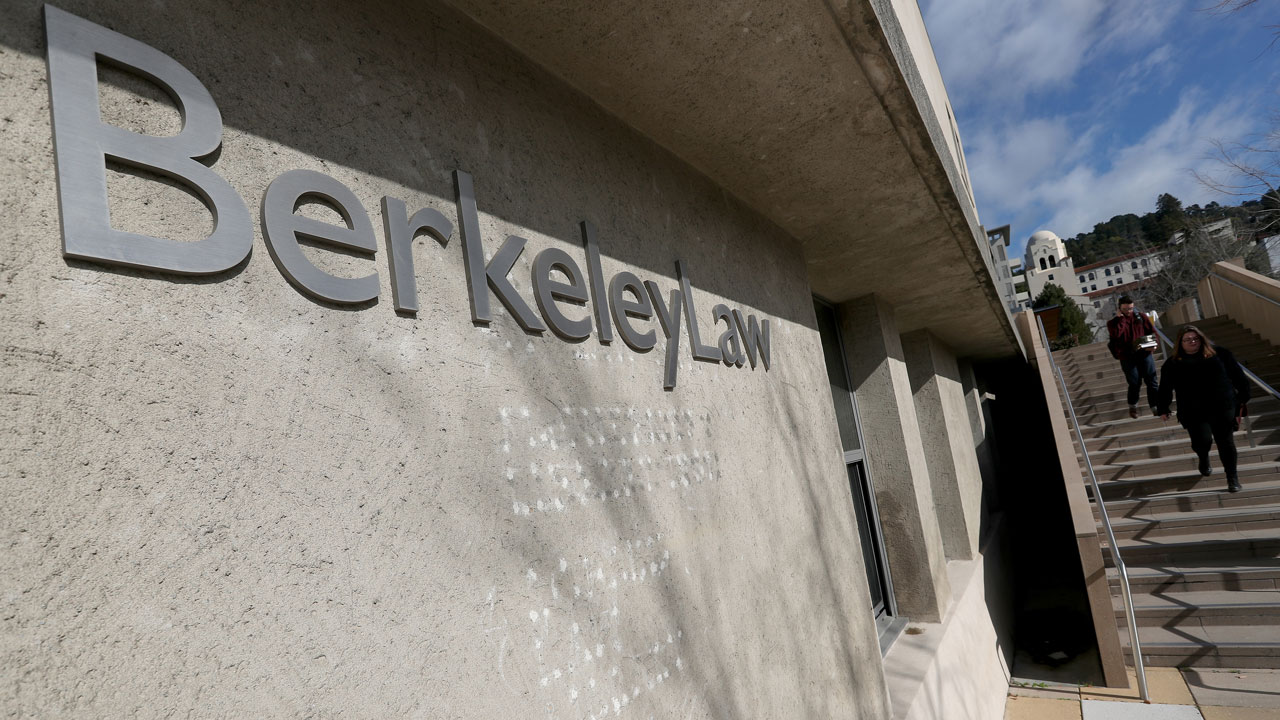
Sibarium wrote that the prestigious California Law Review, the University of California at Berkeley School of Law’s top journal, brings on editors aggressively dedicated to promoting “diversity, equity, and inclusion.”
This group of editors used an increasingly common set of procedures that let them create more racial diversity without directly saying “whites need not apply.”
The Free Beacon reported that it “reviewed 14 applications for the committee submitted between 2023 and 2026,” as well as internal announcements about which applications were ultimately accepted.
The pattern that emerged was clear.
“The documents offer a window into how editors at a top law review … are using personal statements to bypass bans on affirmative action, giving race as much weight or more than what one former committee member, Clemencia Garcia-Kasimirowski, dubbed ‘seemingly objective’ standards.”
One of the members of the California Law Review’s selection committee was former Politico deputy director Maya Parthasarathy, who came aboard in 2025.
Parthasarathy, according to the report, had previously used her position at Politico to aggressively promote DEI.
First, Parthasarathy dropped grade considerations for new hires, then she created a “holistic” review for new job applicants which apparently included an editing test. But even that test didn’t seem to be too important to the eventual hiring decision.
“For candidates on the borderline of a passing score on our test, we considered strengths they showed in other parts of their applications, and experiences they would bring to the table,” Parthasarathy wrote in her application to the California Law Review admissions committee. “At the end of my tenure at Politico, our team had grown from just one person of color—me—to fifty percent hires from underrepresented backgrounds.”
So, the objective hiring measures were effectively dropped. Then there was a flood of people hired from “underrepresented backgrounds.”
The thinly disguised form of racial hiring Parthasarathy described became ubiquitous in media, in corporate America, in law firms, and certainly in academia before the “vibe shift” and President Donald Trump’s election in 2024.
Practically every elite institution of every type grabbed hold of the “racial reckoning” and committed to hiring practices of dubious legal merit. But many of them got cold feet when the Department of Justice made it clear they would begin to enforce civil rights laws against them.
However, as we’ve seen in many such cases, higher education just can’t give up what’s become their central reason for being.
They’ve shown a remarkable willingness to throw away notions of merit and credibility to continue the DEI racket, even in the face of legal threats.
And that was clearly the case at the California Law Review.
It wasn’t just one submissions editor who perfected the art of racist, “antiracist” dog whistling to bring in artificially created diversity.
Previously mentioned Garcia-Kasimirowski blasted standardized testing as “created by a eugenicist” and denounced large scale lectures as “proven to disadvantage people of color.”
Two more editors explicitly said, according to Sibarium, that they joined the submission committee so they could boost Native American applicants.
One editor pledged that she would ensure that “students like the girl from my tribe can look to law review journals and feel represented.”
The submissions process was heavily skewed toward the personal statement which, Sibarium noted, was often a deciding factor in whether an applicant was accepted or not.
And the personal statements that were most likely to be accepted were clearly weighted toward students that demonstrated how they would fit the goals of DEI.
When you see story after media story complaining about how the Trump education department is waging a war on “education,” or how conservatives want to defund “research,” think of this report.
Our nation’s top schools have replaced merit with the ultimately shallow, but ruthlessly discriminatory demands of DEI. This report on the California Law Review doesn’t shock me. What would shock me at this point is if any top law review doesn’t use DEI in some way.
They are operating as if the Awokening never ended, and in their world it didn’t. Woke dogma has only been beaten back in places where it’s been met with actual political opposition, where its ruthless practitioners have been threatened with defunding or lawsuits, where their demands have been explicitly rejected as poisonous and unjust.
Higher education and the vast apparatus of institutions didn’t give up the ideology. They merely created insidious pathways to keep it alive and well with the assumption that the political winds will change, and they can continue spreading its doctrines outside the ivory tower.
It’s an important lesson to keep in mind going forward. They’ll never give it up, but they’ll keep you down if you don’t have the right skin color and don’t bow to the same gods of DEI that they do.
More from this network:
Domains for Sale · GOTPeople.org · TheDSAPlatform · The Truth About Socialism
Originally Published at Daily Wire, Daily Signal, The Blaze, or Fox News
What's Your Reaction?
 Like
0
Like
0
 Dislike
0
Dislike
0
 Love
0
Love
0
 Funny
0
Funny
0
 Wow
0
Wow
0
 Sad
0
Sad
0
 Angry
0
Angry
0

I am just an average American. My teen years were in the late 70s and I participated in all that that decade offered. Started working young, too young. Then I joined the Army before I graduated High School. I spent 25 years in, mostly in Infantry units. Since then I've worked in information technology positions all at small family owned companies. At this rate I'll never be a tech millionaire. When I was young I rode horses as much as I could. I do believe I should have been a cowboy. I'm getting in the saddle again by taking riding lessons and see where it goes.
Premium domains for sale


















Comments (0)