

EXCLUSIVE: First Look At The Trump Admin’s Playbook To Root Out Government Fraud
Premium domains for sale
Freedom Is Back In Style
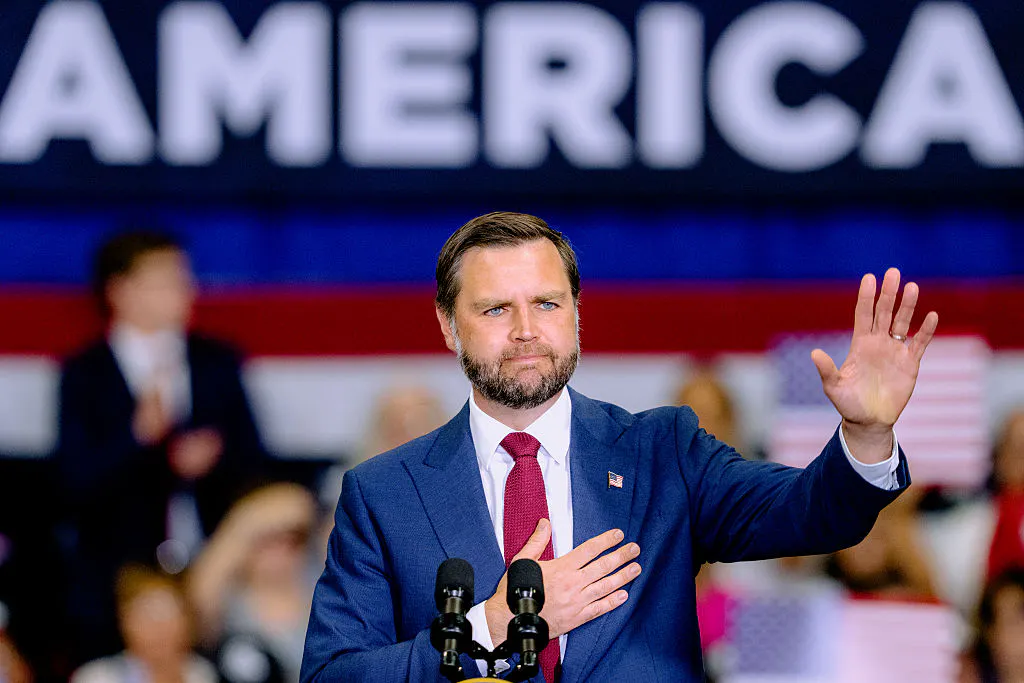
WASHINGTON, D.C. — President Donald Trump’s anti-fraud Task Force is delivering its opening marching orders this week in a memo from Vice President JD Vance, obtained first by the Daily Wire. The memo outlines a four-part plan that includes more prosecutions, better prevention methods, and targeting programs that are most ripe for abuse.
Freedom Is Back
In Style
Premium domains for sale
The newly-minted task force’s primary objective is to stop fraud that is “bleeding the federal government dry, robbing taxpayers, and denying honest Americans the services for which they have paid,” according to the memo, which comes from Vance and FTC Commissioner Andrew Ferguson, the Chair and Vice Chair of the Task Force. The “Tackling Fraud Across Public Programs” memorandum is directed to members of the anti-fraud team, which includes White House deputy chief of staff Stephen Miller.
The Task Force plans to prosecute those committing fraud and to recover as much fraudulently obtained money as it can, focusing on high-spend, low-verification programs. It acknowledges that recovering money lost to fraud is exceptionally difficult, and therefore emphasizes the need to improve prevention methods to stop the money from flowing out in the first place.
According to the memo, the federal government loses about $250 billion annually due to fraud, and only recovers about $10 billion of it, due to the “pay-and-chase” method of government payments.
For immediate next steps, the Task Force is ordered to first instruct all its members to report anti-fraud measures that are currently underway, and to investigate the Biden administration’s policies on fraud prevention — and report back on whether the Biden administration “failed to use available tools to prevent fraud, and to what extent.”
Other initial steps include assessing and implementing existing data analysis tools and tech, identifying more tools for combatting fraud, proposing new regulations and legislation, and creating new teams within agencies.
The memo identifies three primary reasons to significantly increase fraud prosecutions: the American people’s right to justice, the need to establish deterrence against fraud, and the need for accountability.
“The widespread fraud has not been committed by isolated bad actors; large and powerful networks have furthered this fraud. The American people have a right to know how the fraud problem has gotten so bad, and prosecutions will shed light on how this happened,” the memo reads.
DOJ’s new Assistant Attorney General for Fraud, Colin McDonald, will be serving as a member of the Task Force and leading the prosecutorial proceedings.
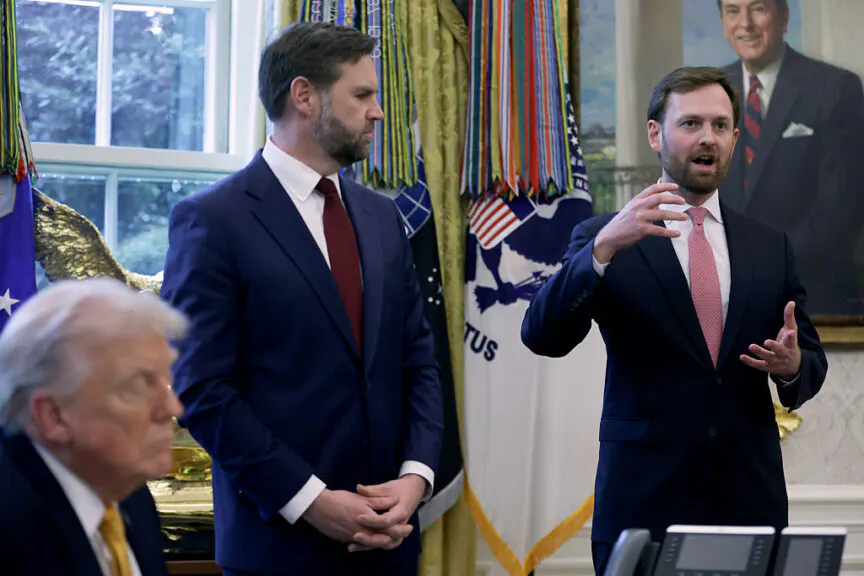
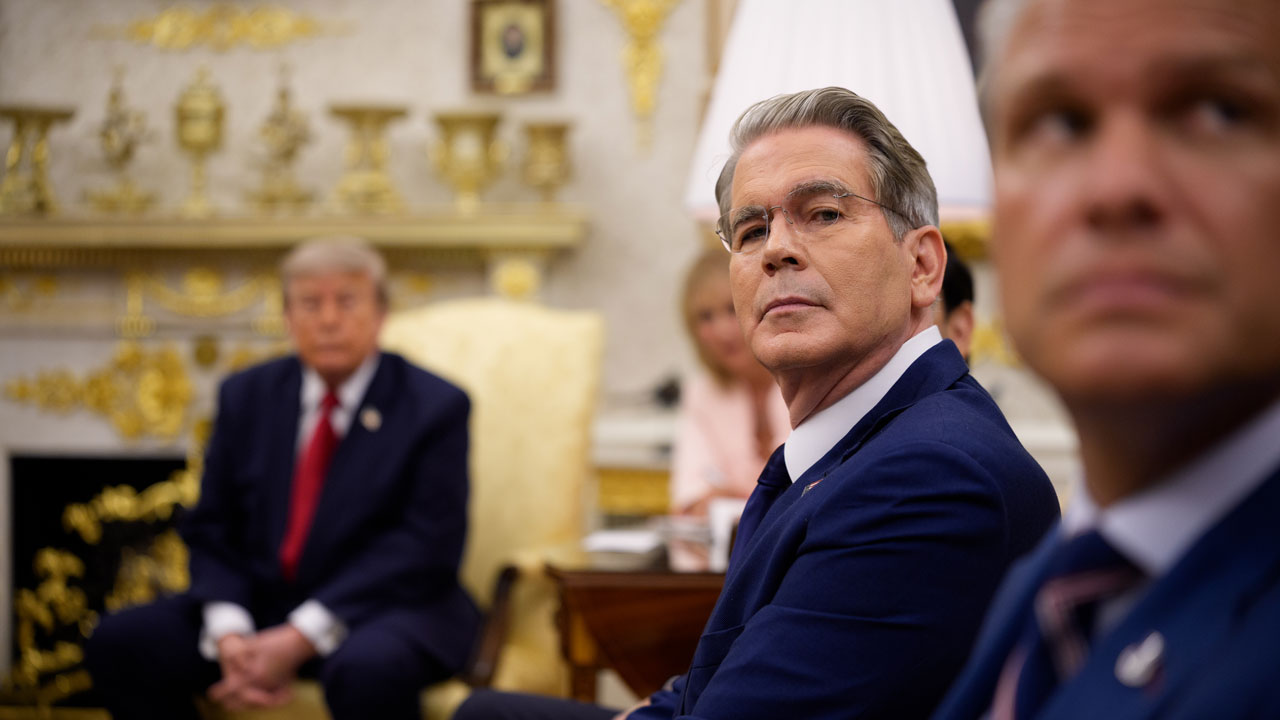
U.S. President Donald Trump and Vice President JD Vance listen as Federal Trade Commission Chairman Andrew Ferguson speaks in the Oval Office of the White House on March 16, 2026 in Washington, DC. (Photo by Alex Wong/Getty Images)
“We cannot litigate ourselves out of the fraud problem,” the memo states. “Research findings show over 1,000,000 suspicious Paycheck Protection Program (PPP) loans and more than 2,000 suspicious durable medical equipment (DME) companies. The federal government simply does not have the resources necessary to recover all of the money lost to fraud once it has been paid out. Many fraudsters are judgment proof and therefore could not pay back the money they stole even after a successful prosecution.”
The task force also identifies “hostile, partisan, and lawless federal judges in nearly every state” as another barrier to litigating the fraud away.
To stop fraud from taking place at all, the task force wants major payor agencies to “use data to check for patterns of fraud like unreasonable growth, impossible services, too many companies at the same location, and other hallmarks of fraud.”
“The government must establish fraud indicators by which the major payor agencies can detect fraud and deny payment,” the memo says. “And major payor agencies must learn to refuse payment when the risk of fraud reaches unacceptable levels. In light of the fraud crisis, agencies must abandon their presumption in favor of payment; they must pay only when they are confident that the payment is legitimate and lawful.”
Many of the government agencies already have existing tools that they can use to combat fraud — at HHS, as the memo points out, there are technological systems already in place for both detecting and blocking fraud. The only problem: these systems have “long been used incorrectly” and the fraud detection has been done after the money has already been sent. Fixing these systems will be part of the task force’s job: the Centers for Medicare & Medicaid Services, which is housed under HHS, has already deployed “new preventative approaches” that put blocks on fraud services up front.
The memo identifies a handful of “high-spend, low-verification” programs that will be targeted: Medicare and Medicaid ($2 trillion a year in spending), Department of Labor’s Unemployment Insurance ($43.5 billion a year), Department of Agriculture’s SNAP program ($101 billion a year), Health and Human Services’ Temporary Assistance for Needy Families ($16 billion a year), Department of Housing and Urban Development’s Rental Assistance / Public Housing ($64 billion a year), and the Small Business Administration loans and assistance ($104 billion a year).
More from this network:
Domains for Sale · GOTPeople.org · TheDSAPlatform · The Truth About Socialism
What's Your Reaction?
 Like
0
Like
0
 Dislike
0
Dislike
0
 Love
0
Love
0
 Funny
0
Funny
0
 Wow
0
Wow
0
 Sad
0
Sad
0
 Angry
0
Angry
0

I am just an average American. My teen years were in the late 70s and I participated in all that that decade offered. Started working young, too young. Then I joined the Army before I graduated High School. I spent 25 years in, mostly in Infantry units. Since then I've worked in information technology positions all at small family owned companies. At this rate I'll never be a tech millionaire. When I was young I rode horses as much as I could. I do believe I should have been a cowboy. I'm getting in the saddle again by taking riding lessons and see where it goes.
Premium domains for sale







Comments (0)