

Five Of The Worst Things Muhammad Did
Premium domains for sale
Freedom Is Back In Style
Today, seven of the top 10 countries with the highest prevalence of child marriage have a Muslim-majority. The same goes for eight of the top 10 countries where Christians face the most severe persecution. At the same time, Islamist terrorism continues to claim lives and threaten communities around the world.
Freedom Is Back
In Style
Premium domains for sale
These patterns raise an important question: Why does Islam appear so frequently in discussions surrounding religious persecution, terrorism, and certain forms of sexual violence?
To understand the answer, we have to examine one of the most important concepts in Islam: the Sunnah.
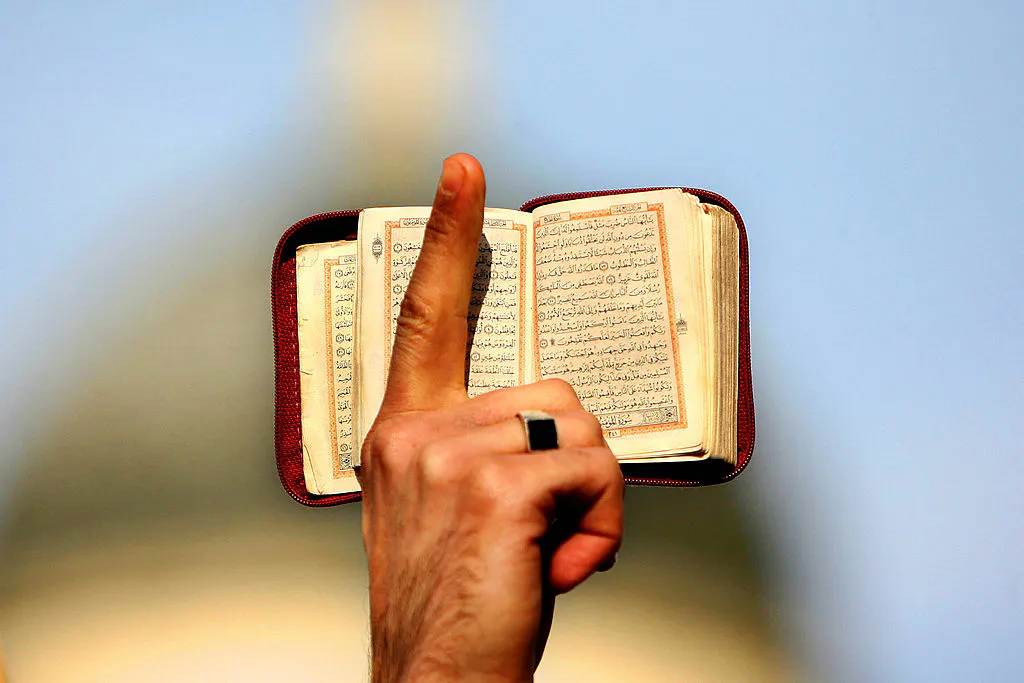
Sunnah, roughly translated as “path” or “way,” refers to the practices, sayings, actions, and approvals attributed to the Prophet Muhammad. For Muslims, Muhammad’s life is regarded as the everlasting example of how a believer should live, and because of this, they have a profound effect on the world today.
Here are five of the most disturbing things Muhammad did, which still serve as a moral example for nearly two billion Muslims worldwide.
Marrying A Six-Year-Old And Sleeping With Her At Nine
Shortly after the death of Muhammad’s first wife, Khadija, Muhammad said he had received two identical dreams in which an angel presented him with a six-year-old girl, Aisha, wrapped in a silk cloth.
Muhammad interpreted these dreams as a divine sign that he should marry her, so he sent a matchmaker to Aisha’s family with the proposition.
Aisha’s father — a close friend of Muhammad — initially opposed the marriage. He claimed that Muhammad was like his brother, so it was wrong, to which Muhammad replied: “You are my brother in Allah’s religion and His Book, but she is lawful for me to marry.”
Muhammad and Aisha’s father eventually signed the marriage contract; however, in 7th-century Arabian custom, the bride typically continued to live in her family home and refrained from sexual intercourse until she menstruated.
The marriage was consummated when Aisha was nine years old. A famous hadith narrated by Aisha herself recalls the day Muhammad took her away from her home:
My mother, Um Ruman, came to me while I was playing in a swing with some of my girl friends. She called me, and I went to her, not knowing what she wanted to do to me. She caught me by the hand and made me stand at the door of the house. I was breathless then, and when my breathing became Allright, she took some water and rubbed my face and head with it. … Unexpectedly Allah’s Apostle [Muhammad] came to me in the forenoon and my mother handed me over to him, and at that time I was a girl of nine years of age.
Muhammad’s example of taking a child bride is widely reflected across the Muslim world today.
The Genocide Of Dogs
According to another hadith, Muhammad’s wife found him silent and grieving. The angel Gabriel had promised to meet him the previous night, Muhammad explained, and had not come — something that had never happened before.
Muhammad eventually remembered that a puppy had gotten under their cot — its presence rendering the bedroom ritually unclean under Islamic tradition. After the prophet ordered the puppy removed and sprinkled water where it had been, Gabriel appeared the next evening.
Gabriel’s confirmed Muhammad’s superstitions, telling him that angels do not enter a house containing a dog.
Muhammad subsequently ordered that dogs in Medina and its surrounding areas be killed. His men carried out the order thoroughly, reportedly killing large numbers of dogs before the command was later modified.
What began as Muhammad’s inability to answer a theological challenge ultimately became a religiously sanctioned genocide against dogs — an episode that would have lasting consequences for the Islamic view of man’s best friend.
In 2022, the Palestinian mayor of Hebron reportedly offered residents 20 Israeli shekels for every dog killed. In a radio interview, he encouraged residents to kill as many dogs as possible, adding that anyone who killed five dogs would receive 100 shekels.
Following the announcement, disturbing videos and photographs circulated on social media, purportedly showing dogs being shot in the streets of Hebron and displaying the corpses of dogs that appeared to have been abused, tortured, or killed for the promised reward.
Similarly, in 2024, Turkey passed a controversial law that critics dubbed the “Dog Massacre” law, which expanded the government’s authority to remove stray dogs from the streets and, under certain circumstances, euthanize them. Critics warned that the legislation could result in the deaths of millions of stray dogs across the country.
The Betrothal Of Safiyya bint Huyayy
In 629, Muhammad’s forces laid siege to Khaybar, a Jewish settlement north of Medina, as the emerging Islamic state sought to expand its power and territory.
After Khaybar fell, many of its inhabitants were killed, while the women and children were taken captive. Islamic sources describe Muhammad’s followers dividing the captives among themselves as spoils of war.
Among the captives was Safiyya bint Huyayy, a young Jewish woman whose father and husband had been killed during the conquest. According to the traditional accounts, one of Muhammad’s companions, Dihya al-Kalbi, initially selected Safiyya as his share of the captives. When Muhammad learned of this, he traded seven of his own captive women for her.
Muhammad subsequently offered Safiyya two choices: marry him or attempt to survive as a 17-year-old girl in a war-ravaged community. Safiyya married him, and a few days later was forced to sleep with him while still grieving her first husband’s death.
Stealing His Son’s Wife
Muhammad had an adopted son named Zayd ibn Harithah, a former slave. Zayd was married to a woman named Zaynab bint Jahsh, who was also Muhammad’s cousin.
Muhammad visited Zayd’s home one day and caught sight of Zaynab naked after the wind blew the cover off her door, according to one account. Muhammad began developing an attraction to her and made remarks about her beauty. Muhammad’s claim to prophethood pressured Zayd into divorcing Zaynab so that Muhammad could marry her.
Muhammad initially declined, telling Zayd to keep his wife. But then, according to Muhammad, Allah intervened and instructed him to marry her.
Muhammad’s marriage to Zaynab became more than a personal relationship — it became the basis for a significant change in Islamic law concerning adoption. The Quran explicitly distinguishes adopted sons from biological sons, meaning that the former wife of an adopted son was no longer considered prohibited to marry.
Beheading 600-900 Men In One Day
In 627 A.D., Muhammad faced one of the greatest military threats to his growing Islamic state. During the Battle of the Ditch, a massive confederation of Arabian tribes, numbering roughly 10,000 men, marched on Medina to defeat Muhammad and his followers. Muhammad had only about 3,000 men to defend the city.
Following the advice of Salman al-Farisi, Muhammad ordered a trench dug around the exposed approaches to Medina. The defensive strategy proved effective, and after weeks of failed attempts to breach the city — worsened by severe weather — the attacking coalition eventually withdrew.
Muhammad’s victory, however, was not the end of the conflict. Almost immediately after the coalition departed, Muhammad claimed the angel Gabriel appeared to him and instructed him to march against the Banu Qurayza, a neighboring Jewish tribe living in Medina.
According to the traditional Islamic accounts, the Banu Qurayza violated an agreement with Muhammad concerning the defense of Medina.
The siege of the Banu Qurayza reportedly lasted 25 days. Cut off from outside assistance and facing an increasingly desperate situation, the Jewish tribe eventually surrendered.
The punishment approved by Muhammad was severe: all of the adult men of the Banu Qurayza were to be executed, while their women and children would be taken captive as spoils of war.
The men were subsequently brought into Medina, where, according to the traditional Islamic biographies, they were executed in groups. Ibn Ishaq’s biography gives the number killed as between 600 and 900.
This was one of the bloodiest episodes in Muhammad’s life and serves as a disastrous example for Islamist militaries today.
In June 2014, ISIS carried out the Camp Speicher massacre, killing roughly 1,700 unarmed Shiite cadets and soldiers of the Iraqi Armed Forces by the Islamic State over the course of three days.
Similarly, on August 8, 1998, Taliban militia forces captured the city of Mazar-e-Sharif in northwest Afghanistan. Within the first few hours of their control, Taliban troops killed at least 2,000 civilians, according to Human Rights Watch. Witnesses described it as a “killing frenzy” as the advancing forces shot at “anything that moved.”
Taken together, these stories present a consistent argument about the danger of treating Muhammad’s life as an unquestionable moral template. The Sunnah is not merely a collection of abstract teachings — it includes Muhammad’s conduct as a husband, political leader, military commander, and judge, and Muslims are encouraged to regard his example as the model for righteous behavior.
When that example includes marrying and having sex with a child, taking a captive woman as a wife after the deaths of her family members, receiving revelations that conveniently permitted his own desires, ordering the execution of an entire tribe’s men, and endorsing the killing of animals, the consequences of holding one man up as the timeless standard of human morality become impossible to ignore.
***
Jacob Falach is a writer and student in Nashville, Tennessee. You can find him on Instagram: @jacobfalach
More from this network:
Domains for Sale · GOTPeople.org · TheDSAPlatform · The Truth About Socialism
What's Your Reaction?
 Like
0
Like
0
 Dislike
0
Dislike
0
 Love
0
Love
0
 Funny
0
Funny
0
 Wow
0
Wow
0
 Sad
0
Sad
0
 Angry
0
Angry
0

I am just an average American. My teen years were in the late 70s and I participated in all that that decade offered. Started working young, too young. Then I joined the Army before I graduated High School. I spent 25 years in, mostly in Infantry units. Since then I've worked in information technology positions all at small family owned companies. At this rate I'll never be a tech millionaire. When I was young I rode horses as much as I could. I do believe I should have been a cowboy. I'm getting in the saddle again by taking riding lessons and see where it goes.
Premium domains for sale





















Comments (0)