

Georgia Starts First-Ever Superfund Research Center
Premium domains for sale
Freedom Is Back In Style
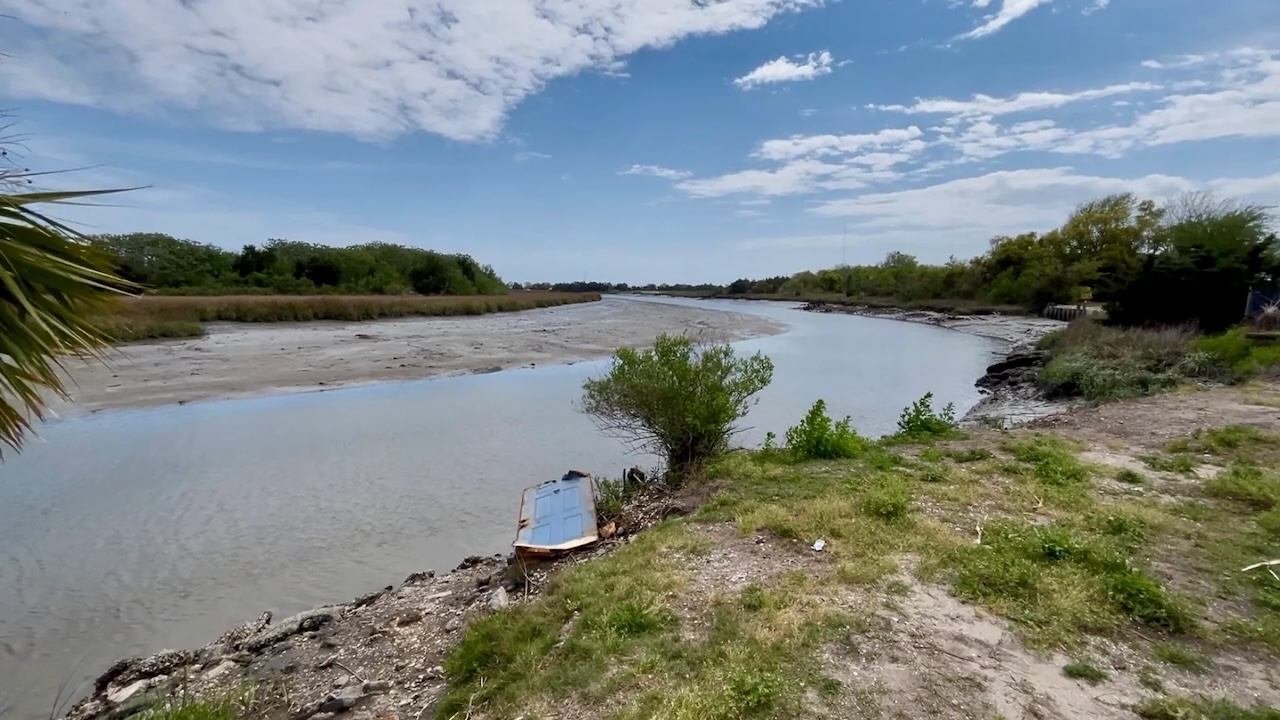
In the city of Brunswick, residents such as Semona Holmes are sharing the concerns that come with living close to a dangerous Superfund site. The EPA has designated a former pesticide plant as a “contaminated former industrial site.”
Freedom Is Back
In Style
Premium domains for sale
According to the Georgia Recorder, the site has raised concerns for contamination, whether it be the locality’s air, soil, or water.
The site will now come under the scrutiny of Georgia’s first-ever “Superfund research center.” Six universities are collaborating on the center, which will operate with $15 million in funding from the National Institute of Environmental Health Sciences over a period of five years.
Georgia’s Emory University and Georgia Tech will join Texas Tech University, among others, in analyzing the locality’s four hazardous Superfund sites.
The concentration of sites is a rarity across the state.
The Daily Signal reached out to the EPA for comment regarding Brunswick’s Superfund sites, to which a spokesperson said regarding the Terry Creek Dredge Spoils/Hercules Outfall Superfund Site, “Toxaphene, a chlorinated pesticide, is the main contaminant of concern at this site. The remedial action to backfill the old outfall ditch and construct a new, concrete-lined conveyance structure is complete. The next step is the remedial investigation of the dredge spoils at Terry and Dupree Creeks.”
The spokesperson continued, “The conveyance channel provides protection against rising sea levels and storm surges. EPA used rip rap to armor the banks of the former ditch along Dupree Creek, a process known as coastal hardening. Remaining sediments in the Outfall Ditch are covered with 2 to 8 feet of clean fill. Regular inspections will ensure that erosion and other issues are promptly resolved.”
Further, the collaboration will analyze the site that Holmes lives near. Holmes has shared her concerns over the toxicity that the pesticide plant has brought to Brunswick, telling the Georgia Recorder, “Everything from that chemical plant has flowed into our community.”
She continued, “If you can imagine this entire area here completely flooded … the flooding would be—we would have like a river on our street.” The flooding once got to the point where, following a hurricane, her neighbor canoed down the street.
The Superfund site is located nearly a half mile from Holmes’ house. For Holmes, the concern goes beyond the flooding; it extends into the possibility of what the floodwater may be contaminated with.
That’s what the research center will help determine.
The center has two primary objectives, according to Emory professor Noah Scovronick, the Georgia Recorder reports. The first is “to understand the health effects of past chemical exposures, and the other is to try and reduce people’s future exposures.”
To accomplish these objectives, researchers will analyze correlations between the hazardous materials at the former industrial sites, as well as potential health effects, and execute environmental sampling to determine where people could have been susceptible to these contaminants.
Further, scientists will need to model the effects of severe weather such as rising tides and powerful storms. Scovronick continued to explain that the locality’s increase in extreme weather could emit further contaminants into the locality’s surroundings.
Contamination into the community’s atmosphere could look like rising tides and powerful storms flooding the Superfund sites, scattering the chemicals into the nearby environment. For sites that have hazardous materials contained in structures, flooding could rupture these measures that are meant to protect people from contaminants.
For now, residents like Holmes await the researchers’ answer to the question: What contaminants has her family already been exposed to?
More from this network:
Domains for Sale · GOTPeople.org · TheDSAPlatform · The Truth About Socialism
What's Your Reaction?
 Like
0
Like
0
 Dislike
0
Dislike
0
 Love
0
Love
0
 Funny
0
Funny
0
 Wow
0
Wow
0
 Sad
0
Sad
0
 Angry
0
Angry
0

I am just an average American. My teen years were in the late 70s and I participated in all that that decade offered. Started working young, too young. Then I joined the Army before I graduated High School. I spent 25 years in, mostly in Infantry units. Since then I've worked in information technology positions all at small family owned companies. At this rate I'll never be a tech millionaire. When I was young I rode horses as much as I could. I do believe I should have been a cowboy. I'm getting in the saddle again by taking riding lessons and see where it goes.
Premium domains for sale




















Comments (0)