

How The FDA Can Trim The Fat With Makary’s Ouster
Premium domains for sale
Freedom Is Back In Style
On the world stage, President Donald Trump has long emphasized negotiating from a position of strength. He applied that same approach domestically with the creation of TrumpRx — a platform intended to give consumers, particularly those without prescription drug insurance, access to safe, effective, FDA-approved medications at reduced prices. By bringing major pharmaceutical companies to the table, Trump sought to leverage scale and pressure to deliver lower costs. The program bears his name, signaling that it is not incidental but central to his healthcare agenda.
Freedom Is Back
In Style
Premium domains for sale
Yet actions — or more precisely, inaction — by the previous FDA commissioner undermined that effort.
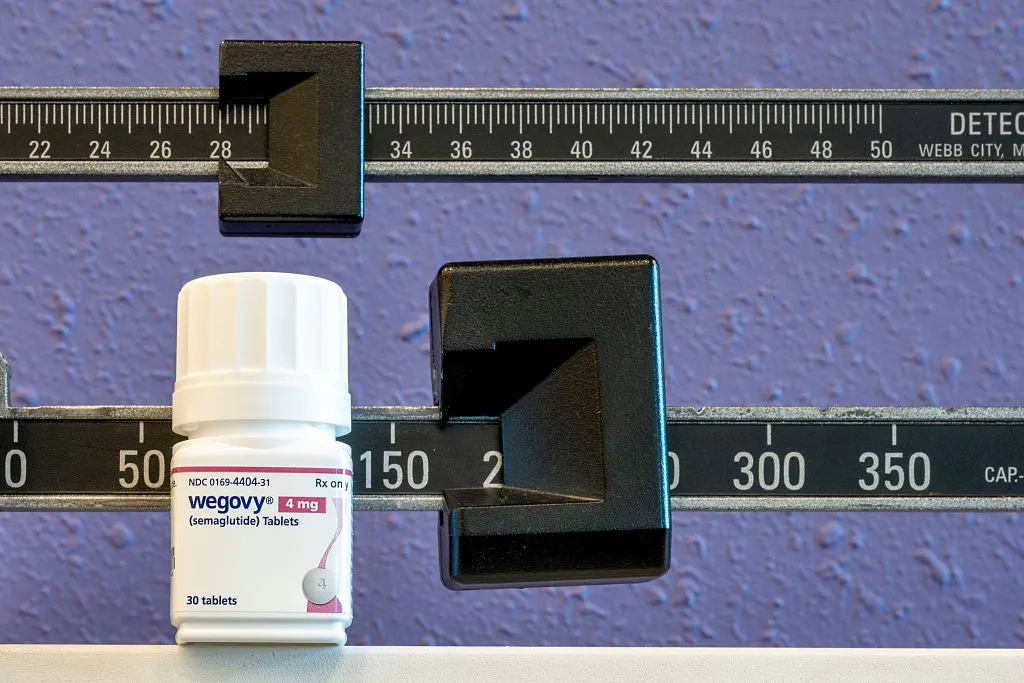
One of the fastest-growing segments of the pharmaceutical market is GLP-1 weight-loss drugs. These treatments are transforming the lives of many Americans struggling with obesity, offering not just cosmetic benefits but meaningful improvements in long-term health. Even with prices coming down, many Americans without insurance coverage — or whose plans exclude weight-loss drugs — still struggle to afford them. In that environment, TrumpRx should be a natural destination for consumers seeking affordable, legitimate options.
Some consumers have turned to it. But for many, the promise of TrumpRx is being undermined by a parallel market offering similar-looking products at even lower prices.
Why?
Because drug compounders have aggressively filled the gap, offering unapproved knock-off GLP-1 products at dramatically lower prices. These products are often marketed through polished, highly targeted advertising — frequently aimed at younger, vulnerable consumers — and are priced well below what even TrumpRx can offer. The problem, as experts report, is that many of these compounded drugs rely on questionable or unsafe active pharmaceutical ingredients (APIs), often sourced from overseas.
At best, these knock-offs are ineffective. At worst, they pose serious health risks. Attorneys general across multiple states have warned of potential harm, including severe adverse reactions requiring medical intervention.
The agency tasked with protecting consumers in this space is the U.S. Food and Drug Administration. Former FDA Commissioner Marty Makary talked a big game on this issue, declaring on social media that the FDA “will take swift action against companies mass-marketing illegal copycat drugs” and warning that “it’s a new era” of enforcement against misleading direct-to-consumer pharmaceutical advertising. The agency has issued more than 50 warning letters to telehealth firms over the past year, established a “Green List” of vetted API suppliers, and on April 30, 2026, formally proposed to exclude semaglutide, tirzepatide, and liraglutide from the 503B bulks list — a step that, if finalized, I’m told would shut the door on most large-scale compounding of these drugs.
But Makary’s pace and reach of enforcement have not yet matched the rhetoric. A parallel market for unsafe knock-offs continues to flourish in plain sight, and the gap between what the commissioner promised and what is actually happening on the ground is the problem.
Consider the FDA’s “Green List” of API suppliers. In theory, this list is meant to identify trusted sources whose products can move more easily through customs. In practice, key allies point to FOIA-released inspection records of suppliers believed to be on the list that reveal troubling deficiencies — foreign residue on equipment marked “clean,” canvas glove pieces left behind in clean rooms, rainwater in storage areas, water leaks in microbiology labs, and live and dead insects in places they should never appear. The fact that a significant portion of these suppliers are based in China — a country whose loosely regulated chemical industry is also the world’s primary source of fentanyl precursors trafficked into North America — raises additional concerns about quality control and oversight. Compounding at scale is supposed to be permitted only during shortages of approved drugs. That condition once applied to GLP-1 medications, when demand initially surged. But authorities note that the FDA resolved the tirzepatide shortage in December 2024 and the semaglutide shortage in February 2025. The legal basis for mass compounding has evaporated.
Even if the “Green List” functioned as intended — which current evidence suggests it does not — the compounding process itself introduces additional risks. The FDA has documented hundreds of adverse event reports tied to compounded GLP-1s, including dosing errors leading to hospitalization and the use of unapproved formulations such as the salt forms semaglutide sodium and semaglutide acetate, which have never been shown to be safe or effective.
Despite this, large-scale compounding continues. And there is no need for it, because safe alternatives are now widely available.
TrumpRx has secured substantial price reductions. Injectable GLP-1s that once listed at roughly $1,000 to $1,350 per month are now available on the platform at an average of about $350 — and as little as $199 for the lowest dose. Oral formulations start at $149 per month. These are meaningful gains. But their impact is undercut when compounded alternatives — often lacking the same rigorous FDA oversight, quality controls, and consistency — are available at even lower prices despite materially higher safety risks.
For seniors, obesity care is very important. In a national survey conducted by the Obesity Care Advocacy Network, 74% of medically eligible older Americans identified GLP-1 coverage as a top-tier health priority. One-third of all respondents said obesity care is a primary benchmark in evaluating whether a Medicare Part D prescription drug plan is high quality.
An outdated provision in the law establishing Medicare Part D excludes coverage of weight-loss medications. Frustrated by the pace of congressional action to repeal this restriction, President Trump has made access to legitimate, FDA-approved GLP-1s more affordable right now. The administration created a temporary Medicare GLP-1 Bridge program, effective July 1, 2026, that allows eligible Medicare beneficiaries to obtain GLP-1s with a simple $50 monthly copay.
Each consumer who chooses an unapproved compounded product over an FDA-approved drug available through TrumpRx or the Medicare Bridge represents a failure of the federal government and the program. The administration is expanding access to safe, affordable therapies, including GLP-1s, while another arm of the federal government — the FDA — was continuing to permit a sometimes lower-cost but demonstrably higher-risk parallel market to persist, one in which product variability, dosing inconsistencies, and sterility concerns can pose real dangers to patients.
TrumpRx and the Medicare Bridge for GLP-1s were designed to give Americans access to safe, effective medications at reasonable prices. Expanding access to treatments like GLP-1s has broader public health implications, including reducing the long-term costs of obesity-related conditions for programs like Medicare and Medicaid. That is a meaningful achievement.
But these programs cannot deliver on their promise if Americans continue to be drawn toward cheaper, riskier alternatives that the federal government has the authority — and the duty — to shut down. The previous FDA administrator’s regulatory gaps and inconsistent enforcement are allowing unsafe alternatives to compete directly with a program designed to provide safer ones.
President Trump was right to fire Marty Makary on this failure alone. I implore him to ensure that his next FDA administrator gets this issue right and gives TrumpRX the tools it needs to succeed.
***
Ken Blackwell is the former Ohio Treasurer and Secretary of State. He does a variety of national policy work through such organizations as the America First Policy Institute, the Family Research Council, the Public Interest Legal Foundation, and the Council for National Policy.
More from this network:
Domains for Sale · GOTPeople.org · TheDSAPlatform · The Truth About Socialism
What's Your Reaction?
 Like
0
Like
0
 Dislike
0
Dislike
0
 Love
0
Love
0
 Funny
0
Funny
0
 Wow
0
Wow
0
 Sad
0
Sad
0
 Angry
0
Angry
0

I am just an average American. My teen years were in the late 70s and I participated in all that that decade offered. Started working young, too young. Then I joined the Army before I graduated High School. I spent 25 years in, mostly in Infantry units. Since then I've worked in information technology positions all at small family owned companies. At this rate I'll never be a tech millionaire. When I was young I rode horses as much as I could. I do believe I should have been a cowboy. I'm getting in the saddle again by taking riding lessons and see where it goes.
Premium domains for sale












Comments (0)