

How The IRS Is Stealing Your Money And Charging You For It
Premium domains for sale
Freedom Is Back In Style
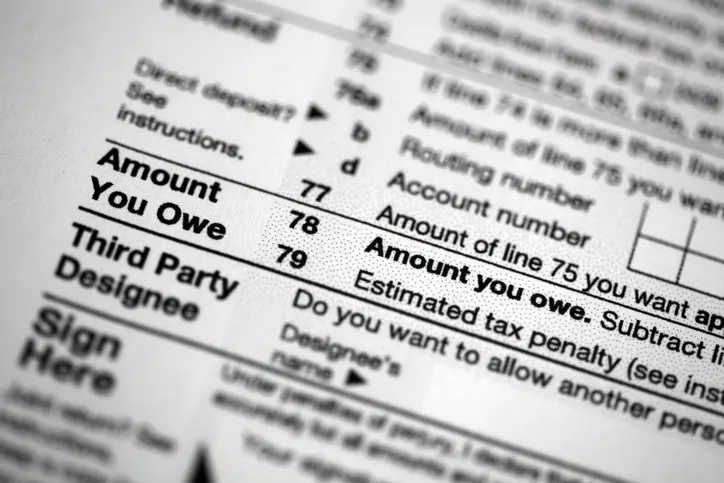
As congressional Republicans reportedly debate the diminishing likelihood of a third budget reconciliation package, they should focus on the fact that such legislation could offer them a historic opportunity to rectify a decades-old injustice in the federal tax code that costs Americans billions of dollars every year.
Freedom Is Back
In Style
Premium domains for sale
If they act, they will demonstrate their genuine commitment to reducing the cost of living. In doing so, they will greatly improve their chances of retaining control of Congress in the midterm elections.
The federal income tax that we know and love today became law in October 1913, following ratification of the Sixteenth Amendment to the U.S. Constitution. Initially, the economic impact of the tax was quite limited. As a result of a low flat rate of just 1%, and numerous exemptions, only about 2% of households were covered. Those subject to the new tax paid all they owed at once on April 15 each year.
Years later, with the onset of World War II, the federal income tax changed radically as the government’s need for revenue soared. Congress passed legislation to significantly increase tax rates and greatly expand the number of individuals subject to the tax.
The Roosevelt administration was concerned that increased tax burdens could produce political blowback that might undermine the war effort. The administration was also concerned that many taxpayers might not be able to make the large annual lump sum payments needed on April 15 to comply with their increased obligations.
And even if taxpayers complied, the administration was concerned that significant revenue fluctuations from annual tax payments would complicate the management of government finances.
In the summer of 1942, in testimony to the U.S. Senate Finance Committee, Mr. Beardsley Ruml presented a proposal to address the government’s concerns. Ruml, treasurer of Macy’s Department Store and chairman of the Federal Reserve Bank of New York, proposed that employers be required to withhold estimated income taxes from the paychecks of their employees and send the money withheld to the government each quarter.
By collecting income taxes in increments each pay period well before they were due, the government could accelerate and smooth its cash receipts and improve taxpayer compliance by reducing the risk of default on large year-end tax bills.
And, by focusing the attention of taxpayers on the net-of-tax take-home pay contained in their paychecks, the government could obscure the increased income tax burden it was imposing.
The government eagerly embraced Ruml’s proposal, and Congress enacted it into law by the Current Tax Payment Act of 1943. While Ruml’s paycheck withholding plan effectively addressed the government’s concerns, it imposed an enormous cost on taxpayers, an onerous burden that we continue to bear today.
Throughout 2025, taxpayers had more than $2.6 trillion withheld from their paychecks for income tax returns due on April 15, 2026. This was a vast amount of money that the government took from taxpayers and drained from the private economy.
In the absence of paycheck withholding, taxpayers could have made productive use of that cash throughout the year. They could have saved it to pay their 2025 taxes and earned billions of dollars of interest in the meantime. They could have used some of it to make short-term productive investments in the private sector, boosting the economy and benefiting everyone. The government provides no compensation for these lost economic opportunities.
If a taxpayer fails to pay his or her taxes on time, the Internal Revenue Service immediately begins charging interest, which compounds daily until the late payment is made. However, the IRS does not pay a penny of interest on the trillions of dollars withheld during the year for returns due the following April.
This is because, under current law, income taxes are payable when you receive your income and not when you file your return next April. Therefore, the government does not consider deductions from paychecks to be early payments. But paycheck deductions are enormous cash advances to the government that come at a real and significant economic cost to taxpayers.
The Republicans can, and should, use a third budget reconciliation bill to correct this unjust one-way flow of interest payments and mandate economic neutrality in the income tax withholding system. They should direct the IRS to develop regulations that provide for interest payments to taxpayers on wages withheld and advanced to the government, with those interest payments calculated using the same percentage interest rate the government uses to calculate interest payments due from taxpayers who miss an IRS deadline.
The development of regulations by the IRS, or any government agency, is a complex process. There will be many details to work out. But Republicans can clearly set the direction of the process with legislation that establishes the fundamental principle that taxpayers must be compensated fairly for the significant economic burden they bear due to paycheck withholding.
The government gets many valuable benefits from paycheck withholding. It is only fair to make the government pay for those benefits.
***
J. Kennerly Davis has worked as a finance executive for a Fortune 500 company and has served as a Deputy Attorney General for Virginia.
More from this network:
Domains for Sale · GOTPeople.org · TheDSAPlatform · The Truth About Socialism
What's Your Reaction?
 Like
0
Like
0
 Dislike
0
Dislike
0
 Love
0
Love
0
 Funny
0
Funny
0
 Wow
0
Wow
0
 Sad
0
Sad
0
 Angry
0
Angry
0

I am just an average American. My teen years were in the late 70s and I participated in all that that decade offered. Started working young, too young. Then I joined the Army before I graduated High School. I spent 25 years in, mostly in Infantry units. Since then I've worked in information technology positions all at small family owned companies. At this rate I'll never be a tech millionaire. When I was young I rode horses as much as I could. I do believe I should have been a cowboy. I'm getting in the saddle again by taking riding lessons and see where it goes.
Premium domains for sale














Comments (0)