

How To Lose Your Mind: The World’s Simplest Impossible Math Problem
Premium domains for sale
Freedom Is Back In Style
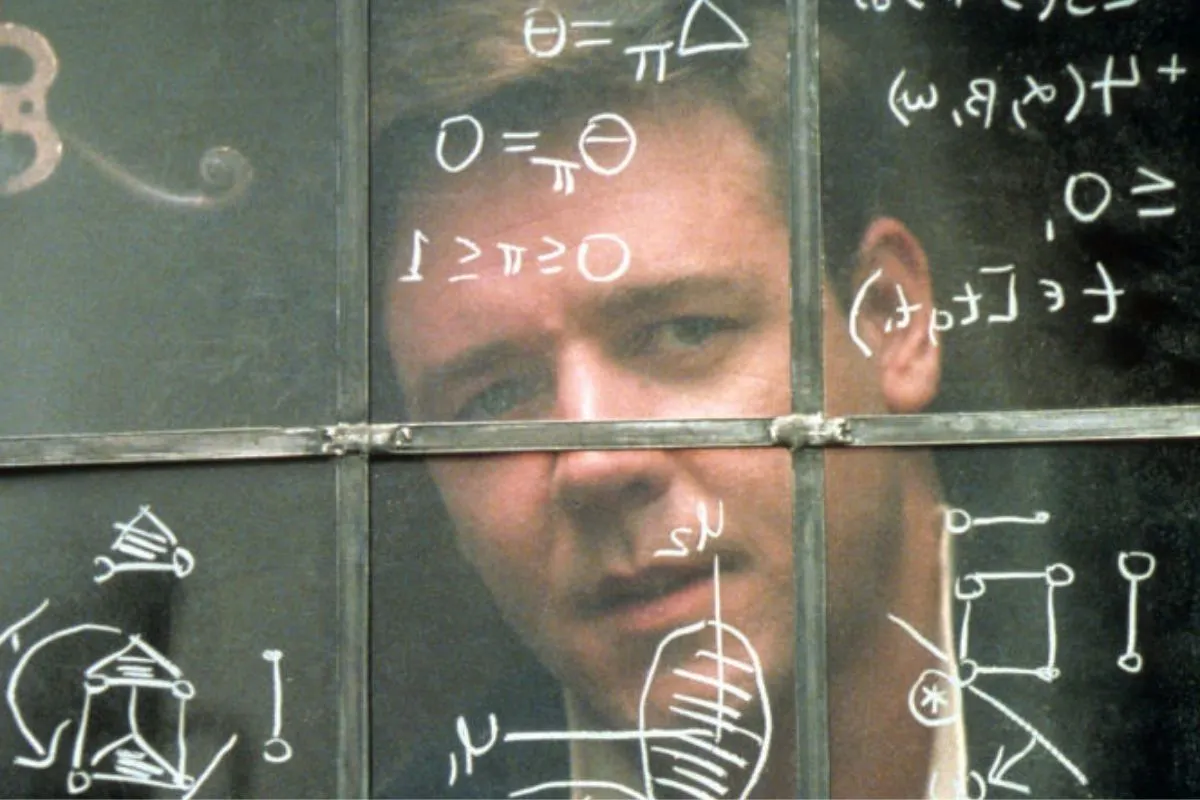
Imagine a puzzle so easy a third-grader can understand the rules, yet so fiendishly stubborn that the world’s greatest mathematicians have spent nearly a century banging their heads against it. Some even joke it was invented by aliens to sabotage human progress.
Freedom Is Back
In Style
Premium domains for sale
Welcome to the Collatz Conjecture — and once you hear it, you might lose an afternoon to it.
Pick any positive whole number. Then follow just two rules: if it’s even, divide by 2. If it’s odd, multiply by 3 and add 1. Take your answer and repeat.
The conjecture — an unproven prediction made by German mathematician Lothar Collatz in 1937 — says that no matter what number you start with, you’ll always eventually spiral down into the same infinite loop: 4, 2, 1, 4, 2, 1, forever.
Start with 7. It’s odd, so 3×7+1=22. Even, so 22÷2=11. Odd, so 3×11+1=34. The sequence lurches up and down chaotically for 16 steps before inevitably crashing into 1.
Mathematicians call them “hailstone numbers” — they shoot skyward before plummeting back down. Start with 27 and the sequence rockets up to 9,232 before taking 111 steps to finally collapse back to 1.
Supercomputers have tested nearly 300 quintillion numbers. Every single one eventually hits 1.
But in mathematics, testing 300 quintillion examples isn’t a proof. You have to prove it works for infinity. And that’s where everything falls apart.
The numbers behave with no predictable pattern — no formula can tell you how many steps a given number will take, or how high it will climb. It’s pure mathematical chaos. The only way to disprove the conjecture would be to find a single rogue number that either grows forever or gets trapped in a completely different loop. Nobody has found one. Nobody can prove one doesn’t exist.
The legendary mathematician Paul Erdős put it bluntly: “Mathematics is not yet ready for such problems.”
In 2019, Terence Tao — arguably the greatest living mathematician — made the biggest breakthrough in decades. He proved that if you pick a random number, the probability it doesn’t eventually shrink toward 1 is effectively zero.
Stunning progress. Still not a proof.
Because probability handles averages, not guarantees. Some theoretically bizarre number could defy the odds — and until someone proves such a number is logically impossible, the Collatz Conjecture remains one of math’s most maddening open wounds.
Go ahead. Try a few numbers. We warned you.
More from this network:
Domains for Sale · GOTPeople.org · TheDSAPlatform · The Truth About Socialism
What's Your Reaction?
 Like
0
Like
0
 Dislike
0
Dislike
0
 Love
0
Love
0
 Funny
0
Funny
0
 Wow
0
Wow
0
 Sad
0
Sad
0
 Angry
0
Angry
0

I am just an average American. My teen years were in the late 70s and I participated in all that that decade offered. Started working young, too young. Then I joined the Army before I graduated High School. I spent 25 years in, mostly in Infantry units. Since then I've worked in information technology positions all at small family owned companies. At this rate I'll never be a tech millionaire. When I was young I rode horses as much as I could. I do believe I should have been a cowboy. I'm getting in the saddle again by taking riding lessons and see where it goes.
Premium domains for sale























Comments (0)