

The Dating Advice Hidden Inside The Year’s Biggest Horror Surprise
Premium domains for sale
Freedom Is Back In Style
This article is part of Upstream, The Daily Wire’s new home for culture and lifestyle. Real human insight and human stories — from our featured writers to you.
Freedom Is Back
In Style
Premium domains for sale
***
Much has been written about how great the new independent horror movie “Obsession” is. With a budget of just $750,000, it’s already earned $224 million. The success is entirely deserved; it’s a phenomenal film. Yet, the most important thing about it is not what it shows, but what it says.
“Obsession” resonates because it combines two deeply human tropes. The first is this: A character gets the thing he’s been striving after for so long, and it doesn’t satisfy him the way he thought it would. Be careful what you wish for, the grass is always greener on the other side, and all that. The second is unrequited love. The pain of falling for someone who doesn’t like you back is something that most people experience. There’s a reason why it’s been fodder for so many stories and so much art.
If there’s a moral to “Obsession,” it’s this: When you have feelings for someone who isn’t willing to give you a shot, the best place for them isn’t with you.
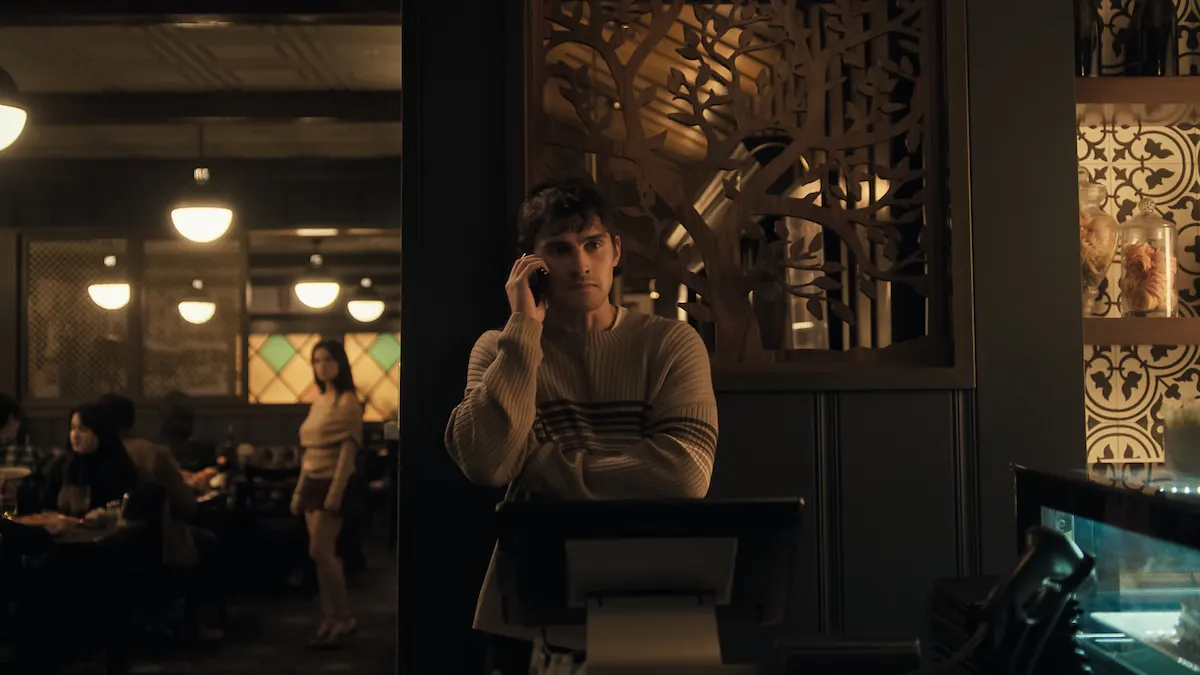
The film follows “Bear” (Michael Johnston), a 20-something man who’s shy and deeply in love with his coworker and friend, Nikki (Inde Navarrette). Unable to admit his feelings for her and ask her on a date, he goes to a crystal shop and buys a “One Wish Willow,” which advertises that it will grant one wish upon being broken. When Bear does so and wishes that Nikki would love him more than anything in the world, her demeanor immediately changes. The love of Bear’s life finally loves him back, and everything is great — until what’s actually happened becomes apparent: This Nikki isn’t quite who Bear thinks she is.
Many have suggested that Bear is the villain of the story. That goes too far. Bear did what so many of us do: He inadvertently meddled with another person’s feelings without regard for how it would affect her and was completely unprepared for the consequences. Yet he did so by doing what so many of us have also done: by hoping against hope that our special someone really does like us back.
He reacted to Nikki’s seeming about-face how you’d expect a shy guy who had the girl of his dreams throwing herself into his arms would act: shock, confusion, and stopping her advances to see if she’s okay. Only when she seems to indicate that she really does want him does he relent. While we, the audience, know that there’s this magic spell that’s been put on her, the characters of “Obsession” seem to inhabit the same sort of world as ours and treat magic the same way we would. So it’s understandable, at least at first, that Bear doesn’t quite comprehend or accept that what he’s dealing with is something other than sudden-onset true love.
If Bear has moral fault, it’s not so much for the willow itself but for the reasoning he displays. There is a deliberate shot of him looking at the toy immediately after Nikki’s behavior changes. It’s clear that he has a growing suspicion that something is very wrong, but he’s so taken by the situation that he doesn’t examine it too closely until it becomes unignorable. This is somewhat defensible at first, but Bear eventually does become fully culpable for his choices.
Courtesy of Focus Features
This is exemplified when Bear asks pseudo-Nikki if her dad really does have cancer. This was the story she told to get him to stay with her the night he made the wish and is therefore foundational to their entire relationship. After her “no, no, no, I thought we were having a nice date” reaction that’s gone viral on social media, pseudo-Nikki says, “What does it matter?” Tellingly, Bear agrees. That’s the question that’s at the heart of “Obsession.” It matters because it’s the truth. The truth about whether Nikki really does like Bear matters, but Bear seems not to want to question his seeming good fortune.
If there’s one point where Bear slides into the wrong, it’s when he has a conversation with the “real” Nikki, who’s briefly able to slip out. She begs him to kill her, and it’s apparent she’s suffering a lot.
Bear doesn’t kill her, and there are good reasons for that. There still might be a way to break the spell, and also because, as far as the world would see, he would just be murdering his devoted, if slightly odd, girlfriend while she slept. No, what’s bad is not what Bear does, but what he says. Specifically, he asks, “What’s so bad about being with me?”
It’s at this moment that many might wonder why Bear is making this about himself. Nikki is the one suffering here, and Bear caused it. At the same time, it’s a very human thing to wonder. I wish I could say I had never uttered any variation of Bear’s question before. Nikki’s response, the real Nikki’s response, is the perfect counter: “I’ve never been with you.”
It’s not that loving Bear would have been bad, it’s that Nikki didn’t love him. Loving Bear was simply not compatible with Nikki, so what’s happened instead is that Nikki has been possessed by this demon who is obsessed with Bear.
What makes the tragedy worse is that Bear had other options: He seemed to have real chemistry with another character, Sarah. But by pursuing Nikki, he foreclosed what would have probably been a good relationship.
When pseudo-Nikki tells Bear that everything is all his fault, she’s not wrong. His fundamental moral flaw is passivity. Had he just told her how he felt early on, he would have gotten the “no” he didn’t want but definitely needed, and none of this would have happened. But he was scared. That’s a very human feeling: There’s a reason why 45% of young men have never asked out a woman in person before. Candidly, I saw a lot of my younger self in Bear.
Funny enough, the film taught me something in real time. As I was sitting down in the theater, I noticed that just about everyone else was sitting in twos. Even in the pitch darkness, I felt very conspicuous. Great, I thought. Everyone here has their person, and I don’t. Why didn’t I have someone who loved me who was by my side?
But I, too, was indulging in the misunderstanding that I would see enacted on screen. When pseudo-Nikki breaks the willow to make Bear obsessed with her in the finale, she knows very well what she’s doing. It shows that while she’s obsessed with him, she doesn’t actually love him. Or rather, she has the same superficial understanding of what love means that many of us do, in a more intentional, malicious way.
Love isn’t just wanting affection from someone. It’s wanting the best for them. And pseudo-Nikki doesn’t want what’s best for Bear. In fact, when she realizes that he doesn’t feel about her the same way she feels about him, she’s perfectly willing to use the willow on him. She’s fine with making him suffer in order to get the validation that she thinks she needs from him. You could call that a lot of things, but it’s not love.
While Bear did the same thing earlier, he did it with the same sort of misunderstanding that a lot of us do. It came from loneliness and wishful thinking and from not really understanding the consequences of what he was asking. As a sort of vague yearning, wanting somebody to love you is human and earnest and largely harmless. However, what the film shows us is that if you’ve ever wanted your unreciprocated crush to love you back, no you don’t — because this is what it would look like.
Love is not something you can manufacture, and if it were, the consequences would be horrifying. Bear would have really benefited from hearing the old saying, “if you love something, set it free.”
***
Stephan Kapustka is a writer at the American Spectator. Follow him on X @SteveKapustka.
More from this network:
Domains for Sale · GOTPeople.org · TheDSAPlatform · The Truth About Socialism
What's Your Reaction?
 Like
0
Like
0
 Dislike
0
Dislike
0
 Love
0
Love
0
 Funny
0
Funny
0
 Wow
0
Wow
0
 Sad
0
Sad
0
 Angry
0
Angry
0

I am just an average American. My teen years were in the late 70s and I participated in all that that decade offered. Started working young, too young. Then I joined the Army before I graduated High School. I spent 25 years in, mostly in Infantry units. Since then I've worked in information technology positions all at small family owned companies. At this rate I'll never be a tech millionaire. When I was young I rode horses as much as I could. I do believe I should have been a cowboy. I'm getting in the saddle again by taking riding lessons and see where it goes.
Premium domains for sale




Comments (0)