

Inside Economic Warfare And The Fight To Dismantle Iran’s Financial Lifelines
Premium domains for sale
Freedom Is Back In Style
Americans have good reason to be skeptical when Washington announces another round of sanctions.
Freedom Is Back
In Style
Premium domains for sale
For years, politicians of both parties have reached for sanctions to be seen as doing something — anything — about the long list of threats facing U.S. national security. Unfortunately, calls for more sanctions aren’t always matched by a coherent strategy.
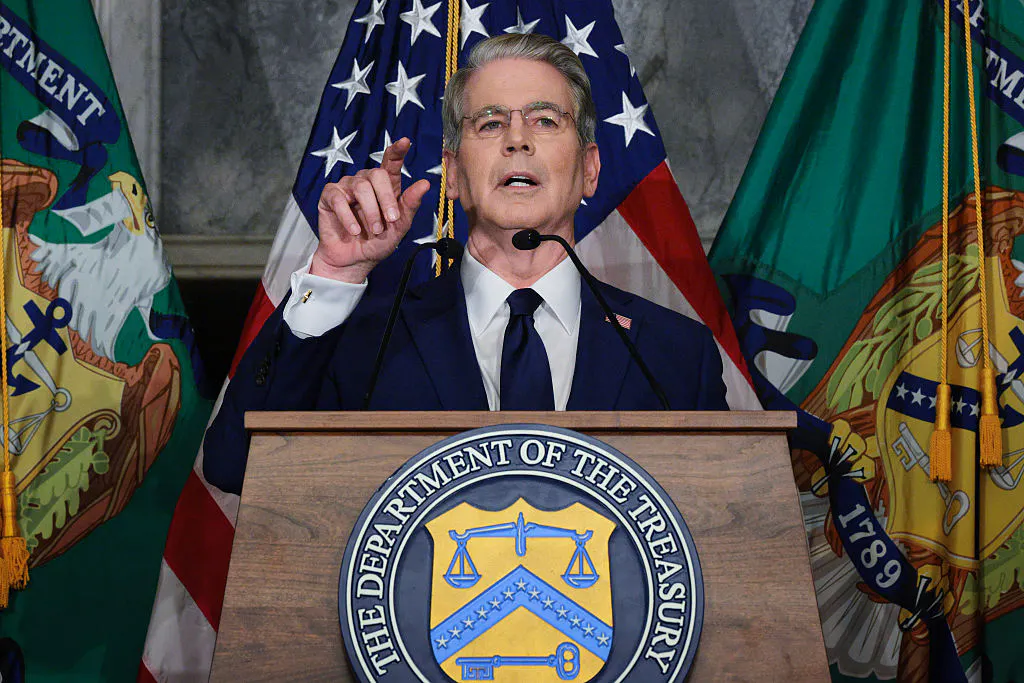
Treasury Secretary Scott Bessent’s “Operation Economic Outcast” against Iran could be different.
When Mr. Bessent promised an “economic D-Day” on August 24, the initial rollout looked more like another warning shot. Treasury sanctioned nearly 60 individuals, companies, and vessels and broadened the scope of targets that could be sanctioned for operating in various parts of the Iranian economy. Missing, however, was any action against a financial institution enabling Iran.
Four days later, that changed. Treasury began a process that, if implemented following an initial 30-day public comment period, could soon cut off the United Arab Emirates branches of Egypt’s state-owned Banque Misr from the U.S. financial system. According to Treasury data, the branches processed about $1.8 billion for 103 suspected Iranian shadow banking fronts since 2024, including companies tied to Iran’s Defense Ministry and Islamic Revolutionary Guard Corps.
This is exactly the type of action Washington needs more of.
Iran has spent years building networks of foreign-registered companies, exchange houses, shipping firms, and financial intermediaries designed to disguise sanctioned oil and petrochemical sales and move the proceeds back to the regime. Sanction one shell company and another can replace it. Make the bank processing those transactions fear losing access to the American financial system, and it faces an obvious commercial choice that Washington has rarely forced.
To be sure, the U.S. has threatened foreign banks for dealing with Iran before. More than a decade ago, the objective was to persuade governments to wean themselves off Iranian oil by putting their banks’ access to the U.S. financial system at risk.
The challenge today is different.
Rather than merely pressuring countries to buy less Iranian oil, the administration now appears to be targeting the financial institutions that have enabled Iran to keep selling sanctioned oil, laundering the proceeds, and accessing the U.S. financial system despite years of sanctions.
If sustained, that would put real teeth behind sanctions enforcement. And its importance would extend far beyond Iran.
The same permissive financial hubs, opaque corporate structures, and weak due diligence practices that facilitate Iranian sanctions evasion also serve Russian sanctions evaders, North Korean procurement networks, cartels, and other transnational criminal organizations. Financial institutions willing to ignore obvious warning signs rarely do so for only one malign actor.
Still, Iran adds a uniquely urgent national security dimension to the problem. Its illicit financial networks generate resources for the world’s leading state sponsor of terrorism, a regime that has repeatedly approached the nuclear threshold. Disrupting those networks is critical to preventing Tehran from reconstituting the capabilities that have repeatedly brought the Middle East to the brink.
That is why critics shouldn’t dismiss Operation Economic Outcast before seeing whether Treasury follows through. Nor should supporters declare victory because of one action against one bank’s branches in the UAE.
The right measure of success is whether foreign banks stop processing Iranian business, whether jurisdictions harboring Iran’s shadow banking networks tighten oversight, and whether Tehran finds it harder to profit from its illicit sanctions evasion networks.
Beginning with action against a bank’s branches in the UAE is smart. The UAE is a partner, but it also faces significant money laundering and terror financing risks that will be difficult to reform quickly. Treasury shouldn’t lose sight of the fact that, beyond the UAE, no jurisdiction is more important to Iranian sanctions evasion than China. Beijing purchases roughly 90% of Iran’s exported oil, and the commercial and financial infrastructure surrounding that trade remains indispensable to Tehran.
Treasury has a wide escalation ladder available, but it cannot succeed without taking aim at these institutions. The Chinese will protest, but they too should face the commercial choice the U.S. presented to Banque Misr UAE: access to the U.S. financial system or continued dealings with Iran. China’s export-dependent economy still relies heavily on dollars, and its ability to import more energy than any other country still depends heavily on the U.S. financial system. The choice should be obvious.
Sanctions aren’t inherently effective or ineffective. They are tools, and their value depends on what Washington targets, how aggressively it enforces them, and whether it is prepared to keep applying pressure when targets adapt.
For too long, sanctions have often substituted for strategy. Operation Economic Outcast could change that. Americans should give the campaign a chance to succeed. And they should call out the administration’s half-measures if it doesn’t.
***
Max Meizlish is a research fellow at the Foundation for Defense of Democracies. He has worked in the U.S. Treasury’s Office of Foreign Assets Control. Follow Max on X @maxmeizlish.
More from this network:
Domains for Sale · GOTPeople.org · TheDSAPlatform · The Truth About Socialism
What's Your Reaction?
 Like
0
Like
0
 Dislike
0
Dislike
0
 Love
0
Love
0
 Funny
0
Funny
0
 Wow
0
Wow
0
 Sad
0
Sad
0
 Angry
0
Angry
0

I am just an average American. My teen years were in the late 70s and I participated in all that that decade offered. Started working young, too young. Then I joined the Army before I graduated High School. I spent 25 years in, mostly in Infantry units. Since then I've worked in information technology positions all at small family owned companies. At this rate I'll never be a tech millionaire. When I was young I rode horses as much as I could. I do believe I should have been a cowboy. I'm getting in the saddle again by taking riding lessons and see where it goes.
Premium domains for sale














Comments (0)