

Inside the Pentagon-Palantir 'digital twin' unleashed on Iran in Epic Fury
Premium domains for sale
Freedom Is Back In Style
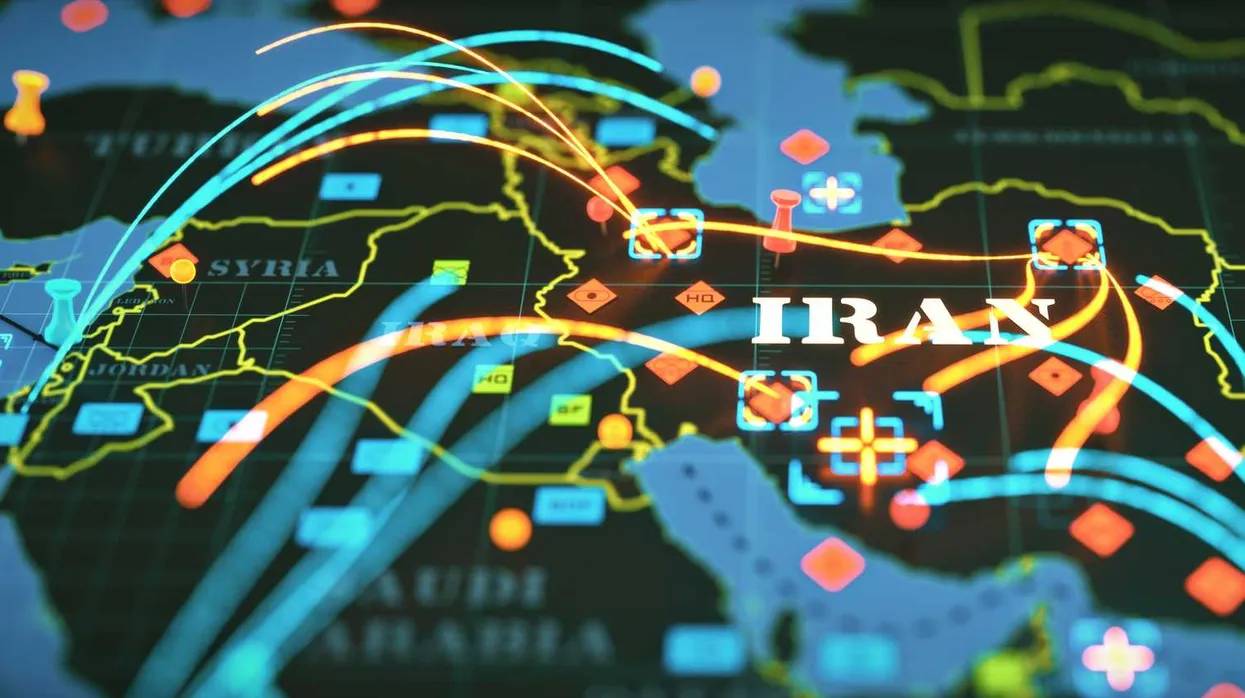
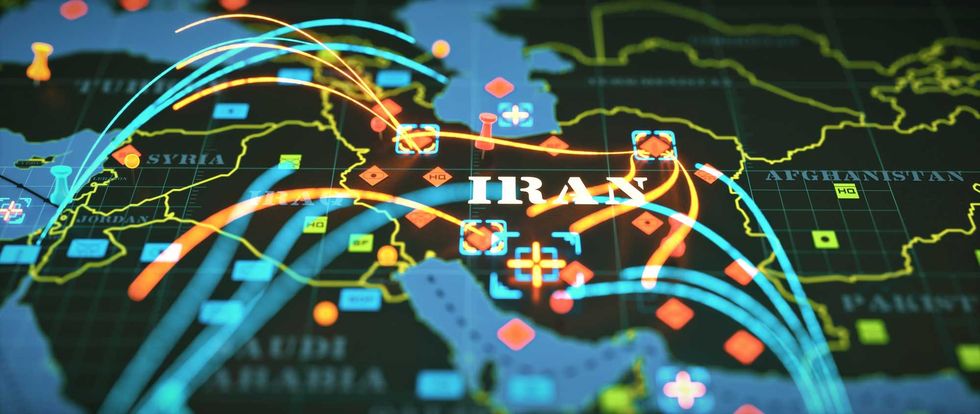
The Maven Smart System is briefly explained in the “one-pager,” a Palantir-produced document that frames the system as an “AI-enabled platform” for something called Combined Joint All Domain Command and Control. The prose is the sterile, aspirational language of the Pentagon, emphasizing a “live, synchronized view of the battlespace,” the language of “decision advantage,” a phrase that suggests we can outthink our adversaries by processing data more accurately.
Freedom Is Back
In Style
Premium domains for sale
MSS is no longer an AI prototype. It has become a durable layer in the military’s information architecture, a Program of Record transitioned to the National Geospatial-Intelligence Agency in 2023.
In the first 24 hours alone, the system processed a thousand targets.
The money is real and the timelines are long: a $480 million Army contract in 2024, followed by a $795 million modification in 2025, both reaching toward 2029. There is also a $99.8 million vehicle designed to expand access across the services. MSS is a story of how an automation effort for drone video became the epistemic infrastructure for modern American war.
Birth of a twin
The precondition for MSS was a crisis of human attention. In 2017, Deputy Secretary Robert O. Work issued a memo establishing the Algorithmic Warfare Cross-Functional Team, nicknamed Project Maven. The problem was simple and overwhelming: They had too much data and not enough eyes. Enormous volumes of full-motion video from unmanned systems were piling up, outstripping the capacity of human analysts to “process, exploit, and disseminate” them. The initial goal was simple: data labeling and algorithms to detect, classify, and alert.
By the time the project evolved into the Maven Smart System, it had become an apparatus that observes, organizes, and normalizes the battlespace. At its heart is the “Maven Ontology,” described as an operational “digital twin.” In this world, the messy heterogeneity of war (the images, the reports, the movement) is translated into a queryable database of objects, properties, and links. The analyst no longer interprets raw feeds; he operates on already-structured objects. The battlespace becomes a manipulable database.
The interface itself (Gaia for mapping, Maverick and Target Nexus for identification) is designed for scaling. It includes LLM-powered workflows and an Agent Studio in which users can build interactive assistants to query the ontology in natural language. One can ask for “detections of X” across thousands of objects and receive an answer in seconds. These interfaces are sometimes described as video game-like, which captures the ease of navigation while minimizing the gravity of the destruction it represents.
RELATED: Trump acted first — and the ‘experts’ are furious because it worked
 Andrew Harnik/Getty Images
By early 2026, the user base had doubled to 20,000 active participants, a scaling that found its ultimate expression in Operation Epic Fury. In the first 24 hours alone, the system processed a thousand targets, with many thousands more to follow. This is the kill chain compressed from hours to minutes, an acceleration that effectively removes the friction of deliberation. War is no longer an event to be survived, but a dataset to be optimized, a feedback loop in which the destruction of the target serves primarily to improve the next detection.
How fast is too fast?
The logic of the platform is “fight-tonight” readiness and “rapid sensor-to-shooter engagements.” The Marine Corps speaks of a “fully digital workflow” for target management, pressuring the military toward a tempo in which speed is the organizing value. Yet the demands of war require discrimination and proportionality, context-sensitive reasoning that cannot be scaled by a Model Catalog.
The danger is the category error: treating the output of the machine as if it were a judgment. Humans have a tendency to “automation bias,” to over-trust the platform, especially under the crushing pressure of time. When the system pre-structures perception and prioritization, responsibility is dispersed through chains of mediation and eroded before human approval is even requested.
The platform is spreading through sale and licensing agreements like enterprise software. NATO has adopted “MSS NATO” for Allied Command Operations, with training already integrating the system into exercises and simulations. In the U.S. Army, the fielding is rapid, with training described as an “accelerated learning effort.” Software now changes faster than doctrine, habits, or the slower virtues of judgment.
The Pentagon has “Responsible AI Guidelines” and strategy documents that emphasize the ability to disengage or deactivate systems with unintended behavior. These frameworks exist in constant tension with the platform’s own gravity within the process, which pulls toward more data, more detections, and faster workflows.
We are left with a question of agency. In the MSS architecture, control is lost or found in how the targets are modeled, how the alerts are tuned, and how the ontology is constructed. The system is built to make war more legible and therefore more actionable. Legibility, however, is not the same as understanding. One wonders if “decision advantage” can truly co-exist with the capacity to consider, to scrutinize, or to refuse a path that a platform has already made so efficient.
More from this network:
Domains for Sale · GOTPeople.org · TheDSAPlatform · The Truth About Socialism
What's Your Reaction?
 Like
0
Like
0
 Dislike
0
Dislike
0
 Love
0
Love
0
 Funny
0
Funny
0
 Wow
0
Wow
0
 Sad
0
Sad
0
 Angry
0
Angry
0

I am just an average American. My teen years were in the late 70s and I participated in all that that decade offered. Started working young, too young. Then I joined the Army before I graduated High School. I spent 25 years in, mostly in Infantry units. Since then I've worked in information technology positions all at small family owned companies. At this rate I'll never be a tech millionaire. When I was young I rode horses as much as I could. I do believe I should have been a cowboy. I'm getting in the saddle again by taking riding lessons and see where it goes.
Premium domains for sale





















Comments (0)