

Japan’s Crash Is Our Canary in the Coalmine
On Tuesday, the Dow Jones Industrial Average stock index crashed 870 points, the biggest drop since October.
Live Your Best Retirement
Fun • Funds • Fitness • Freedom
The mainstream media predictably blamed President Donald Trump’s threat of tariffs over Greenland, but they were wrong.
Thanks to Bitcoin—which trades 24/7—we can actually go to the tape. It turns out Greenland barely made a dent. What caused the bloodbath was Japan.
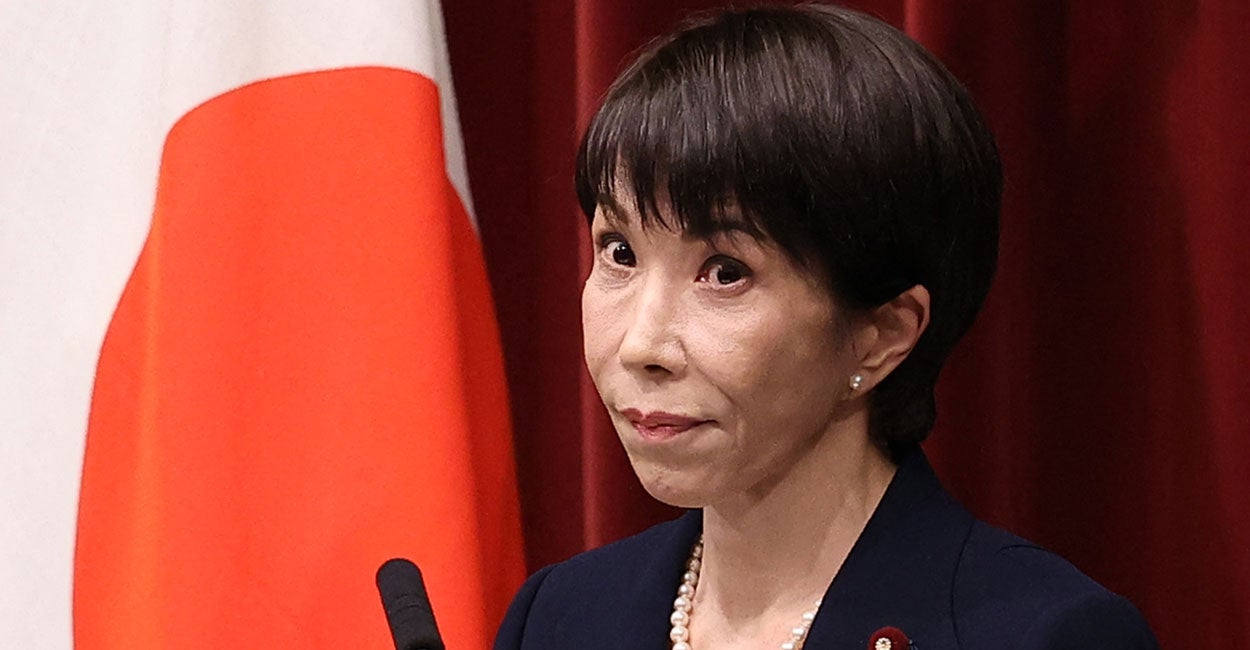
Specifically, the drop was due to new Prime Minister Sanae Takaichi’s Monday press conference. She announced snap elections to bolster a raft of reforms, which would hike government spending and reduce tax revenue. This sent Japanese bonds crashing as bond investors worried Japan can’t handle its massive government debt.
The panic then bled into U.S. financial markets via the yen carry trade, where hedge funds and speculators have borrowed hundreds of trillions of yen at near-zero interest rates to park it in U.S. assets.
The trade worked fine when rates in Japan were kept artificially lower than in the United States and traders could employ plenty of leverage—like gambling with borrowed money.
But now Japanese bond yields are soaring with the 30-year yield setting new records and shorter-term securities like the 10-and two-year at the highest levels since the 1990s. The stratospheric rise in these yields is threatening to strengthen the yen with them—so, that free money spigot is reversing.
Unwinding the yen carry trade sent the hedge funds rushing for the exits, crashing stocks and bonds worldwide as they liquidated holdings to get out of their leveraged positions. Put simply, if they bought assets with borrowed money, the assets were sold to repay the loans before the interest on those loans could skyrocket.
Japan’s latest bond crisis is a near-repeat of the U.K. Gilt Crisis in 2022, when British Prime Minister Liz Truss introduced a package of tax cuts and spending hikes that sent bond yields soaring a point and a half in a single day—third world territory. And that sent the British pound crashing to a 37-year low against the dollar.
The wider issue is what the U.K.—and now Japan—have illustrated: Bond markets cannot digest fiscal deficits that have blown away peacetime records.
The fact this is happening in two of the most advanced—and heretofore drama-free—economies on Earth is ominous. The bond vigilantes are reminding everyone that they have the final veto on all government finance.
Even worse, the fiscal deficit in Japan is less than half that of the U.S.—3% of the Gross Domestic Product in Japan versus the 6.4% of GDP Congress is spending us into the hole every year.
While the dollar’s reserve currency status and our lower aggregate national debt buy time, this suggests we’re living on borrowed time. And when the crisis hits here, it could be even harder than Japan.
How the Land of the Rising Sun got here is illustrative since Congress is following the same recipe.
Japan’s original sin dates to when their easy money bubble burst in 1990, and instead of letting weak companies and banks die off, they put them on permanent life support with stimulus and low interest rates.
This created a zombie economy of money-losing companies that hog up one-third of all bank lending and almost 10 million Japanese workers essentially paid to lose money. The result is while American productivity grew by half since 1990, Japan’s actually dropped.
That in turn translated into real wages that are lower in Japan today than 1990, while also driving Japanese government debt to 230% of GDP—an eye-watering $70 trillion in U.S. GDP terms.
To finance all that debt, the Bank of Japan pushed interest rates down near zero for 30 years, which was necessary because otherwise the interest on that mountain of debt would eat Japan alive.
This created the free money machine of the century for foreigners in the yen carry trade, and it plunged Japan into 30 years of stagnation with no end in sight.
Beyond the economic costs, this has driven Japanese suicide rates to one of the highest rates on earth, while Japanese fertility has plunged to just 1.2 children per couple. Shockingly, that means eight great-grandparents turn into just 1.7 souls. If this keeps up, Japan’s population will fall by half per generation, leaving a shell of a developed nation.
Japan is the poster child for a creeping worldwide government takeover that’s transforming vibrant economies into permanent crony bailout apparatuses: Where government handouts and tax-funded NGO’s feast while the dwindling taxpayers—who pay for it—all check out, figuratively and sometimes literally.
The canary in the coalmine is singing. Trump’s doing what he can. Now Congress needs to wake up and turn us back from the fiscal cliff with meaningful spending cuts.
The post Japan’s Crash Is Our Canary in the Coalmine appeared first on The Daily Signal.
What's Your Reaction?
 Like
0
Like
0
 Dislike
0
Dislike
0
 Love
0
Love
0
 Funny
0
Funny
0
 Wow
0
Wow
0
 Sad
0
Sad
0
 Angry
0
Angry
0

I am just an average American. My teen years were in the late 70s and I participated in all that that decade offered. Started working young, too young. Then I joined the Army before I graduated High School. I spent 25 years in, mostly in Infantry units. Since then I've worked in information technology positions all at small family owned companies. At this rate I'll never be a tech millionaire. When I was young I rode horses as much as I could. I do believe I should have been a cowboy. I'm getting in the saddle again by taking riding lessons and see where it goes.























Comments (0)