

Mandami's 'food desert' lie: How millions of your tax dollars are spent fixing fake urban famine
Premium domains for sale
Freedom Is Back In Style
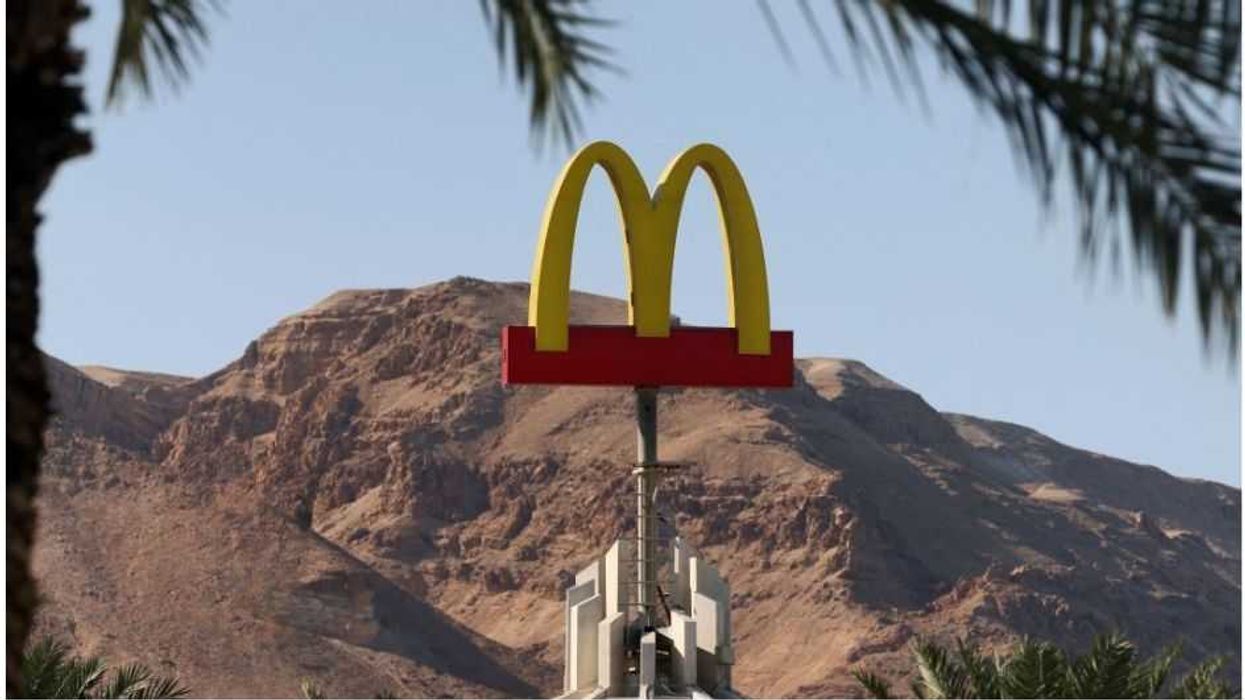
New York City Mayor Zohran Mamdani (D) has a new solution for urban poverty: government-run grocery stores.
Freedom Is Back
In Style
Premium domains for sale
The plan, announced as part of his first 100 days in office, would spend roughly $70 million creating city-owned supermarkets across New York, beginning with a flagship location in East Harlem. The stores would operate through private contractors under city oversight, with subsidized staples — cheaper eggs, cheaper bread, cheaper basics — guaranteed by government rather than market competition.
Fast food, the supposed cheap fallback of the food-deprived, has out-inflated inflation itself and is now closer to a sit-down dinner than a quick bite.
Mamdani justifies this spending by invoking a persistent, infrequently examined assumption of liberal policymakers: that cities in America are riddled with blighted urban zones where fresh produce and healthy groceries remain frustratingly out of reach.
These are called "food deserts."
Hunger games
Never mind that a quick look around the proposed East Harlem site reveals multiple grocery stores within walking distance, including produce markets sitting blocks from where the city plans to spend tens of millions constructing another one.
Yet the language persists. Reading recent coverage of America's "food deserts," you would be forgiven for thinking we have all woken up in the back half of "The Road," scavenging tin cans in ash-choked ruins while a feral child clutches our pant leg.
ABC News informs us that 17 million Americans live in a federally designated food desert, a term so bleak it sounds like it should come with a Pulitzer and a black-and-white photo of a barefoot kid staring into the middle distance.
Tara Colton of New Jersey's Economic Development Authority calls food deserts a product of structural racism, neighborhood redlining, and disinvestment — three abstractions stacked into one sentence, which is the literary equivalent of a turducken. Malcolm Gladwell is taking notes.
To be clear, there are real people in these stories who deserve real help. Take Knoxville, for instance, where an elderly disabled woman with a walker needs three to four hours to buy groceries. There are many like her. No car, no one to call when the fridge needs to be restocked.
But is that really a food problem, or is it a loneliness problem in disguise? A what-happened-to-neighbors problem? Whatever it is, it isn't fixed by the nearest Kroger relocating two blocks closer, but by a person with transportation and 20 free minutes.
Couch-bound
Which brings us to the definition itself, because the definition is where this whole conversation instantly falls apart. Per the USDA, a food desert is a low-income area where residents live more than one mile from a supermarket in a city or 20 in the country.
The rural number is its own conversation. The urban one deserves a closer look. One mile. That is the apocalyptic threshold, the line past which we reach for the language of famine and structural decay. One mile is the distance between your couch and the place you were going to walk to anyway before you decided to "treat yourself" to DoorDash. There are CrossFit gyms charging $200 a month to make people walk farther than that carrying objects on purpose.
Then there is the part the hellscape correspondents won't touch. A Big Mac combo now averages $9 nationally. A large pizza that feeds two or three people runs $15 to $20 before tip and delivery fee and the mysterious "service charge" that has crept onto every receipt in America. A medium fries alone is $4 now, a price point that used to get you the whole meal. Fast food, the supposed cheap fallback of the food-deprived, has out-inflated inflation itself and is now closer to a sit-down dinner than a quick bite.
Shop right
Meanwhile, in the so-called desert, a bag of dried lentils is $1.79. A pound of rice is a dollar. A dozen eggs, even after the great egg panic, is around $4 and gives you a week of breakfasts. Frozen vegetables, the great equalizer of American nutrition, run $2 or $3 at any Dollar Tree, which, surprise, exists in basically every "food desert" I've ever set foot in. A whole rotisserie chicken at Walmart is $5.97 and feeds a family for two days. A can of black beans is a dollar. An onion is 50 cents.
So when an able-bodied 28-year-old with a working car and a smartphone tells me he can't eat healthy because he lives in a food desert, what he means is he doesn't want to. He wants the Crunchwrap Supreme combo for $9. He wants the door to open and the food to be hot and the wrapper to crinkle.
That's a preference, not a famine. Calling it a crisis is an insult to people who actually are in one — like, say, the woman with the walker — because it lumps her struggle in with some slob's Tuesday-night laziness and gives both the same vocabulary.
Fertile ground
Either way, the term "food desert" seems deliberately designed to invoke panic. Maybe so taxpayers will look the other way when, say, New Jersey passes a $240 million Food Desert Relief Act and starts paying restaurants to deliver hot meals.
But there are no ash plumes. No one is barbecuing cats or plucking ducks from ponds. Well, very few are.
Battlefield Farm, a Knoxville nonprofit, understands this. It doesn't tweet about food apartheid. Instead, it grows actual collards and drives them to actual people in an actual van. The company is planning a low-cost grocery store.
That's the thing about real problems. They tend to have real, boring solutions, and they tend to require us to acknowledge reality before we can do anything about them.
The 53 million Americans the USDA classifies as having "limited" food access are not all starving in a wasteland. Most of them are within walking, biking, or one-bus distance of a place that sells apples and carrots. Most of them know this, and a lot of them are cooking meals right now. The ones who genuinely cannot get there need rides, ramps, and delivery — not a fatalistic op-ed painting America like a Ken Burns documentary nobody asked for.
More from this network:
Domains for Sale · GOTPeople.org · TheDSAPlatform · The Truth About Socialism
What's Your Reaction?
 Like
0
Like
0
 Dislike
0
Dislike
0
 Love
0
Love
0
 Funny
0
Funny
0
 Wow
0
Wow
0
 Sad
0
Sad
0
 Angry
0
Angry
0

I am just an average American. My teen years were in the late 70s and I participated in all that that decade offered. Started working young, too young. Then I joined the Army before I graduated High School. I spent 25 years in, mostly in Infantry units. Since then I've worked in information technology positions all at small family owned companies. At this rate I'll never be a tech millionaire. When I was young I rode horses as much as I could. I do believe I should have been a cowboy. I'm getting in the saddle again by taking riding lessons and see where it goes.
Premium domains for sale













Comments (0)