

March Madness Sparks Betting Boom — What It Proves About Letting Americans Choose
Premium domains for sale
Freedom Is Back In Style
This week, Americans will legally wager an estimated $3.3 billion on March Madness, a 54% jump from just three years ago. That number says something important about what happens when you let adults make their own choices in regulated markets rather than pushing them toward offshore bookies in the shadows.
Freedom Is Back
In Style
Premium domains for sale
Freedom Is Back
In Style
Premium domains for sale
I’ve spent a decade as a consumer advocate, watching nearly every wave of moralist and neoprohibitionist crusading: alcohol, cannabis, nicotine pouches, fatty food, caffeine, red meat, sports gambling, and prediction markets. Plenty I wouldn’t touch. Others I moderately enjoy. But I’ve never once lobbied my congressman to ban any of them — because I’ve also watched what happens when governments do.
The Atlantic recently published a gripping year-long account of sports betting that ends with its writer, McKay Coppins, a Mormon dad from the suburbs, filing a self-exclusion form at 5:00 a.m. after the Super Bowl. The magazine gave Coppins $10,000 to experiment with gambling.
As an inexperienced bettor playing with earmarked money from his bosses, Coppins describes feeling “seduced” and asks how it is that Americans think, “unlike every civilization that came before us, we can beat the house.”
But his ending proves a worthwhile point: the voluntary self-banning request form he eventually signs exists only because sports betting is properly regulated in the United States. Offshore bookmakers don’t have such an off-ramp.
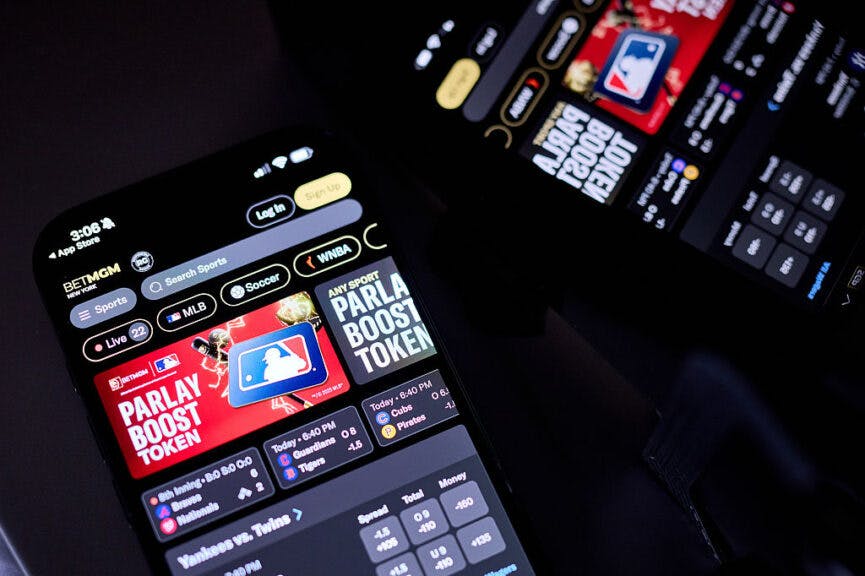
Gabby Jones/Bloomberg via Getty Images
Compliance Cops
There is a growing pile of commentary from writers and activists who have cast themselves as chaperones for everyday Americans who might enjoy a little risk. Call them compliance cops: the prediction market writer who only covers why prediction markets are bad, the crypto journalists fixated only on harsh regulation, or the energy reporter more interested in advancing climate mandates than covering the innovations that will actually power tomorrow. And of course, tech journalists who want to ban data centers at the precise time we need them more than ever.
That compliance-cop pattern repeats everywhere. State regulators are issuing cease-and-desist orders against prediction markets like Kalshi, which is federally regulated by the Commodity Futures Trading Commission, but is putting pressure on incumbent sportsbooks. It’s not dissimilar from how taxi permit holders spent years trying to legislate ride-sharing out of existence. Consumers and new entrants are always the main losers when incumbents write the rules.
Call it the American moralist streak. Call it the prohibitionist impulse. Whatever name it goes by, it persists no matter the product or pastime.
The answer, however, isn’t to abandon all guardrails. We’re not choosing between Sodom and Gomorrah and the 17th-century Puritanism of the Massachusetts Bay Colony. Licensed markets with basic age-verification rules let people access nicotine pouches or cannabis without unregulated alternatives where product safety is a gamble in its own right. Regulated gambling is better than shady offshore sites gaining market dominance with zero accountability.
Food Bans Or Consumer Choice?
Meanwhile, Health and Human Services Secretary Robert F. Kennedy Jr. is barnstorming the country demanding bans on synthetic food dyes, restricting SNAP benefits for candy and soda, and redesigning what Americans may eat. This year, 18 states will block SNAP purchases of sugary drinks. Wanting cleaner labels is reasonable — deciding which snacks food-assistance recipients may buy is not.
The MAHA agenda’s answer is always a new ban or restriction when transparency and consumer choice would better serve the public. Oftentimes, the most effective public health measures aren’t mandates.
The principle is simple: if an activity primarily affects the adult who chooses it, and that adult accepts responsibility, the government’s job is to minimize harm at the margins, not to decide the activity shouldn’t exist.
Prohibition never ends demand. Not for alcohol, not for cannabis or gambling, not for the countless pleasures Americans have been told are bad for them. Every failed ban produces the same result: a thriving illicit market, greater danger, and no fewer users.
I’ve made my choices. Americans should be free to make theirs — somewhere safe, regulated, and above ground.
* * *
Yaël Ossowski is deputy director of the Consumer Choice Center.
The views expressed in this piece are those of the author and do not necessarily represent those of The Daily Wire.
More from this network:
Domains for Sale · GOTPeople.org · TheDSAPlatform · The Truth About Socialism
What's Your Reaction?
 Like
0
Like
0
 Dislike
0
Dislike
0
 Love
0
Love
0
 Funny
0
Funny
0
 Wow
0
Wow
0
 Sad
0
Sad
0
 Angry
0
Angry
0

I am just an average American. My teen years were in the late 70s and I participated in all that that decade offered. Started working young, too young. Then I joined the Army before I graduated High School. I spent 25 years in, mostly in Infantry units. Since then I've worked in information technology positions all at small family owned companies. At this rate I'll never be a tech millionaire. When I was young I rode horses as much as I could. I do believe I should have been a cowboy. I'm getting in the saddle again by taking riding lessons and see where it goes.
Premium domains for sale










Comments (0)