

NATO 3.0 and Shifts in Force Posture and Funding
Premium domains for sale
Freedom Is Back In Style
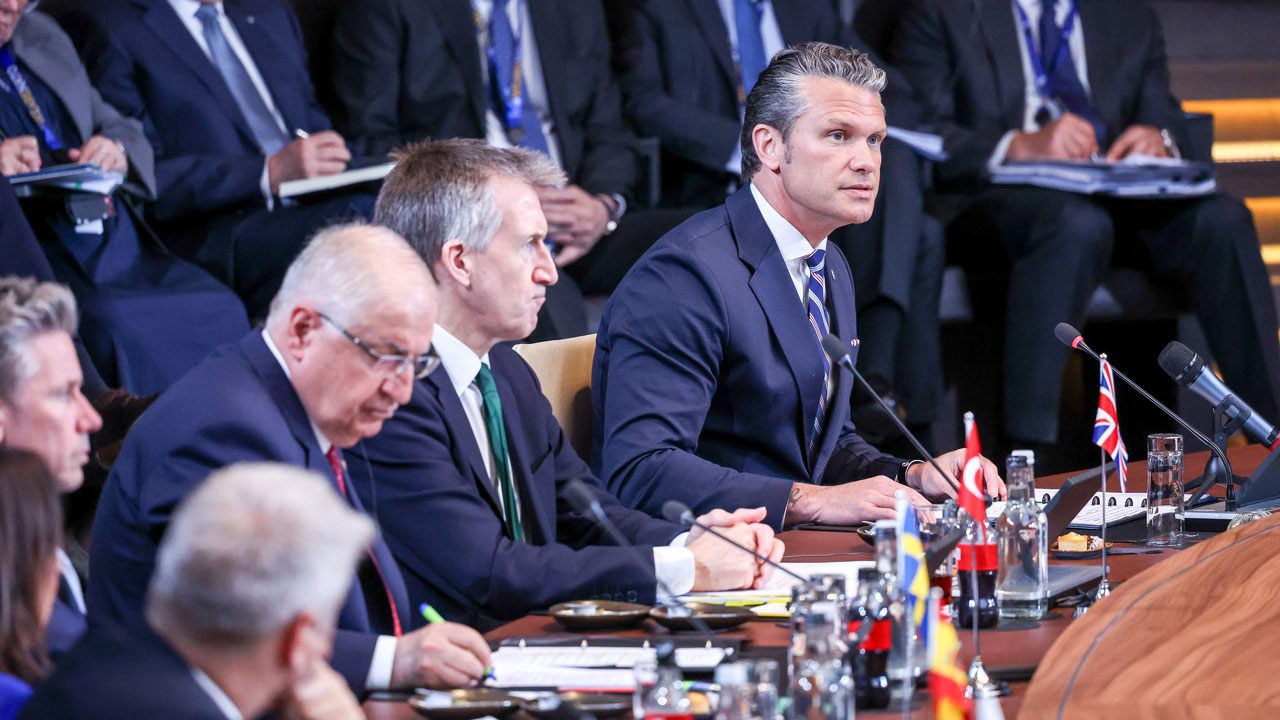
Thursday morning, Secretary of War Pete Hegseth spoke at the headquarters of the North Atlantic Treaty Organization (NATO) in Brussels, announcing a six-month review of American force posture and funding relating to NATO as part of the Trump administration’s efforts to build “NATO 3.0.”
Freedom Is Back
In Style
Premium domains for sale
In 2026, the U.S. is forced by geopolitical necessity to prioritize deterring China, a monumental effort that will require a shift in resources and a change in force posture, with the U.S. moving forces and funding into the Pacific. Despite this, the U.S. has security and economic reasons to care about the future of Europe and is pushing for a revitalized and reshaped alliance in the form of NATO 3.0.
It is no secret that there has been legitimate debate in Washington about America’s future role in NATO, largely stemming from Europe’s larger and wealthier nations dismissing their own national security interests since the end of the Cold War.
Maintaining continued American engagement partially depends on the sovereign decisions of European allies, as demonstrations of European commitment to collective security in Europe make the case to Americans that Europeans are taking their own security seriously and that European NATO members are capable and committed allies of the U.S. in advancing shared security goals.
Some European NATO members are already doing more for their own security and deserve credit. Many NATO countries, especially the Baltic states, Nordic states, Poland, and Germany, are significantly increasing their defense spending and moving toward the new defense spending target ahead of schedule while also making significant shifts in planning and force posture that demonstrate real commitment to collective deterrence.
Other NATO countries, notably those in Southern Europe (and especially Spain), continue to lag behind in defense spending and serious commitments to taking more responsibility for European security. Parts of Western Europe, like the United Kingdom, meet their spending targets but have deeply concerning problems with readiness and maintenance.
Improving Atlantic security through burden-sharing will serve the U.S. by positioning it to pivot to the Pacific while ensuring that its NATO allies can provide most of their own conventional deterrence and defense.
The Heritage Foundation’s special report “NATO 3.0 and American Security Strategy in Europe” advocates reducing the total number of troops in Europe but moving the troops that remain east, shifting a brigade of American soldiers from Germany to Poland. At the same time, it recommends that European allies permanently station more troops in the Baltic states and to procure more airpower, warships, and strategic airlift and refueling capabilities to account for U.S. shifts to the Pacific.
The American nuclear umbrella provided as part of U.S. membership in NATO is especially critical, given the huge imbalance between the large Russian nuclear arsenal and the small nuclear arsenals of the UK and France.
Without the U.S., Russia would almost certainly engage in nuclear blackmail against countries like Poland, Estonia, Latvia, Lithuania, and Finland. The Heritage Foundation has therefore advocated for increasing the number of U.S. tactical nuclear weapons in Europe even as conventional troop commitments are reduced.
This shift in resources and forces is not a matter of preference but a geopolitical necessity given the economic and military rise of China. The U.S. military is not currently prioritizing deterring the rise of the People’s Republic of China, although China has publicly warned about its plans to invade Taiwan and clearly seeks hegemony in Asia. A NATO in which European allies provide most conventional deterrence is one in which the U.S. has fewer security concerns in the Atlantic region and can focus on the Pacific.
A militarily strong Europe capable of defending its sovereign interests is in the national interest of the U.S., and America should promote European military capability so that European allies can take the lead in their own collective defense.
The stronger America’s European allies are, the safer the Atlantic world will be, and the success of this vision for NATO 3.0 is critical to ensuring that the transatlantic alliance endures to the mutual benefit of Americans and Europeans.
More from this network:
Domains for Sale · GOTPeople.org · TheDSAPlatform · The Truth About Socialism
What's Your Reaction?
 Like
0
Like
0
 Dislike
0
Dislike
0
 Love
0
Love
0
 Funny
0
Funny
0
 Wow
0
Wow
0
 Sad
0
Sad
0
 Angry
0
Angry
0

I am just an average American. My teen years were in the late 70s and I participated in all that that decade offered. Started working young, too young. Then I joined the Army before I graduated High School. I spent 25 years in, mostly in Infantry units. Since then I've worked in information technology positions all at small family owned companies. At this rate I'll never be a tech millionaire. When I was young I rode horses as much as I could. I do believe I should have been a cowboy. I'm getting in the saddle again by taking riding lessons and see where it goes.
Premium domains for sale





















Comments (0)