

Netanyahu Backs Bill That Few Expected Him To Support
Premium domains for sale
Freedom Is Back In Style
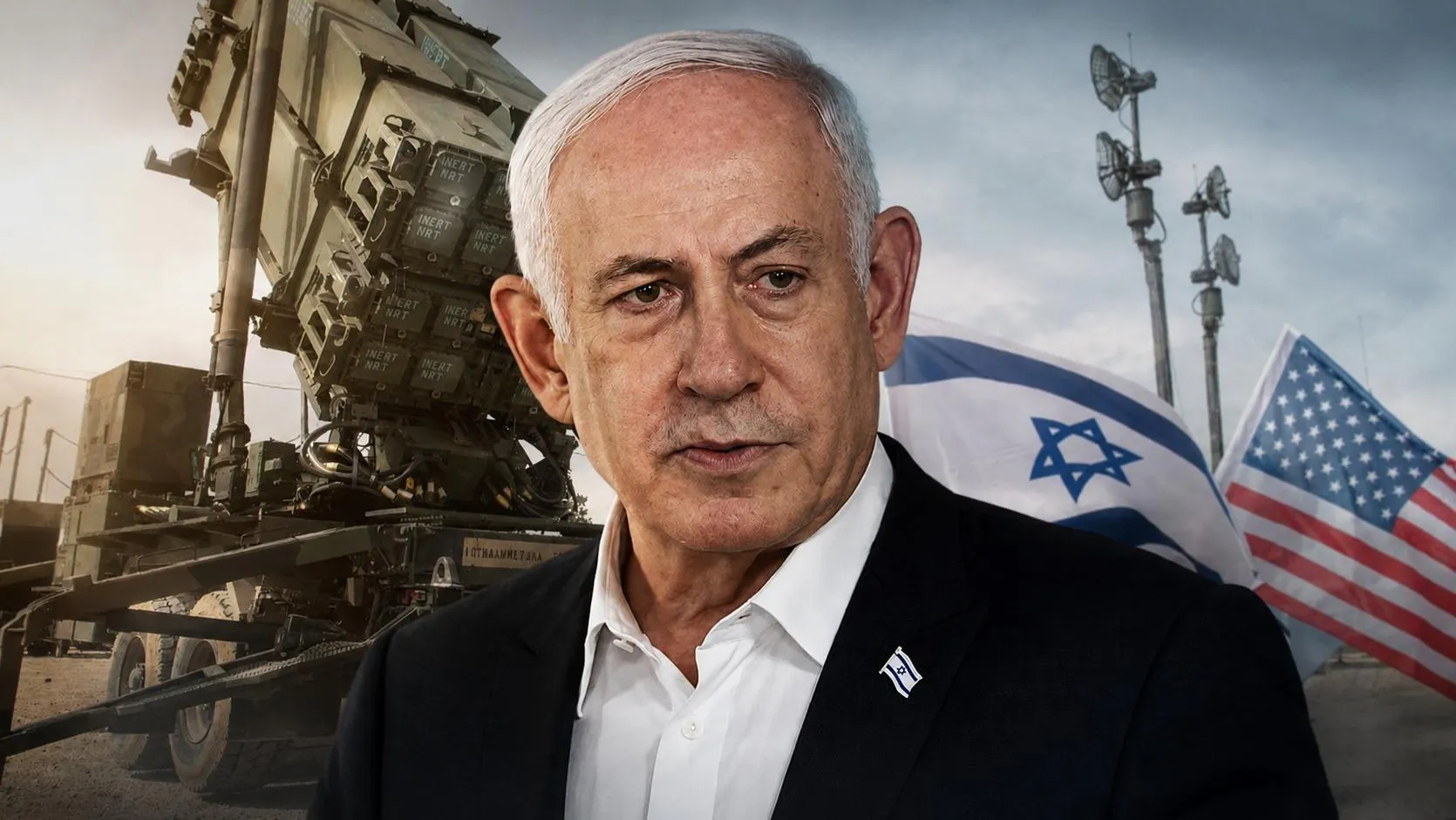
Israeli Prime Minister Benjamin Netanyahu is backing a new congressional resolution that calls for phasing out U.S. military aid to Israel and replacing it with a joint strategic partnership between the longtime allies.
Freedom Is Back
In Style
Premium domains for sale
The resolution, introduced Wednesday by Rep. Marlin Stutzman (R-IN) after a meeting with Netanyahu in Jerusalem last week, calls for ending the current military aid framework and replacing it with expanded cooperation on defense technology, intelligence sharing, weapons development, and strategic planning.
The proposal reflects a position Netanyahu has increasingly embraced over the past year: that Israel should reduce its dependence on American military assistance and build a more self-sufficient defense industry while maintaining a close alliance with Washington.
“As I said in our meeting in Jerusalem on May 27, 2026, Israel deeply appreciates the financial component of the military aid the United States has generously provided us over the years,” Netanyahu wrote in a letter endorsing the legislation. “The time has now arrived for us to move from aid recipient to partner.”
Israel receives roughly $3.8 billion annually in U.S. military aid under a long-standing memorandum of understanding between the two countries. Most of that funding must be spent on American-made military equipment and defense systems.
Stutzman said the resolution would mark “a new era” in the U.S.-Israel alliance.
“Above all, the United States and Israel stand together against totalitarianism and for freedom,” Stutzman said in a statement. “We are bound by the shared Western values that built both our nations.”
“This resolution affirms that the United States stands with Israel not out of obligation, but out of shared strength and shared strategic interest. Israel has come of age where our nations should contribute equally and share results equally.”
Supporters of the move argue the current aid structure no longer reflects Israel’s military and economic strength, noting that Israel is now one of the world’s top arms exporters and spends a larger share of its GDP on defense than nearly every NATO ally. Backers also say the plan aligns with President Donald Trump’s broader foreign policy approach of encouraging allied nations to take greater responsibility for their own defense while maintaining close strategic partnerships with the United States.
Even U.S. Ambassador to Israel Mike Huckabee, a decades-long supporter of Israel, suggested this week that the future of the relationship lies beyond traditional aid, arguing that the alliance already delivers significant returns for the United States.
“Israel receives $3.8 billion but spends far more than that buying U.S. military goods,” Huckabee wrote on X. “U.S. also receives intel, tech innovations so that ROI is many times more.”
He added that a future U.S.-Israel memorandum of understanding could reflect that shift, writing: “New MOU w/ Israel ends aid & will be based on trade.”
Israeli leaders have increasingly argued that dependence on foreign weapons shipments creates vulnerabilities during wartime. Those concerns intensified after the Biden administration temporarily halted a shipment of heavy bombs and threatened to withhold offensive weapons if Israel launched an assault on Rafah. It wasn’t until Trump took office that all of the weapons were shipped.
Netanyahu recently blamed the embargo for the death of soldiers because of the lack of ammunition.
“At a certain stage, we simply didn’t have enough ammunition and people fell, heroes fell,” he said. “Part of that shortage of ammunition was the result of an embargo.”
During Operation Protective Edge in 2014, the Obama administration suspended a shipment of Hellfire missiles and increased oversight of weapons transfers.
Retired Israeli Brigadier General Amir Avivi told The Daily Wire that episodes like those convinced many Israeli defense officials that the country needed greater manufacturing independence.
“This really shook the Israeli defense establishment and an understanding that you cannot really rely, during a moment of truth, on getting what we need,” Avivi said.
Avivi added that he reached a similar conclusion while serving as chief auditor of Israel’s defense establishment in 2014.
“We really lacked the capabilities because we transferred many capabilities to the U.S., and this really hurt our readiness but also our sovereignty — our ability as a country to defend ourselves,” he said.
Other Israeli officials and defense analysts argue that the current aid structure has made Israel increasingly reliant on American suppliers while weakening incentives to expand domestic production. Under the military aid agreement negotiated during the Obama administration, the percentage of U.S. aid that Israel can spend on its own defense industry has steadily declined — from 25% to just 11% this year — and is scheduled to reach zero by 2028, a change critics say undermines Israel’s long-term military independence.
When unveiling his $108 billion, decade-long plan to build an independent Israeli munitions industry, Netanyahu emphasized the goal to “reduce our dependence on all players, including friends.”
Israel is already one of the world’s leading arms exporters, generating roughly $19 billion in weapons sales in 2025, but it remains dependent on foreign suppliers for key munitions and military equipment.
Advocates of the transition also contend that ending aid would strengthen political support for the alliance in the United States because it “creates antagonism both among the hard right and the delusional left.”
“In the United States, some — such as Tucker Carlson — use the aid to attack Israel,” Avivi said. “They ask why American taxpayers are funding Israel and its wars. Israel wants to remove this argument entirely and say: ‘We don’t want aid.’”
Lawyer and Israeli activist Ran Bar-Yoshafat told The Daily Wire that ending aid would reduce both political friction and foreign leverage over Israeli military operations.
“The use of force is constrained according to American preferences,” Bar-Yoshafat, a reservist combat special forces officer, said. “The Americans, depending on the administration and military establishment, routinely dictate what weapons we can use and where in the field.”
More from this network:
Domains for Sale · GOTPeople.org · TheDSAPlatform · The Truth About Socialism
What's Your Reaction?
 Like
0
Like
0
 Dislike
0
Dislike
0
 Love
0
Love
0
 Funny
0
Funny
0
 Wow
0
Wow
0
 Sad
0
Sad
0
 Angry
0
Angry
0

I am just an average American. My teen years were in the late 70s and I participated in all that that decade offered. Started working young, too young. Then I joined the Army before I graduated High School. I spent 25 years in, mostly in Infantry units. Since then I've worked in information technology positions all at small family owned companies. At this rate I'll never be a tech millionaire. When I was young I rode horses as much as I could. I do believe I should have been a cowboy. I'm getting in the saddle again by taking riding lessons and see where it goes.
Premium domains for sale












Comments (0)